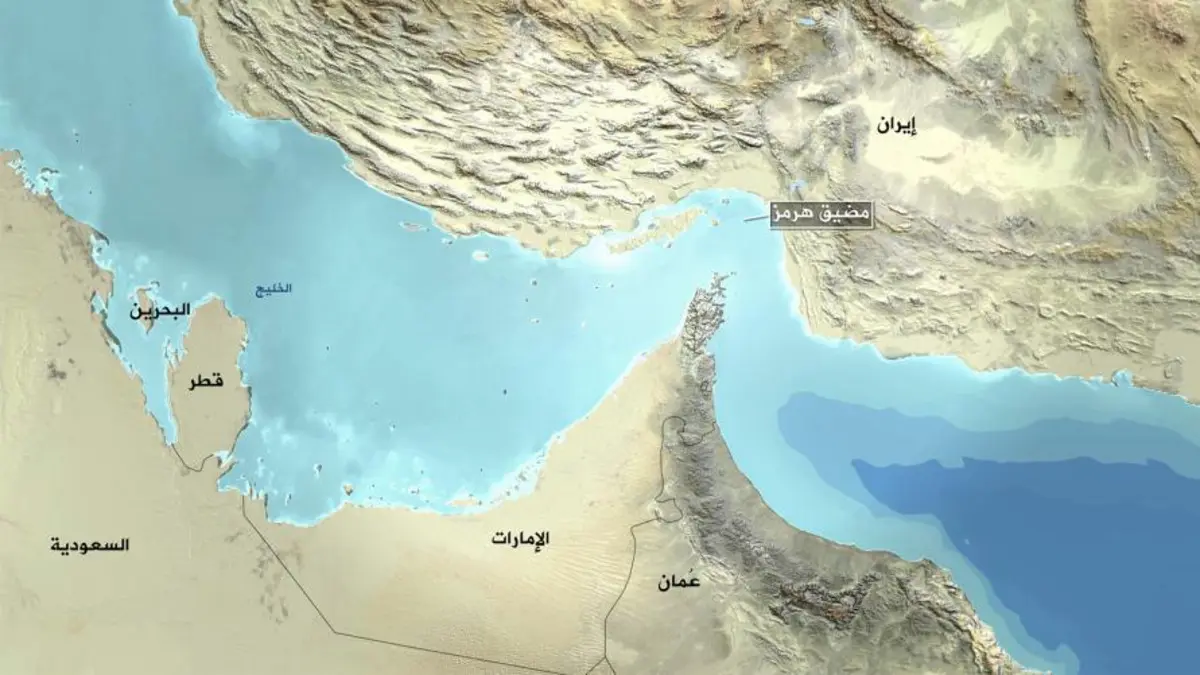
The Iranian headquarters of Khatam al-Anbiya, affiliated with the Revolutionary Guard, announced on Sunday that it would fully close the Strait of Hormuz if the United States follows through on threats made by former President Donald Trump regarding Iranian power facilities.
The statement made it clear that non-harmful traffic in the Strait of Hormuz operates according to regulations that ensure Iranian security and interests. It confirmed that if the U.S. implements its threats regarding power stations, the strait will be completely shut down, only to be reopened after the damaged facilities have been rebuilt.
The Khatam al-Anbiya headquarters also noted that American pressures would not go unanswered; that if Iranian power stations were attacked, all power stations and infrastructure belonging to the Israeli entity would be targeted. They vowed to conduct similar destructive operations against companies owned by American entities in the region.
This warning came after comments from former U.S. President Trump, suggesting airstrikes on energy facilities in Iran within 48 hours, further escalating tensions in the region.
In related news, Major General Ali Abdullah, commander of Khatam al-Anbiya, stated that Iran has shifted its military strategy from defense to offense, and will rely on more advanced weapon systems to confront American and Israeli threats. He added that these actions are part of a tactical change in line with military developments and assured that Iran will continue to enhance its capabilities and utilize new surprises in the battlefield.
General Abdullah also addressed U.S. and Israeli claims regarding the destruction of Iranian arms production facilities, indicating that Iranian scientists are still working to develop advanced weapons capable of confounding enemy calculations.
Since February 28, the United States and Israel have been conducting repeated attacks on Iran, resulting in the deaths of numerous security and military figures, including the Iranian leader Ali Khamenei. In response, Iran has carried out several attacks on what it describes as American interests in Arab countries, despite some of these operations resulting in civilian casualties, sparking condemnations from affected countries demanding an end to such assaults.
As tensions in the region escalate, Iran's stance remains firm against what it perceives as attempts to impose American and Israeli hegemony, adversely affecting regional stability and intensifying the war atmosphere.
In light of these developments, the Strait of Hormuz, vital for maritime oil transport, remains on high alert for possible military escalation, which indicates further tensions in international relations, opening the door to more economic crises in global markets.