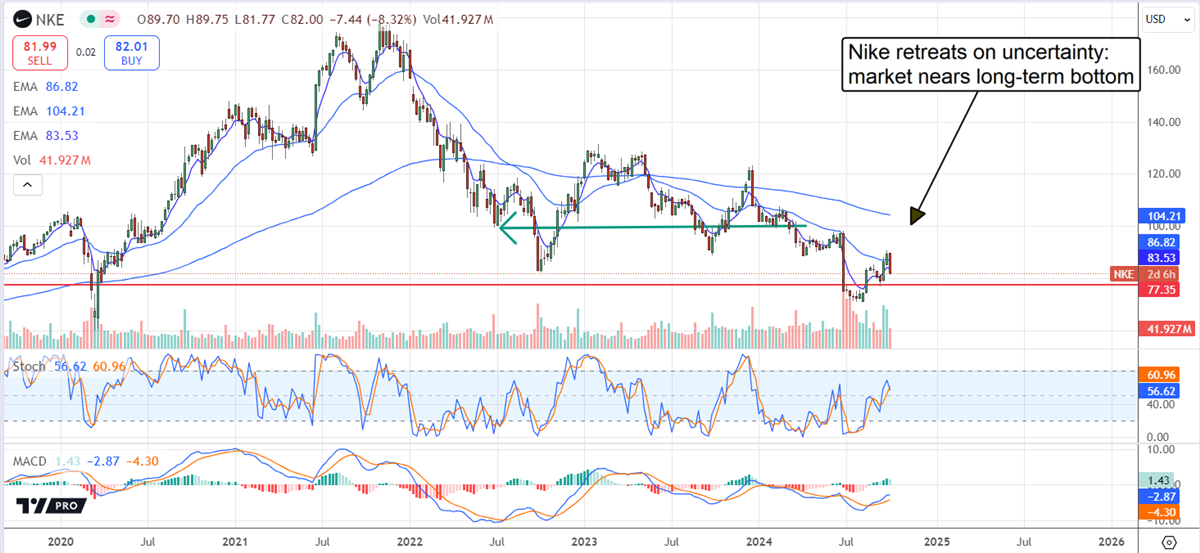
Reports indicate that the price-to-earnings ratio of Nike, one of the leading global companies in sports apparel and footwear, has significantly decreased, opening the door for long-term investors to take advantage of this opportunity. Data suggests that this ratio is now much lower than its historical average, making it appealing for investors seeking good returns in the future.
Despite this decline, Nike's price-to-earnings ratio remains higher than that of U.S. market indices such as the S&P 500, reflecting the challenges the company faces amid intense market competition.
Event Details
The price-to-earnings ratio is one of the key indicators that investors rely on to assess company performance. This ratio typically reflects how much the market is willing to pay for a company's earnings. In Nike's case, the decline in this ratio suggests that investors may be able to purchase shares of the company at lower prices compared to previous levels.
This decline comes at a time when Nike is undergoing strategic changes in its operations, as the company seeks to expand its product range and increase its market share. Additionally, global economic challenges, including inflation and supply chain disruptions, have impacted the company's performance, leading to this drop in the price-to-earnings ratio.
Background & Context
Nike was founded in 1964, and since then it has become one of the largest companies in the world in the sports apparel and footwear sector. Over time, Nike has built a strong brand based on innovation and quality. However, the market is constantly changing, requiring companies like Nike to adapt to new conditions.
In recent years, Nike has faced significant challenges due to increasing competition from other companies such as Adidas and Puma, as well as the entry of new brands into the market. The COVID-19 pandemic has also significantly affected the company's sales, prompting it to reevaluate its strategies.
Impact & Consequences
The decline in Nike's price-to-earnings ratio is an important indicator for investors, as it may signal a good opportunity for entering a long-term investment. However, investors must be cautious and consider the potential risks associated with investing in stocks.
This decline in the price-to-earnings ratio is expected to influence investors' decisions, as it may encourage some to buy shares now, while others may hesitate to take similar action due to potential risks. Ultimately, success in investing depends on the ability to accurately assess risks and opportunities.
Regional Significance
Although Nike is an American company, its impact extends to Arab markets, where its products are among the most popular in the region. With the growing interest in sports and fitness in Arab countries, local investors may find opportunities to benefit from this drop in stock prices.
Moreover, Arab companies operating in the sports apparel sector may benefit from this decline, as it could lead to increased demand for local products that compete with Nike. In the end, this event represents an opportunity for investors in the region to consider new strategies that align with global trends.