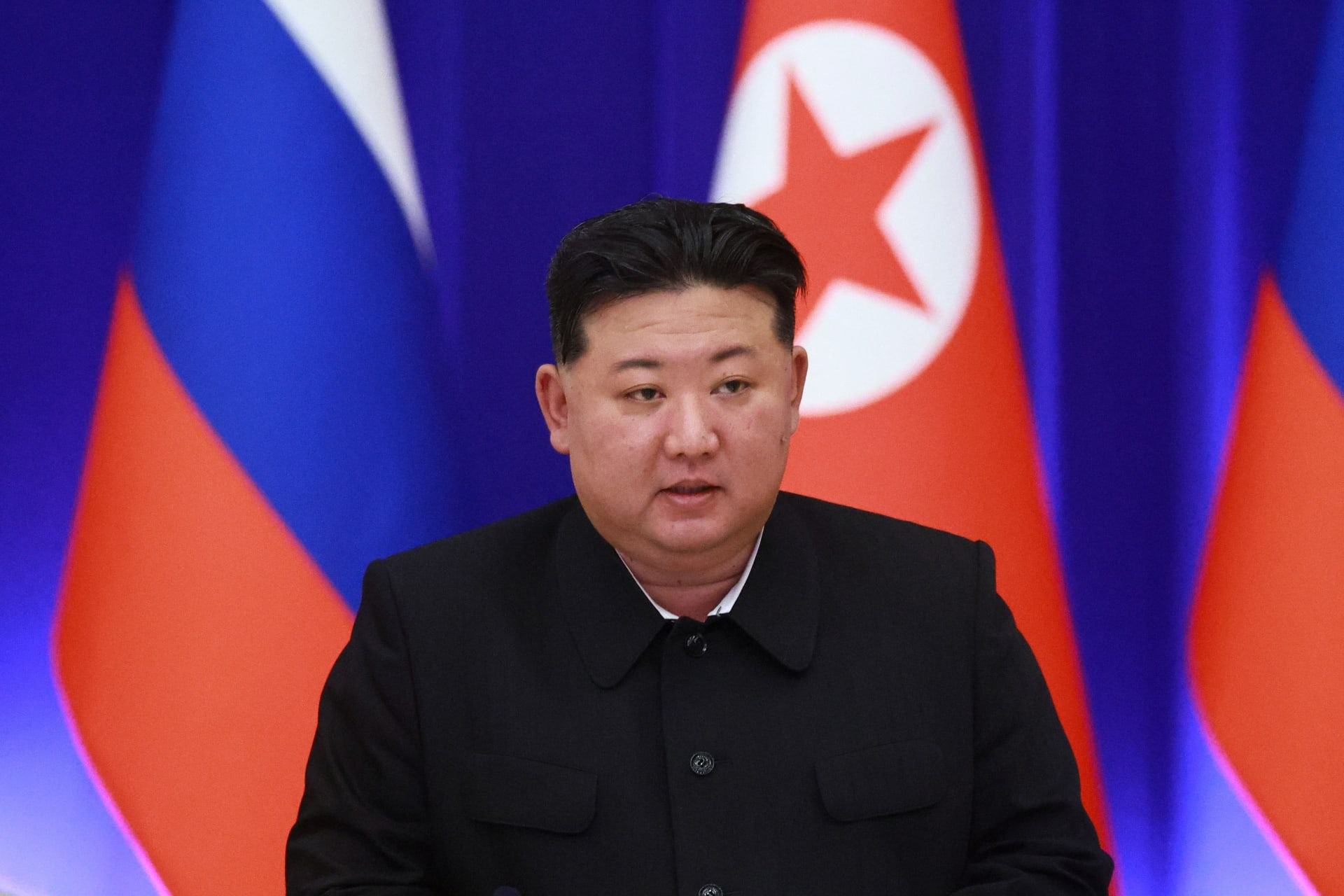
North Korean leader Kim Jong Un has confirmed that his country will not relinquish its status as a nuclear-armed state, stating that North Korea will permanently enhance its nuclear strength. This declaration was made during a speech at the legislative council in Pyongyang, where he labeled South Korea as the most hostile nation towards his country.
In his address, Kim indicated that Pyongyang will continue to bolster its nuclear capabilities to counter strategic threats, asserting that maintaining nuclear power is the correct strategic choice. He justified the development of the nuclear arsenal, claiming that nuclear weapons have contributed to deterring wars, allowing the state to direct resources towards economic growth and improving living standards.
Details of the Address
During his speech, Kim stated, "We will continue to solidify our status as a nuclear-armed state as an irreversible path, intensifying our struggle against hostile forces vigorously." He emphasized that expanding the "defensive nuclear deterrent" is essential for national security and regional stability, noting that North Korea will respond forcefully to any violations by South Korea, which he described as the "most hostile state."
Kim also criticized the United States, labeling its actions as "state terrorism" and "aggression," referring to American and Israeli attacks on Iran. Pyongyang had previously expressed support for the Iranian people's choice of the new Supreme Leader, Ayatollah Mojtaba Khamenei, who took office following his father's death in strikes on Tehran.
Background & Context
These statements come at a sensitive time as tensions escalate on the Korean Peninsula. Since Kim Jong Un assumed power, North Korea has adopted a hardline policy towards its southern neighbor, abandoning the peaceful reunification policy that had been in place for decades. Instead, Pyongyang has redefined its relationship with Seoul as one between two hostile states.
Simultaneously, South Korea continues to seek ways to enhance security and regional cooperation, with the presidential office in Seoul commenting on Kim's statements, indicating that these remarks "do not serve peaceful coexistence," and that dialogue and cooperation are the means to ensure mutual security and prosperity.
Impact & Consequences
Kim's statements indicate a potential escalation in military tensions in the region, as these policies may lead to a new arms race on the Korean Peninsula. Additionally, the enhancement of North Korea's nuclear capabilities could raise concerns among neighboring countries, including Japan and China, complicating peace efforts in the area.
These developments also signal how American policy in the region is influencing dynamics, as Washington adopts a pressure strategy on Pyongyang, further complicating relations among the three nations. Such statements may increase pressure on South Korea to develop stronger defensive strategies.
Regional Significance
Although events on the Korean Peninsula may seem distant from the Arab region, the escalation of nuclear tensions could impact regional security overall. An increase in nuclear armament in any area could lead to arms races in other regions, including the Middle East, where many countries are experiencing ongoing conflicts.
Moreover, North Korea's hardline stances may bolster the positions of countries seeking nuclear weapons, complicating global disarmament efforts. In this context, Arab nations must closely monitor these developments, as any escalation could affect the stability of the region.
In conclusion, Kim Jong Un's statements reflect Pyongyang's hardline tendencies, raising concerns about the future of regional and international security, making it essential to enhance dialogue and cooperation among nations to achieve peace and stability.