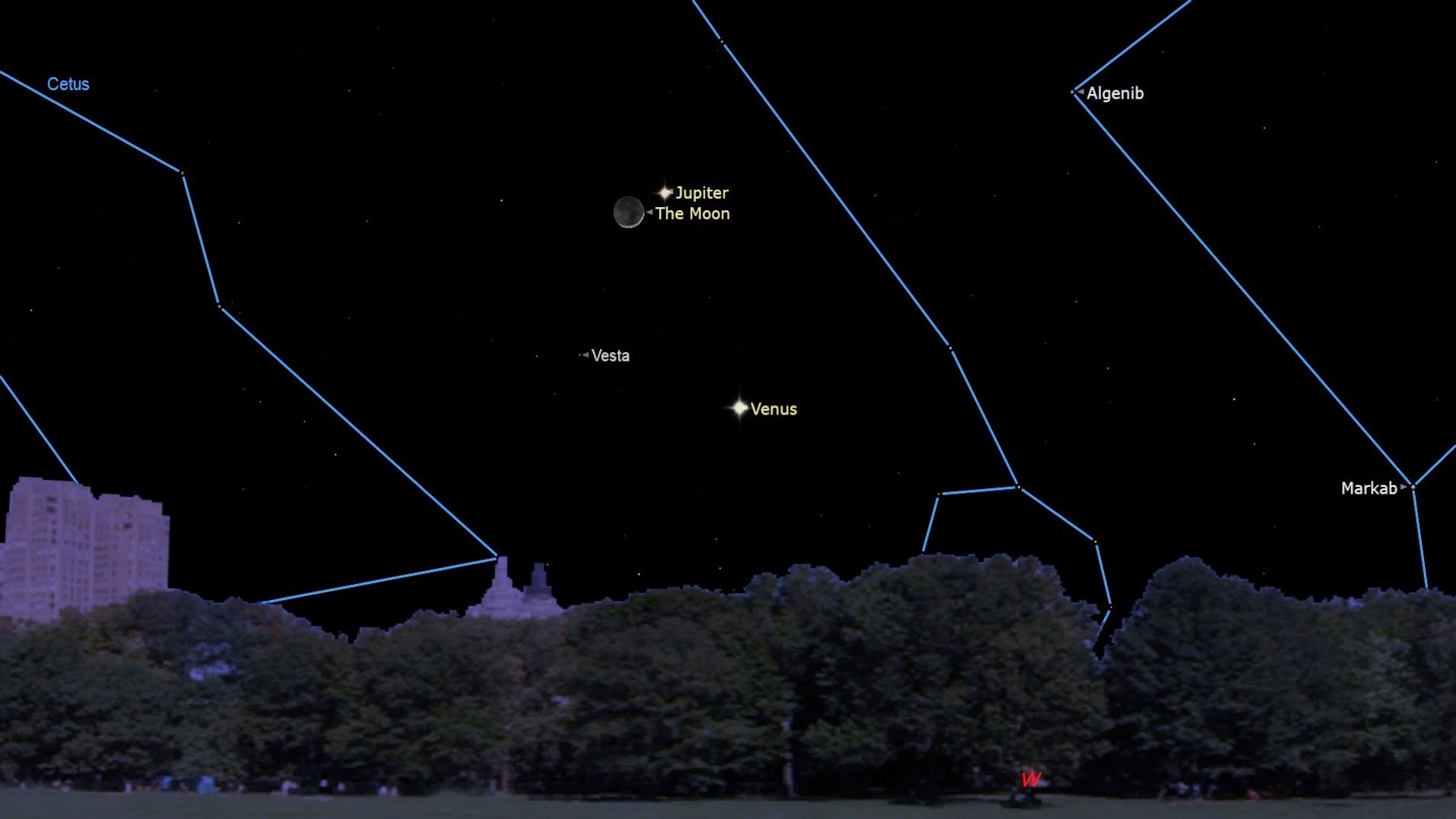
A remarkable astronomical event was witnessed in the skies of the Arab world, where the Moon was observed in conjunction with the stars Antares and Niyat 2. This celestial event presents a rare opportunity for astronomy enthusiasts and sky watchers.
The conjunction of the Moon with stars is a natural phenomenon that captivates both scientists and astronomy lovers, as the Moon appears close to the stars, creating a stunning scene in the sky. This conjunction was observed in several Arab countries, where enthusiasts gathered to witness this astronomical phenomenon.
Details of the Event
The conjunction of the Moon with the stars Antares and Niyat 2 was observed late at night, with the Moon in its full phase, enhancing the beauty of the scene. Photos captured during this conjunction revealed intricate details of the stars and the Moon, allowing enthusiasts to share their experiences on social media.
Antares is one of the bright stars in the constellation Scorpius, while Niyat 2 is one of the stars contributing to this celestial gathering. Astronomers noted that this phenomenon occurs periodically but requires specific conditions for clear visibility.
Background & Context
Historically, astronomical conjunctions were considered significant signs in ancient cultures, believed to carry special meanings. In modern times, these phenomena have attracted the attention of scientists and researchers who seek to understand their impacts on the environment and climate.
Astronomical observatories in Arab countries are among the most modern in the region, contributing to the observation of such phenomena and providing accurate information to the public. There is also a growing interest among youth in the field of astronomy, reflecting a desire to explore the universe and understand its mysteries.
Impact & Consequences
Observing astronomical conjunctions is an opportunity to enhance scientific awareness among new generations, potentially inspiring youth to engage in science and technology fields. Additionally, these phenomena contribute to the promotion of astronomical tourism, where trips can be organized to observe major astronomical events.
Moreover, these phenomena foster cooperation among Arab countries in the field of astronomical research, opening new horizons for scientific collaboration and cultural exchange.
Regional Significance
Astronomical conjunctions are part of the cultural heritage of many Arab countries, often used in folklore and myths. These phenomena also contribute to enhancing cultural identity and deepening scientific understanding.
In conclusion, observing the conjunction of the Moon with the stars Antares and Niyat 2 is a wonderful opportunity for astronomy enthusiasts and reflects the progress made by Arab countries in the field of astronomical sciences.