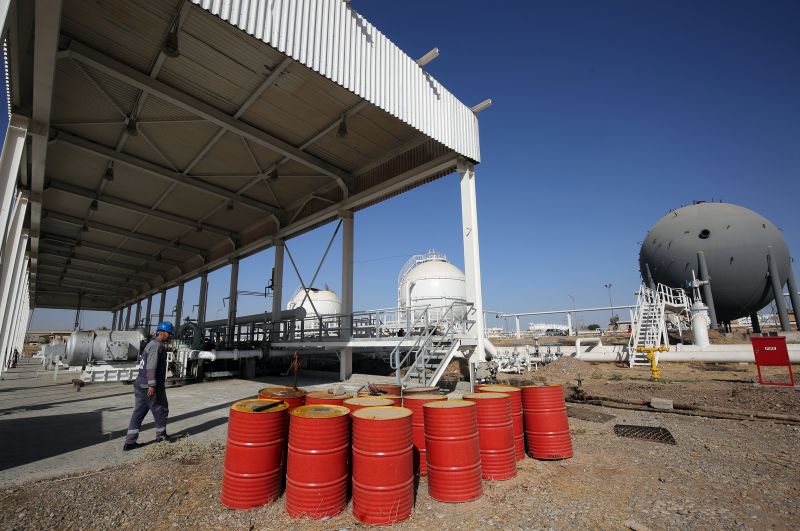
Oil prices dropped by more than $1 early Thursday, as markets await a speech from US President Donald Trump that could announce a reduction in American intervention in the Iranian war. Brent crude fell by $1.16, or 1.15%, to $100 per barrel, while West Texas Intermediate crude decreased by $1.41, or 1.41%, to $98.71 per barrel.
This decline follows Trump's statement to Reuters that the United States will end the war in Iran "very soon," which has increased optimism in the markets. IG analyst Tony Sycamore noted that "intense selling in the markets may have accelerated with rising hopes that the Iranian conflict may be nearing its end."
Details of the Event
Despite the prevailing optimism in the markets, a US exit from the conflict does not guarantee the reopening of the Strait of Hormuz, a vital corridor for global oil trade. Sycamore warned that "if the US leaves without a formal ceasefire agreement that guarantees freedom of passage, risks will remain, potentially leading to continued increases in oil prices."
It is noteworthy that threats to maritime navigation are increasing as the conflict escalates in the region. A tanker chartered by Qatar Energy was attacked by an Iranian missile in Qatari waters, raising concerns about the safety of oil shipments in the area.
Background & Context
Historically, the conflict in Iran has had a significant impact on global oil markets. Oil prices have experienced sharp fluctuations over the past years due to political and military tensions in the region. As the conflict escalates, markets have been directly affected, leading to a noticeable increase in prices.
Moreover, Europe, which has been shielded from the effects of the conflict due to shipments contracted before the war began, may face difficulties this April, as the head of the International Energy Agency warned that supply disruptions will begin to impact the European economy.
Impact & Consequences
Oil prices are a vital indicator of the global economy, and any fluctuations in them affect many sectors. If the conflict in Iran continues, it could lead to rising oil prices, negatively impacting the global economy and increasing the cost of living for consumers.
On the other hand, if the United States succeeds in reducing its intervention in the conflict, it could lead to price stabilization, benefiting the global economy. However, the question remains: will the United States be able to exit safely without jeopardizing its interests and those of its allies?
Regional Significance
For Arab countries, any changes in US policy towards Iran could directly affect security and stability in the region. Gulf countries, in particular, rely heavily on stable oil prices, and any escalation in the conflict could increase security risks.
In conclusion, the situation in the region remains complex, with political and economic interests intertwined. Monitoring developments in the Iranian conflict will be crucial for understanding future trends in oil markets.