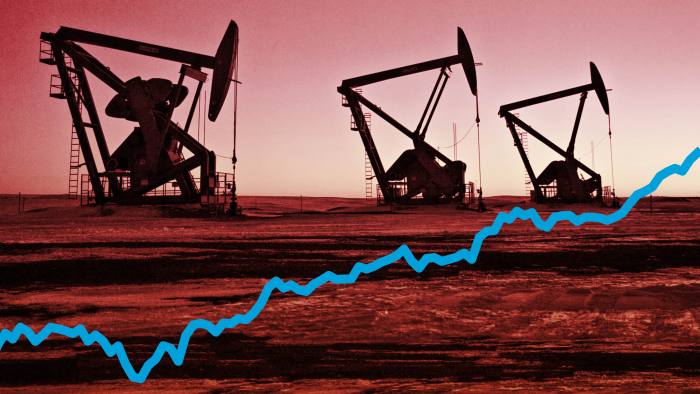
Global oil prices rose in Friday's trading sessions, recovering part of the heavy losses incurred in the previous session, driven by escalating geopolitical tensions in the Middle East. Chief among these developments was Hezbollah's rejection of a new ceasefire proposal in Lebanon, alongside the suspension of oil loading operations at Oman's Port of Fahal following an explosion near its facilities.
Brent crude futures climbed by 33 cents, or 0.35%, to reach $95.36 per barrel, after suffering a loss of 2.84% in the previous session. Meanwhile, West Texas Intermediate (WTI) crude rose by just 2 cents, or 0.02%, recording $93.06 per barrel, following a sharp decline of 3.1%.
Incident Details and Supply Security Concerns
According to maritime and media sources, Port of Fahal in the Sultanate of Oman, one of the region's primary oil export terminals, halted crude loading operations following an explosion near floating loading docks. Reports suggest a potential drone attack caused the blast. This development triggered fresh concerns regarding oil supply security in the Gulf region, particularly as military tensions continue in vital shipping lanes experiencing increasing commercial vessel traffic.
In the same context, Naim Qassem, Secretary-General of Lebanese Hezbollah, rejected an agreement mediated by the United States between Israel and the Lebanese government to halt fighting, complicating efforts to achieve de-escalation on the southern front. Iran, the party's main backer, considers reaching a ceasefire in Lebanon a prerequisite for any progress in peace talks with Washington, organically linking the Lebanese file to the suspended nuclear negotiations that have been stalled for months.
Diplomatic Context and Strategic Background
These developments come amid cautious anticipation of the results of US-Iranian talks, which have witnessed a prolonged stalemate. US President Donald Trump confirmed progress in talks between Israel and Lebanon, stating that Lebanon deserves to enjoy peace, yet recent military escalation threatens to frustrate these Washington-sponsored diplomatic efforts. These statements reflect a contradiction between diplomatic optimism and the inflamed field reality.
It is noteworthy that the Strait of Hormuz, through which approximately one-fifth of global oil supplies pass, is witnessing limited navigation movement and increasing security tensions, posing significant geostrategic risks to global energy markets. Historically, this strategic passage has witnessed several crises that directly affected crude prices, particularly during periods of confrontation between Tehran and the West, specifically following the US withdrawal from the nuclear deal in 2018.
Market Impact and OPEC Response
Despite geopolitical pressures, OPEC maintained its expectations for global oil demand growth at 1.2 million barrels per day for the current year. Organization Secretary-General Haitham Al-Ghais confirmed that these expectations remain stable despite the Middle East conflict and threats to close the Strait of Hormuz, reflecting the organization's confidence in the market's ability to absorb geopolitical shocks and the flexibility of available supplies from member states.
On the other hand, shipping data revealed a sharp collapse in Iranian oil exports, which fell to their lowest levels in six years, due to the tightened US maritime blockade. Conversely, weak demand in China, the world's largest oil importer, contributed to pressuring both Iranian and global oil prices, creating a complex equation between supply and demand in a market oscillating between geopolitical fears and macroeconomic indicators.
Regional Implications for Arab Economies
Arab regional economies are directly affected by oil price fluctuations, as Gulf states rely on crude revenues as a primary source of national income. Relative price stability at elevated levels supports economic diversification plans and ambitious government budgets, while sudden shocks could lead to disruptions in local financial markets and declines in sovereign asset values.
Furthermore, security developments in Lebanon and Oman raise regional concerns regarding maritime navigation security and supply chains, particularly with escalating threats in the Red Sea and Arabian Gulf. International financial institutions warn that declining global oil inventories could lead to sharp price increases during the third quarter of the year, placing Arab consumers before new inflationary challenges that may reflect on basic goods and services prices.
As the week concluded, both benchmark crudes were heading to record their first weekly gains in three weeks, with West Texas Intermediate rising by more than 6%. This reflects market caution and anticipation of what the coming days will reveal regarding negotiations and field developments in the region, amid continued uncertainty regarding the future of global supplies.