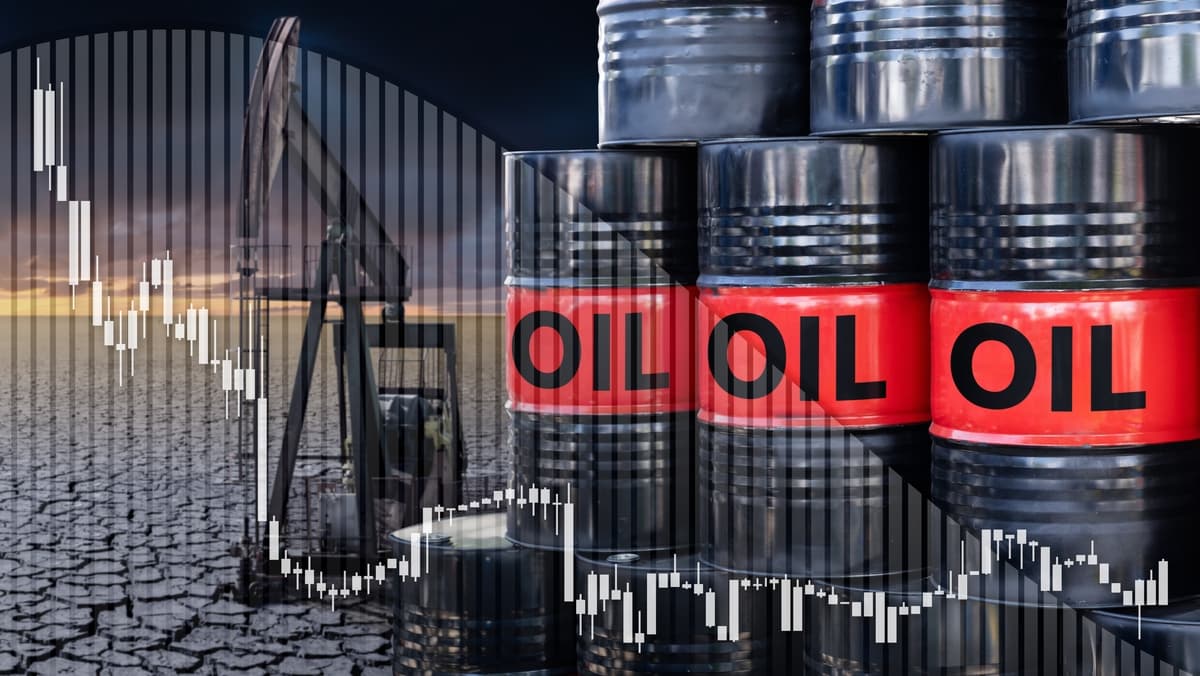
Oil prices saw a significant rise at the close of trading on Tuesday, with Brent crude closing above the $111 per barrel mark. This increase followed reports indicating U.S. President Donald Trump's dissatisfaction with Iran's recent proposal regarding the reopening of the Strait of Hormuz and the resolution of ongoing disputes.
According to the website "Argaam", June Brent crude futures increased by 2.80%, equivalent to $3.03, reaching $111.26 per barrel. Meanwhile, June West Texas Intermediate (WTI) futures rose by 3.69%, or $3.56, to settle at $99.93 per barrel.
Details of the Event
This price surge comes after the "New York Times" reported that President Donald Trump informed his advisors of his rejection of the Iranian proposal, which included reopening the Strait of Hormuz in exchange for lifting the maritime blockade, while postponing discussions on the nuclear issue. This rejection reflects the ongoing tensions between the United States and Iran, which continue to cast a shadow over global oil markets.
U.S. Secretary of State Marco Rubio expressed deep skepticism regarding the Iranian offer, stating in an interview with "Fox News" that Washington would not tolerate a regime seeking to "normalize" Tehran's control over an international waterway and impose transit fees. These statements reflect the U.S. administration's hardline stance towards Iran, increasing uncertainty in oil markets.
Background & Context
Historically, the Strait of Hormuz is one of the world's most crucial waterways, through which approximately 20 million barrels per day of crude oil, fuel, and petrochemicals from the Middle East pass. Any disruption in this corridor can significantly impact global oil prices.
In recent years, the region has experienced escalating tensions due to political and military conflicts, raising concerns about supply disruptions. These fears have intensified with the rising tensions between Iran and the United States, especially following Washington's withdrawal from the Iranian nuclear agreement.
Impact & Consequences
The rise in oil prices has significant implications for the global economy, affecting transportation and production costs, which may lead to increased prices for consumers. Additionally, higher prices could impact oil-importing countries, increasing economic pressures on them.
Conversely, oil-producing countries may benefit from rising prices, boosting their revenues and granting them more leverage in political and economic negotiations. This delicate balance between consumers and producers makes oil markets a continuous battleground.
Regional Significance
For Arab countries, the rise in oil prices may have varying effects. Producing countries like Saudi Arabia and the UAE could benefit from increased revenues, while importing countries may face economic challenges due to higher energy costs.
In light of these circumstances, Arab nations must devise effective strategies to cope with oil price fluctuations, whether through diversifying income sources or improving energy efficiency. These steps will be crucial to ensuring sustainable economic growth in the region.
In conclusion, oil prices remain under pressure from geopolitical tensions, making it essential to closely monitor developments. Market stability depends on how the involved parties address these challenges.