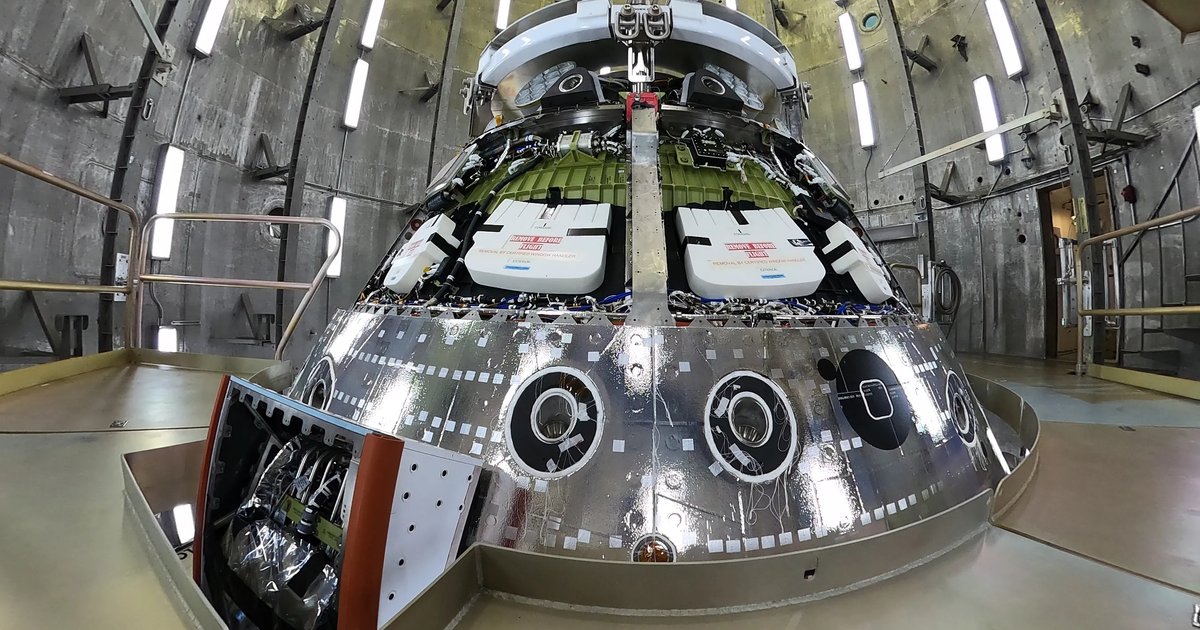
The Orion spacecraft, part of the Artemis 2 mission, has commenced its journey to the Moon after successfully completing critical maneuvers. On the morning of Sunday, April 5, the spacecraft executed two trajectory corrections, underscoring the precision in planning and execution for this historic mission.
The first maneuver, known as lunar trajectory injection, is the primary engine that propelled the spacecraft toward the Moon. Following this maneuver, Orion entered a free return trajectory, a path that allows it to utilize the gravitational forces between Earth and the Moon, thereby reducing the need for additional propulsion. This strategy represents an innovative approach by NASA to mitigate risks associated with space travel.
Event Details
If all goes as planned, Orion will enter the Moon's gravitational field on Monday, April 6, and will begin orbiting the Moon. This moment will be historic, as the astronauts will be able to view the far side of the Moon from the spacecraft's windows, making them the first humans to see this side of the Moon in its entirety.
As they approach the Moon, the astronauts will view Earth from a distance of approximately 406,771 kilometers, setting a record for the farthest distance humans have traveled from Earth. This experience will be unique, as the astronauts will witness a sight that no one has seen before.
Background & Context
The Artemis 2 mission is part of a larger program aimed at returning humans to the Moon by 2024. This program is integral to NASA's vision for future Mars exploration. Historically, there have been numerous lunar missions, but this mission represents a new return of humans to the Moon after decades of absence.
In 1969, the Apollo 11 mission was the first to land on the Moon's surface, and since then, there have been multiple attempts to explore the Moon. However, the Artemis program signifies a qualitative leap in this field, focusing on sustainability and scientific research.
Impact & Consequences
This mission is a significant step not only for NASA but also for science and technology in general. The success of the Artemis 2 mission could open doors to further space explorations, including missions to Mars. Additionally, this mission enhances international cooperation in space, with many countries participating in the development of the technologies necessary for these journeys.
Moreover, this mission could inspire future generations of scientists and engineers, emphasizing the importance of education in the fields of science, technology, engineering, and mathematics.
Regional Significance
For Arab countries, this event represents an opportunity to boost interest in space science and technology. Many Arab nations have begun developing their own space programs, such as the United Arab Emirates, which launched the Hope Probe to Mars. The success of the Artemis 2 mission could serve as an impetus for Arab countries to invest in space programs and enhance regional and international cooperation in this field.
In conclusion, Orion's journey to the Moon represents a historic step in space exploration, opening new horizons for international collaboration and scientific research. The success of this mission will mark a milestone in the history of space and reinforce the importance of future explorations.