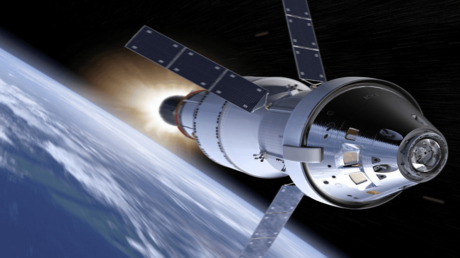
NASA has announced that the crew of the Orion spacecraft, participating in the Artemis 2 mission, has completed its lunar observation mission and has now begun its journey back to Earth. This mission is part of NASA's efforts to explore deep space and return humans to the Moon.
The Artemis 2 mission is a crucial step in the Artemis program, which aims to return to the Moon by 2024. The spacecraft was launched on a historic journey around the Moon, where it gathered valuable data about the lunar environment, contributing to the planning of future missions.
Event Details
During the Artemis 2 mission, the crew conducted scientific experiments and the spacecraft captured a series of unique images of the Moon. These images will help scientists gain a better understanding of the Moon's terrain and potential resources that could be exploited in the future. Additionally, the spacecraft's systems were tested under real space conditions, enhancing its readiness for upcoming missions.
The return to Earth will take several days, with the spacecraft scheduled to land in the Pacific Ocean. After landing, the crew and the spacecraft will be recovered by rescue teams, marking a successful conclusion to an important exploratory mission.
Background & Context
The Artemis 2 mission is part of a larger vision by NASA, which aims to establish a permanent human presence on the Moon. This vision includes the creation of a lunar base that could serve as a launch point for Mars exploration. Historically, there have been previous attempts to explore the Moon, but the Artemis program represents a renewed effort after decades of inactivity.
Through this mission, NASA seeks to enhance international cooperation in space, with many countries participating in technology development and involvement in space missions. This collaboration reflects the importance of space as an area for scientific research and technological advancement.
Impact & Consequences
The success of the Artemis 2 mission could open doors for further investments in the space sector, fostering innovation and creating new job opportunities in this field. Furthermore, this mission reinforces the United States' position as a leading power in space exploration.
Advancements in space exploration may also lead to the development of new technologies that can be utilized in various fields, such as communications and energy. These technologies could contribute to improving the quality of life on Earth.
Regional Significance
The successes of American space missions serve as an inspiration for many Arab countries that are seeking to develop their own space programs. Some nations, like the United Arab Emirates, have launched ambitious space projects, reflecting a growing interest in space exploration.
Arab cooperation in the field of space could lead to shared achievements, enhancing scientific and technological capabilities in the region. Additionally, investments in this area could contribute to achieving sustainable development.
The return journey of the Orion spacecraft to Earth represents an important step in the journey of space exploration, opening new horizons for international cooperation and innovation in this field. As technology continues to advance, we may witness even greater achievements in the near future.