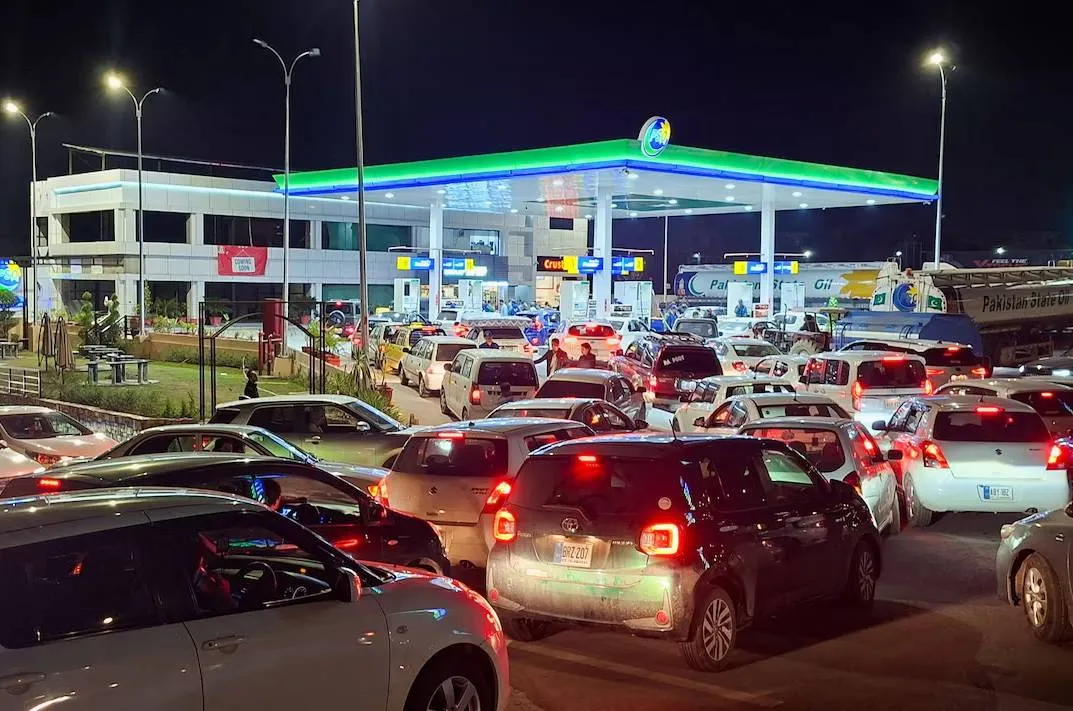
Pakistani Prime Minister Muhammad Shehbaz Sharif announced a new support package that includes a reduction in gasoline prices by 80 rupees per liter, bringing the price down to 378 rupees from 458 rupees. This move is part of the government's efforts to tackle the economic challenges facing the country, with the decision being made just a day after the increase in diesel and gasoline prices for consumers.
Sharif explained that the reductions will be achieved by cutting the government tax imposed on petroleum products, indicating that this decision aims to support motorcycle riders, cargo vehicles, and passenger buses. He also confirmed that the new price will remain stable throughout the next month.
Details of the Announcement
In a televised address, Shehbaz Sharif stated that the federal government and provincial governments will work together to mobilize resources to support citizens amid difficult economic conditions, particularly those resulting from the conflict in the Middle East. He also mentioned the allocation of support for the transportation sector, where 100 rupees will be granted for each liter to owners of motorcycles and cargo vehicles, in addition to a monthly support of 70,000 rupees for small trucks, 80,000 rupees for large trucks, and 100,000 rupees for passenger buses.
In a gesture of solidarity with citizens, Sharif announced that all members of the federal cabinet will forgo their salaries for the next six months to contribute additional funds for relief measures for the people.
Background & Context
The reduction in gasoline prices follows a sharp increase in diesel and gasoline prices by the government, with diesel prices rising by 54.9% to 520.35 rupees per liter and gasoline prices increasing by 42.7% to 458.40 rupees per liter. The government attributed this increase to the rise in global oil prices due to the conflict in the Middle East.
Last month, the government raised fuel prices by approximately 20%, significantly impacting inflation rates and increasing pressure on the poor population in Pakistan. Pakistan primarily imports oil from Saudi Arabia and the UAE via the Strait of Hormuz, which is a vital corridor for oil flow.
Impact & Consequences
This decision is expected to alleviate financial pressures on citizens, especially amid the difficult economic conditions the country is experiencing. However, the sharp rise in global oil prices may continue to affect the Pakistani economy, potentially leading to increased inflation rates.
The government also faces significant challenges in managing its financial resources, particularly amid the disruptions caused by the conflict in the Middle East, which has affected energy prices overall. Sharif indicated that the poor are the most affected by these increases, necessitating swift and effective measures to support them.
Regional Significance
Arab countries are directly affected by rising oil prices, as many of these nations rely on oil revenues in their budgets. The ongoing price increases may lead to heightened economic pressures on oil-importing countries, necessitating precautionary measures to mitigate the effects of these hikes.
In conclusion, Pakistan's decision to reduce gasoline prices represents a positive step amid challenging economic conditions; however, challenges remain, and the government must take further actions to ensure price stability and support citizens in facing economic crises.