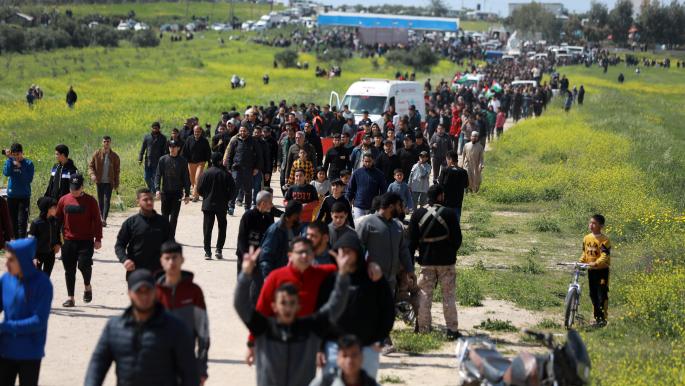
The 50th anniversary of Palestinian Land Day has become a unifying occasion for Palestinians around the world, whether in the occupied territories or in the diaspora. This day embodies Palestinian identity and the right of return, as Palestinians gather in various Arab and global countries to affirm their legitimate rights and demands.
Land Day, which falls on March 30 each year, dates back to 1976 when Israeli authorities confiscated land from Palestinians in the Galilee. This action was met with massive protests that resulted in the martyrdom of several Palestinians, making this day a symbol of the struggle against occupation.
Event Details and Activities
This year, the events saw significant participation from Palestinians both inside and outside the territories, as they organized marches and demonstrations in many cities. In the occupied territories, large crowds gathered in Palestinian cities, waving Palestinian flags and holding banners calling for an end to the occupation and the restoration of rights. Arab countries, such as Lebanon and Jordan, also witnessed solidarity events with Palestinians, reflecting ongoing Arab support for the Palestinian cause.
The activities also included cultural and artistic seminars, showcasing artworks that express Palestinian suffering, alongside lectures discussing the history of Land Day and its significance in Palestinian memory. Social media platforms were utilized to spread messages of solidarity and calls for Palestinian unity.
Background & Context
Land Day is not merely a historical commemoration; it is part of the ongoing struggle of the Palestinian people against Israeli occupation. Since 1948, Palestinians have faced numerous challenges, starting from the Nakba that led to their displacement, to current Israeli policies targeting their lands and rights. Land Day represents a moment for reflection on the history of the Palestinian struggle, highlighting the ongoing challenges they face.
Historically, Land Day marked a turning point in Palestinian consciousness, contributing to the strengthening of national identity and deepening the connection to the land. It also helped unify efforts among Palestinians both at home and abroad, making the Palestinian cause a global issue.
Impact & Consequences
The repercussions of Land Day extend beyond Palestinian borders, as this day serves as an opportunity to renew Arab and international support for the Palestinian cause. Amid current tensions in the region, Land Day helps spotlight Israeli violations and the necessity of achieving justice for Palestinians. It also strengthens the position of Palestinians in international forums, where this occasion is leveraged to call for an end to the occupation and the right to self-determination.
On the other hand, the celebrations of Land Day also reflect the challenges faced by Palestinians in the diaspora, as many strive to maintain their identity and culture amid the difficult circumstances they live in. This day reminds them of the importance of returning to their homeland and building a better future.
Regional Significance
Land Day has a significant impact on the Arab region, reflecting Arab solidarity with the Palestinian cause. Despite the political and economic crises faced by some Arab countries, support for the Palestinian cause remains one of the constants that unite Arab peoples. The events organized on this day enhance the spirit of unity and solidarity among Arabs, contributing to the strengthening of a shared Arab identity.
Moreover, Land Day is considered an opportunity to redirect attention to the Palestinian cause in international forums, where this occasion is used to advocate for achieving a just and comprehensive peace in the region. Supporting the Palestinian cause is an essential part of security and stability in the Arab region.
In conclusion, Land Day remains a symbol of the ongoing Palestinian struggle, reflecting the challenges faced by the Palestinian people in their quest for freedom and justice. Commemorating this anniversary reflects the commitment of Palestinians to their rights and emphasizes the importance of unity and solidarity in the face of occupation.