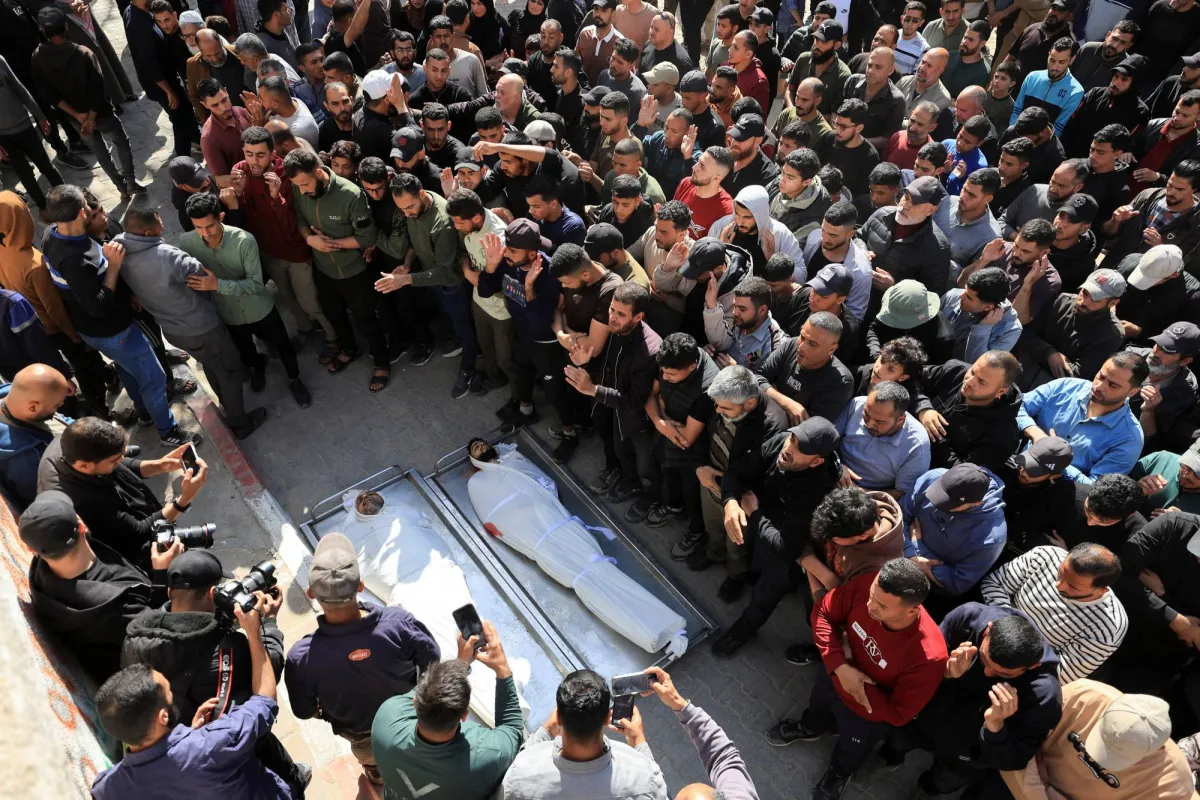
A Palestinian paramedic was killed and a citizen injured today, Wednesday, as a result of shelling and gunfire from Israeli forces in northern Gaza. This incident comes at a time when tensions in the region are escalating, with Israeli airstrikes continuing on various targets.
The Palestinian news agency "Wafa" reported that medical sources confirmed that paramedic Ibrahim Saqr was martyred due to an airstrike by the occupation near the Al-Tawam roundabout in northwestern Gaza. The sources also stated that the citizen who was injured by the occupation's gunfire was in the town of Beit Lahia in the northern part of the enclave.
Details of the Incident
This incident occurs in the context of rising violence in the region, where five Palestinian citizens were killed in the past 24 hours, including one whose body was recovered, while seven others were injured. According to the Gaza Ministry of Health, the death toll since the ceasefire on October 11 has risen to 823 dead and 2308 injured, with 763 bodies retrieved from under the rubble.
This escalation follows the Israeli army's announcement of the killing of Iyad Ahmad Abdul Rahman Shambari, head of the operations department in the military intelligence of the Hamas movement, in an airstrike in northern Gaza. The Israeli army claimed that Shambari played an active role in planning the massacre on October 7.
Background & Context
Historically, the Gaza Strip has witnessed a continuous escalation of military actions between Israeli forces and Palestinian factions, with airstrikes significantly increasing since the conflict began in March. The humanitarian situation in Gaza is worsening, as residents suffer from severe shortages of basic resources due to the ongoing blockade.
At the same time, Lebanon is experiencing the repercussions of the conflict, with a Lebanese soldier and his brother killed in an Israeli airstrike in southern Lebanon, further heightening tensions between Lebanon and Israel. Lebanese President Joseph Aoun condemned the attack, citing violations of international law.
Impact & Consequences
The military escalation in Gaza and southern Lebanon reflects the ongoing instability in the region, affecting regional security and increasing tensions between nations. The continuation of Israeli airstrikes may exacerbate the humanitarian situation in Gaza, necessitating international intervention.
There are growing concerns that these events could lead to a larger escalation in the conflict, as military operations continue from both sides, threatening to ignite a full-scale war in the region. Warnings from officials indicate that the situation could spiral out of control if urgent steps are not taken to halt the violence.
Regional Significance
The events in Gaza and Lebanon have implications for the broader Arab situation, raising concerns among Arab nations about the escalation of armed conflicts. These events also reflect the challenges faced by Arab countries in achieving stability and security under the current circumstances.
In conclusion, the situation in Gaza and southern Lebanon remains under close observation, as the world looks for peaceful solutions to end the cycle of violence and restore hope to the affected populations.