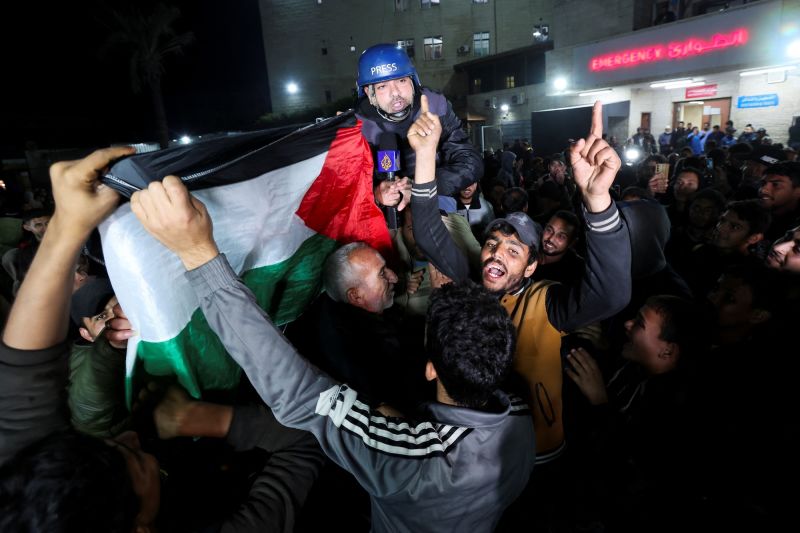
Palestinian Prime Minister Mohammed Mustafa confirmed during a press conference in Al-Bireh that the ceasefire announced in Gaza since October 10 has not been fully implemented, noting the continued occurrence of daily incidents in the sector. He explained that the humanitarian situation in Gaza requires the opening of all crossings to facilitate the entry of humanitarian aid and necessary materials for reconstruction.
Mustafa pointed out that Israel continues to exert political, economic, and security pressures on the West Bank, while settlement activities persist. He highlighted that Israel has withheld Palestinian tax revenues for over a year, adversely affecting the Palestinian Authority's ability to pay its employees' salaries.
Details of the Situation
Despite the declaration of the ceasefire, tensions remain high in Gaza, where the region is subjected to airstrikes by Israeli forces. Mustafa indicated that the ceasefire has not been fully realized, as daily incidents continue to disrupt peace in the sector.
He also called for the immediate withdrawal of Israeli forces from Gaza, emphasizing that the humanitarian situation necessitates urgent action to provide the required assistance to affected populations.
Background & Context
Historically, Gaza has witnessed numerous armed conflicts between Palestinian factions and Israel, leading to a deterioration of humanitarian conditions. Since 2007, Israel has imposed a blockade on Gaza, impacting the lives of millions of Palestinians in the sector.
In recent years, several countries and international organizations have attempted to mediate ceasefire agreements, but tensions persist, complicating the situation further.
Impact & Consequences
The conditions in Gaza affect regional stability, with increasing fears of escalating violence in the area. The ongoing Israeli blockade hinders reconstruction efforts and exacerbates the suffering of the population.
The Palestinian leadership seeks to work with the international community to pressure Israel to lift the blockade and provide humanitarian assistance, but political and economic pressures continue to obstruct these efforts.
Regional Significance
The Palestinian issue is one of the most prominent concerns in the Arab world, with events in Gaza eliciting widespread reactions in Arab countries. Calls for solidarity with the Palestinian people and lifting the blockade on Gaza are increasing, reflecting the importance of the issue in the Arab consciousness.
In conclusion, the situation in Gaza requires urgent international attention, as the continuation of humanitarian crises may lead to further deterioration in the region.