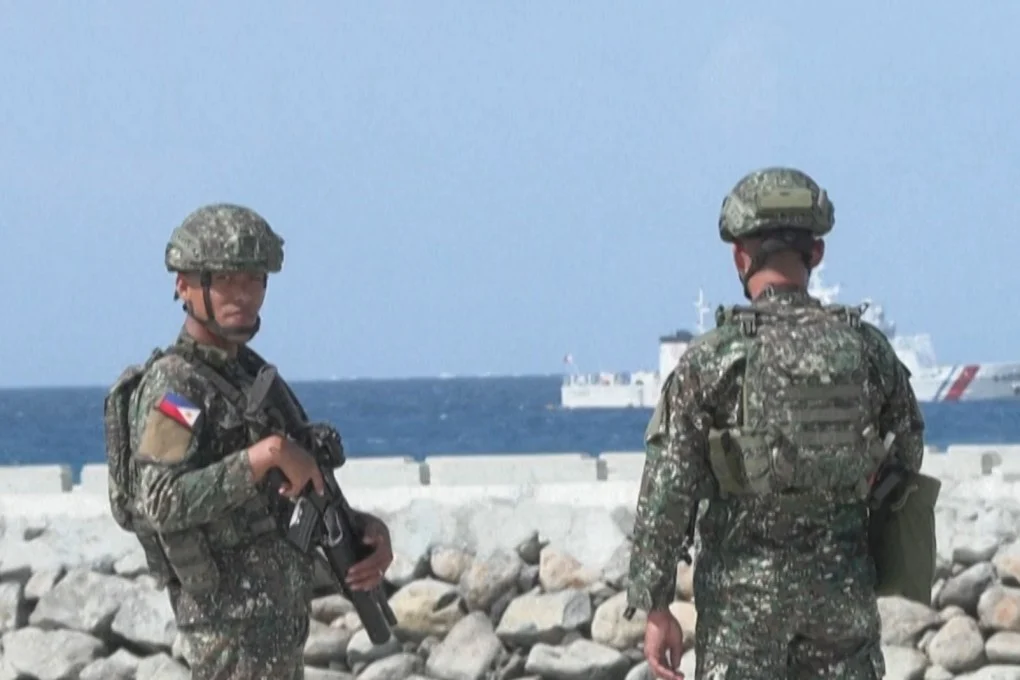
On Tuesday, the Philippines declared its intention to rename over 100 island features in the South China Sea, a step aimed at reinforcing its sovereignty over these disputed areas, which include regions claimed by China. This decision is made under an executive order from Philippine President Ferdinand Marcos Jr., at a time when the region is experiencing increasing tensions between the Philippines and China, particularly in the Spratly Islands, which have seen repeated confrontations between Philippine and Chinese vessels.
The features to be renamed include a range of islands and maritime elevations that the Philippines considers part of its territory. This decision is part of the Philippine government's efforts to strengthen its position against China's extensive claims in the South China Sea, where Beijing asserts sovereignty over most parts of the sea, despite an international ruling affirming the illegality of these claims.
Details of the Announcement
The renaming initiative is seen as part of the Philippines' strategy to bolster its national sovereignty, as the government seeks to assert its rights in the contested maritime areas. President Marcos Jr. indicated that this move reflects the Philippines' commitment to protecting its national interests and enhancing its presence in the South China Sea.
The features to be renamed include islands and maritime elevations that are experiencing intensified maritime activity, with Philippine vessels increasingly present in these areas to counter Chinese threats. This decision comes at a sensitive time, as tensions between the Philippines and China escalate due to Chinese military activities in the region.
Background & Context
Historically, the South China Sea has witnessed long-standing disputes among several countries, including the Philippines, China, Vietnam, and Malaysia. The Spratly Islands are considered one of the most contested areas, rich in marine resources and a vital corridor for global trade. In 2016, the Permanent Court of Arbitration in The Hague ruled in favor of the Philippines, affirming the illegality of Chinese claims; however, Beijing has not recognized this ruling.
The Philippines is seeking to strengthen its position through strategic alliances with other nations, including the United States, which is a key ally of the Philippines. Washington has expressed support for the Philippines' rights in the South China Sea, further complicating the situation in the region.
Impact & Consequences
The renaming initiative may escalate tensions between the Philippines and China, as Beijing is likely to respond with countermeasures. These could include increased military activity in the region or bolstering Chinese claims. Additionally, this step could affect economic relations between the Philippines and China, as Beijing is a major trading partner for the Philippines.
Conversely, this move may enhance support among Filipinos for their government, as they view it as an expression of national sovereignty. It may also encourage other countries in the region, such as Vietnam and Malaysia, to take similar stances against Chinese claims.
Regional Significance
Events in the South China Sea are of great importance to the Arab region, as any escalation in maritime disputes could impact global trade flows, including Arab trade. Furthermore, the Philippines' reinforcement of its position may encourage other countries in the region, such as Vietnam and Malaysia, to take similar steps to assert their sovereignty.
In conclusion, the Philippines' initiative to rename islands in the South China Sea represents part of its efforts to enhance its sovereignty in the face of regional challenges. As tensions continue, the future of the region remains uncertain, necessitating close monitoring by the international community.