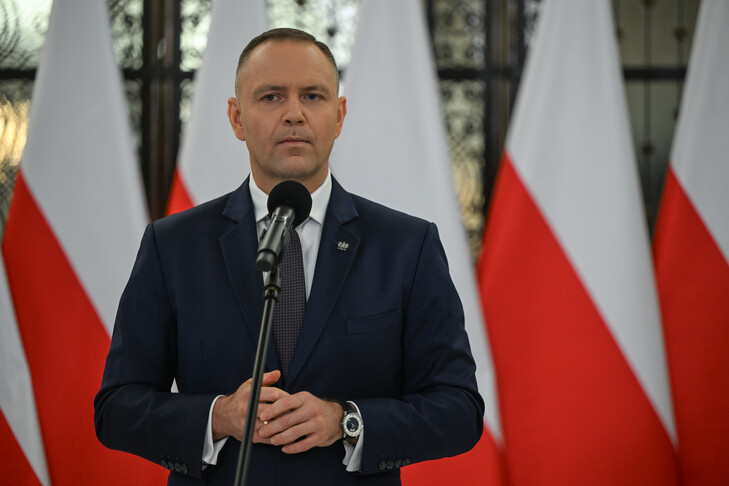
Polish Foreign Minister Radoslaw Sikorski emphasized the necessity of creating a rapid reaction force funded by the European Union to address security crises in the European neighborhood. This statement was made during a press conference where he highlighted the importance of Europe's ability to manage small-scale security operations independently.
Sikorski pointed out that strengthening Europe's defensive capabilities would contribute to increasing its credibility as an ally on the international stage. He affirmed that this step is not only essential for addressing current challenges but also for securing a more stable future for Europe.
Details of the Proposal
The call from the Polish Foreign Minister comes at a time when Europe is facing increasing security challenges, particularly amid geopolitical tensions in Eastern Europe. Sikorski noted that crises such as the conflict in Ukraine require a swift and effective response from European nations.
He added that the proposed force should be capable of intervening in crises quickly, reflecting Europe's ability to protect its interests and security. He stressed that this force must be supported by EU funding to ensure its sustainability and effectiveness.
Background & Context
Historically, Europe has heavily relied on NATO for security and defense matters. However, changes in the geopolitical landscape, including threats from Russia, have prompted many European countries to consider enhancing their defensive capabilities independently.
In recent years, we have witnessed movements by some European nations to bolster defense cooperation, such as the establishment of the European Shield, which reflects the desire of European countries to enhance their autonomy in defense matters.
Impact & Consequences
If the idea of establishing a rapid reaction force is implemented, it could significantly alter the security dynamics in Europe. European nations would become more capable of handling crises independently, potentially reducing reliance on NATO.
This shift may also lead to increased tensions with Russia, which could perceive this move as a threat to its security. Therefore, a delicate balance is needed between enhancing defensive capabilities and maintaining communication with the eastern neighborhood.
Regional Significance
The establishment of a rapid reaction force funded by the EU would mark a strategic shift in European security thinking, enhancing the ability of European nations to confront security challenges independently. This initiative could reshape alliances and influence the geopolitical landscape in the region.
In conclusion, the proposal for a rapid reaction force represents a significant step towards a more autonomous European defense strategy, reflecting a proactive approach to emerging security threats.