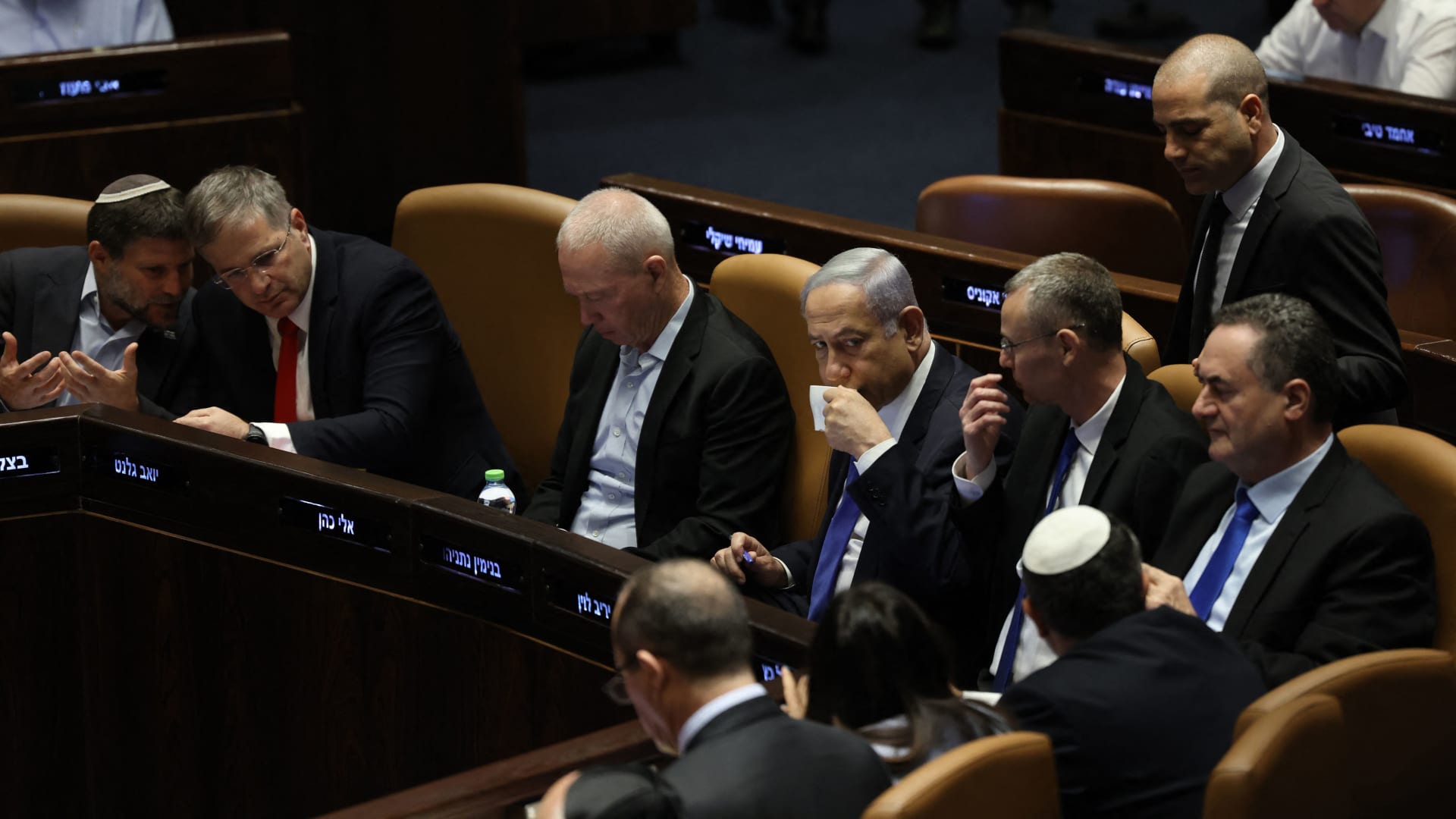
Israeli opposition leader Yair Lapid announced on Tuesday his intention to introduce a bill for a vote in the Knesset, aimed at designating the state of Qatar as a 'hostile state' to Israel. This announcement comes at a time when tensions are escalating between Israel and Qatar, especially after Lapid accused officials in Prime Minister Benjamin Netanyahu's office of receiving funds from Qatar, which is considered one of the largest financiers of terrorism in the world.
In a post on the platform X, Lapid confirmed that this law, known as the Oritch Law, will be put to a vote in the Knesset's general session, expressing confidence that there are supporters of this approach even within the ruling coalition. This statement has sparked mixed reactions within the Israeli political arena, with some parties arguing that this step could complicate relations with Qatar, which plays an important role in mediating between Israel and Hamas.
Details of the Event
This move follows a series of tense events between the two sides, as Israel bombed residential headquarters of Hamas in Doha on September 9, 2025, resulting in the martyrdom of one member of the Qatari internal security and five Palestinians. This aggression drew widespread condemnation from Arab and international communities, with many considering it a violation of Qatari sovereignty. The Qatari government responded to these attacks with denunciation, emphasizing the need to respect the sovereignty of nations and refrain from interfering in their internal affairs.
Lapid, who previously served as Prime Minister, pointed out that the actions of the current Israeli government towards Qatar reflect an unbalanced policy, ignoring Qatari efforts in mediating between Israel and Hamas. Qatar has successfully achieved a ceasefire in the war launched by Israel on the Gaza Strip since October 2023, highlighting the importance of its role in the region.
Background & Context
Historically, Qatar has played a pivotal role in mediating between conflicting parties in the Middle East, including Israel and Hamas. Its efforts have contributed to several ceasefire agreements, making it a key player in regional politics. However, its designation as a hostile state by some Israeli politicians may reflect a shift in this role and increase tensions between the two sides.
It is noteworthy that Israeli-Qatari relations have experienced numerous fluctuations over the years. While Qatar was considered a partner in some diplomatic efforts, the rising accusations from some Israeli politicians could threaten this dynamic. Additionally, Lapid's recent statements come in a complex political context, where some politicians seek to bolster their positions by criticizing the current government.
Impact & Consequences
Lapid's move could escalate tensions between Israel and Qatar, potentially impacting mediation efforts in the region. If this law is adopted, it could isolate Qatar from some regional and international alliances, making it more difficult to achieve peace in the area. Furthermore, this designation may negatively affect relations between Israel and other Arab countries that are seeking to improve ties with Tel Aviv.
Moreover, classifying Qatar as a hostile state may provoke reactions from other Arab nations, which may view this as a threat to their interests. This could lead to increased tensions in relations between Arab countries and Israel, strengthening the position of groups opposing normalization with Tel Aviv.
Regional Significance
This step serves as a test for Arab-Israeli relations under current circumstances. The region has witnessed significant transformations in recent years, with new alliances emerging and changes in policies. Designating Qatar as a hostile state could affect peace efforts in the region and deepen divisions among Arab nations.
Ultimately, the question remains about how this step will impact Israeli-Qatari relations and whether it will lead to greater escalation of tensions or open the door for further dialogue. Upcoming events will determine the trajectory of relations between the two sides and their impact on stability in the region.