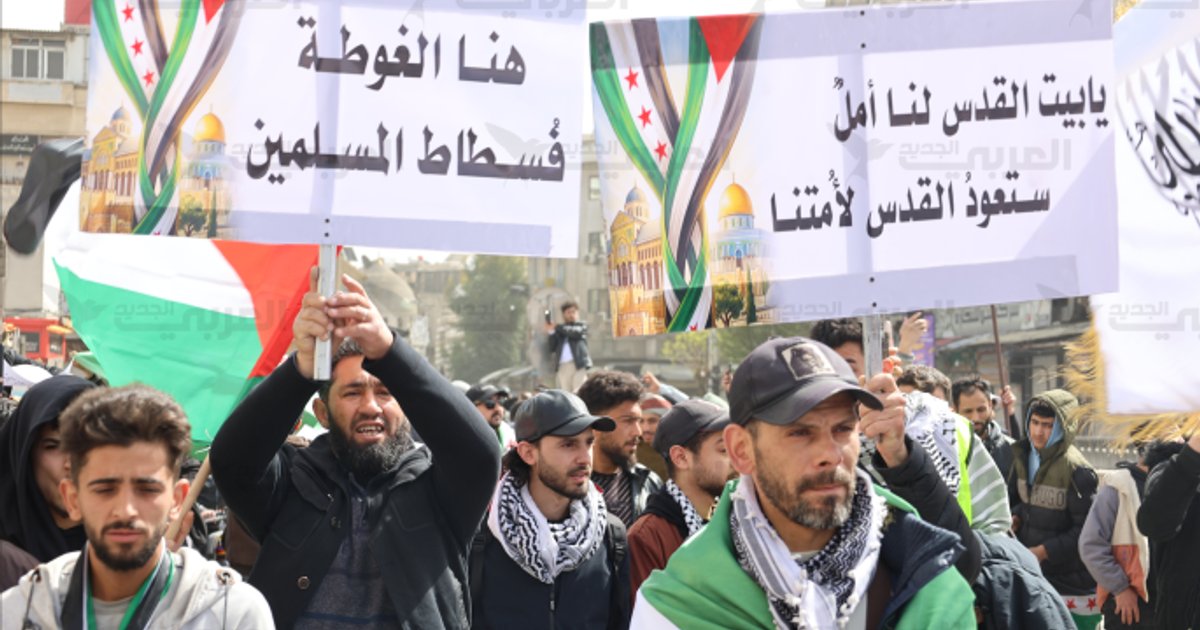
Protests continue in southern Syria, where demonstrators express their anger over violations by the Israeli occupation, affecting not only Palestinians but also local residents. These demonstrations reflect the increasing outrage towards Israeli policies.
Participants in these protests assert that the reasons for their anger extend beyond Palestinian issues, encompassing ongoing violations faced by local populations in southern Syria. In recent days, massive demonstrations have taken place in several areas, where protesters raised slogans condemning the occupation and demanding freedom and dignity.
Details of the Protests
The manifestations of protest in southern Syria are evident through large gatherings in cities such as Dar'a and Suwayda, where citizens take to the streets to express their rejection of the Israeli occupation. These protests have included calls for unity among Syrians and Palestinians in the face of common challenges. Some demonstrators have also highlighted the necessity of supporting resistance against the occupation.
Reports indicate that the protests coincide with an escalation of Israeli military operations in the region, further heightening tensions. Videos circulated on social media have shown large crowds chanting against the occupation and demanding justice.
Background & Context
Historically, the southern region of Syria has been a theater for conflicts and disputes, where Israeli and Syrian interests intersect. Since the onset of the Syrian conflict in 2011, the area has witnessed significant changes, including military interventions by Israel, which it justifies with security concerns.
Israel considers the presence of Iranian forces or Hezbollah near its borders a threat, prompting it to carry out military operations against targets in southern Syria. At the same time, local populations suffer the repercussions of these policies, facing bombardment and displacement.
Impact & Consequences
These protests underscore a growing public awareness of Israeli violations and may lead to an escalation of tensions in the region. They could also affect relations between Arab states and Israel, as calls for solidarity with Palestinians and Syrians in the face of occupation increase.
It is likely that these protests will stimulate further political and social activities in the region, as citizens seek to express their demands and achieve their rights. These dynamics may contribute to reshaping the political landscape in southern Syria.
Regional Significance
The protests in southern Syria are part of a broader wave of popular anger in the Arab world towards Israeli policies. This phenomenon reflects an increasing awareness of Palestinian and Syrian issues and emphasizes the importance of Arab solidarity in facing common challenges.
Moreover, these protests may inspire other protest movements in Arab countries, as citizens strive to express their demands and rights. Under the current circumstances, these dynamics could become a significant factor in shaping the future of the region.
In conclusion, the protests in southern Syria reflect a state of popular anger towards the Israeli occupation and highlight the challenges faced by local populations. These demonstrations are not merely a reaction to Israeli policies but express the aspirations of the Syrian people for freedom and dignity.