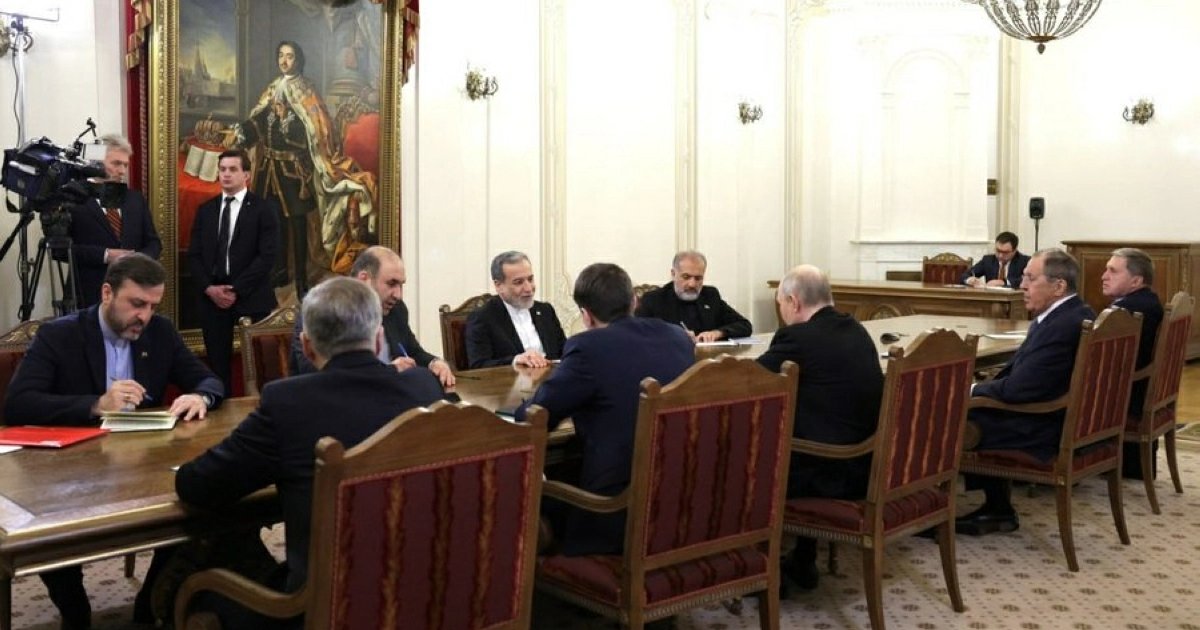
Iranian Foreign Minister Abbas Araghchi met with Russian President Vladimir Putin on Monday at the presidential library in St. Petersburg. During the meeting, Putin commended the Iranian people for their resilience in the face of American and Israeli pressures, emphasizing that Russia will do everything in its power to achieve peace in the Middle East.
Araghchi, who arrived in Russia to enhance consultations between Tehran and Moscow regarding regional and international issues, described the meeting as a good opportunity to discuss the developments of the war and review the current situation. He expressed confidence that these consultations would be particularly significant in strengthening coordination between the two countries.
Event Details
Araghchi's visit follows his meeting with Omani officials in Muscat, where Iran seeks to rally regional and international support for resuming negotiations. Russia has offered to mediate to restore calm in the Middle East following the American and Israeli strikes, which Moscow has strongly condemned. Russia has also proposed storing Iranian enriched uranium as a means to ease tensions, a suggestion that the United States has rejected.
During the meeting, Putin expressed hope that the Iranians could overcome what he described as a difficult period, affirming that Russia would do everything that serves the interests of Iran and the peoples of the region to achieve peace as soon as possible.
Background & Context
These developments coincide with ongoing tensions between the United States and Iran, as Washington and Tehran agreed to a temporary ceasefire on April 8 after more than a month of fighting that began with joint American and Israeli strikes. The truce has been affected by tensions surrounding shipping through the Strait of Hormuz and the United States imposing a blockade on Iranian ports.
In this context, Iranian President Masoud Pezeshkian confirmed that Tehran would not enter negotiations unless the blockade is lifted. The U.S. Central Command (CENTCOM) has indicated that its forces continue to enforce the blockade, preventing ships from entering or leaving Iranian waters.
Impact & Consequences
These meetings between Russia and Iran are seen as a sign of strengthening strategic relations between the two countries, especially amid increasing tensions in the region. Additionally, Russia's support for Iran could bolster Tehran's position in upcoming negotiations with the United States, potentially leading to changes in regional dynamics.
It is also important to note that recent events may serve as a catalyst to accelerate diplomatic efforts by concerned nations, as all parties seek to find a framework that ensures a permanent end to hostilities.
Regional Significance
These developments directly impact security and stability in the Arab region, as any escalation in tensions between Iran and the United States could negatively affect neighboring Arab countries. Furthermore, the strengthening of relations between Iran and Russia may lead to a shift in the balance of power in the region.
In conclusion, hopes remain pinned on the success of diplomatic efforts to achieve lasting peace in the Middle East, as cooperation between major powers like Russia and Iran could have a significant impact on the region's future.