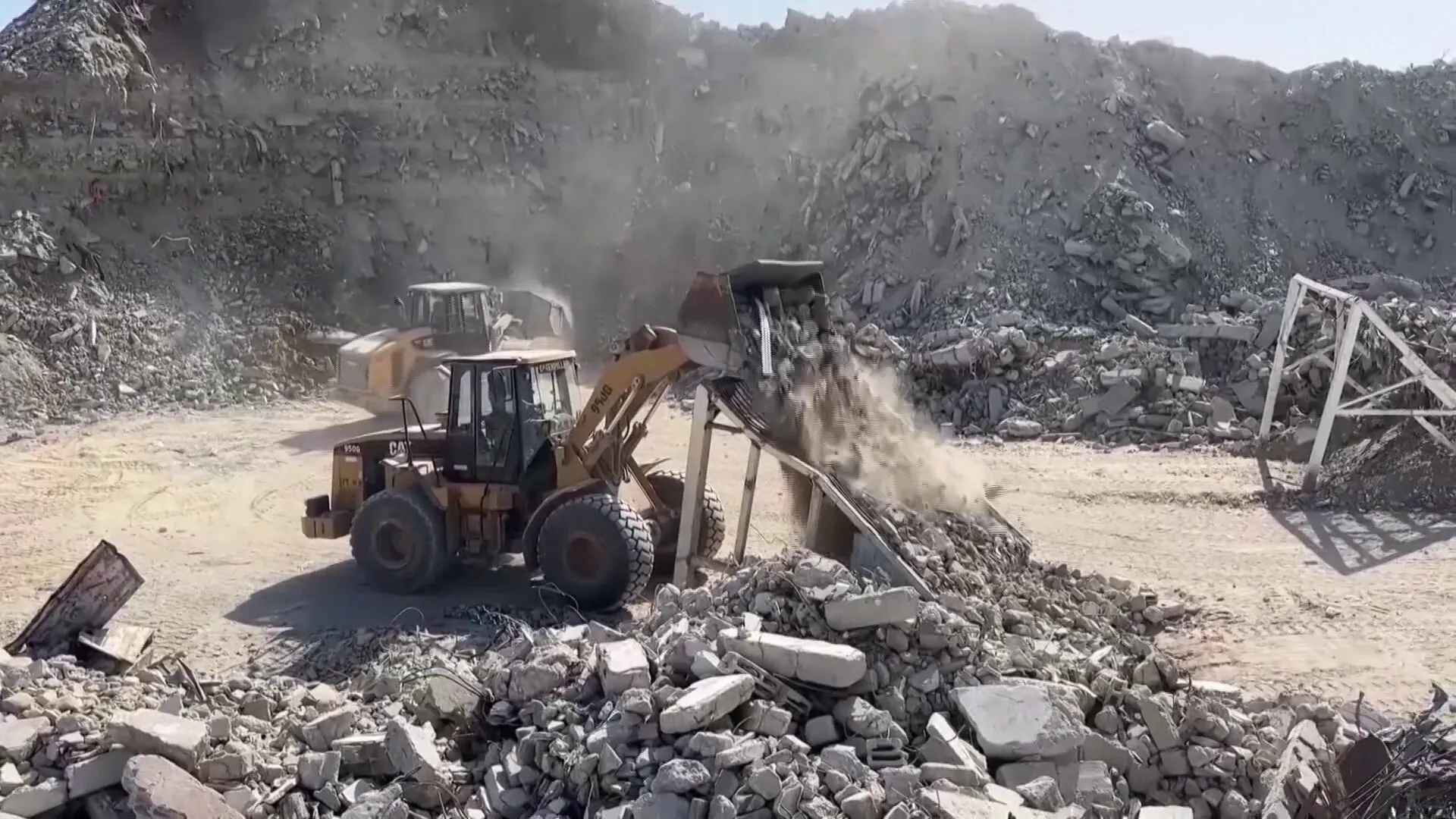
Amid the challenging conditions in the Gaza Strip, Palestinians continue their efforts to rebuild their lives by converting the rubble of destroyed buildings into roads that contribute to restoring normalcy. These initiatives arise despite the significant challenges they face, including resource shortages and the difficulty of debris removal.
Under the supervision of the United Nations Development Programme, Gazans are recycling rubble and turning it into raw materials used for road repairs. This step, despite its simplicity, holds substantial economic importance given the current situation, as residents seek innovative solutions to address recurring crises.
Details of the Situation
Estimates indicate that the volume of rubble in the Gaza Strip amounts to approximately 61 million tons, while only 287,000 tons have been removed so far. This difficulty is attributed to the high costs of the removal process, which requires site inspections for unexploded ordnance, increasing risks for workers and slowing down the pace of work.
The rubble represents a significant barrier to recovery efforts, complicating access to essential services such as water and hospitals, and negatively impacting trade movement. According to international estimates, the reconstruction of Gaza will require around $71.4 billion over ten years, while debris removal alone could take seven years if the necessary equipment and resources are available.
Background & Context
Over the past two and a half years, the Gaza Strip has experienced devastating wars, leading to the destruction of nearly 90% of buildings in the area, with over 320,000 housing units affected. These conditions place immense pressure on the population, who are striving to return to their normal lives amidst the devastation.
Historically, Gaza has suffered from repeated wars and blockades, making reconstruction a constant challenge. Nevertheless, these current efforts reflect the Palestinian people's determination to confront difficulties and rebuild their future.
Impact & Consequences
The situation in Gaza affects regional stability, as the humanitarian crises in the area reflect larger challenges faced by the region. The ongoing destruction and instability could exacerbate economic and social conditions, increasing tensions in the area.
Moreover, local reconstruction efforts may help foster a spirit of solidarity among Palestinians, reflecting the community's ability to adapt to difficult circumstances. These initiatives may also inspire other regions facing crises.
Regional Significance
The conditions in Gaza serve as a mirror reflecting the challenges faced by many Arab countries, which are grappling with internal conflicts and economic crises. The Palestinians' ability to turn crises into opportunities may provide an important lesson for other countries in the region.
In conclusion, the reconstruction efforts in Gaza remain a symbol of will and resilience, as Palestinians strive to build a better future despite all challenges. These efforts require ongoing international support to ensure that the desired goals are achieved.