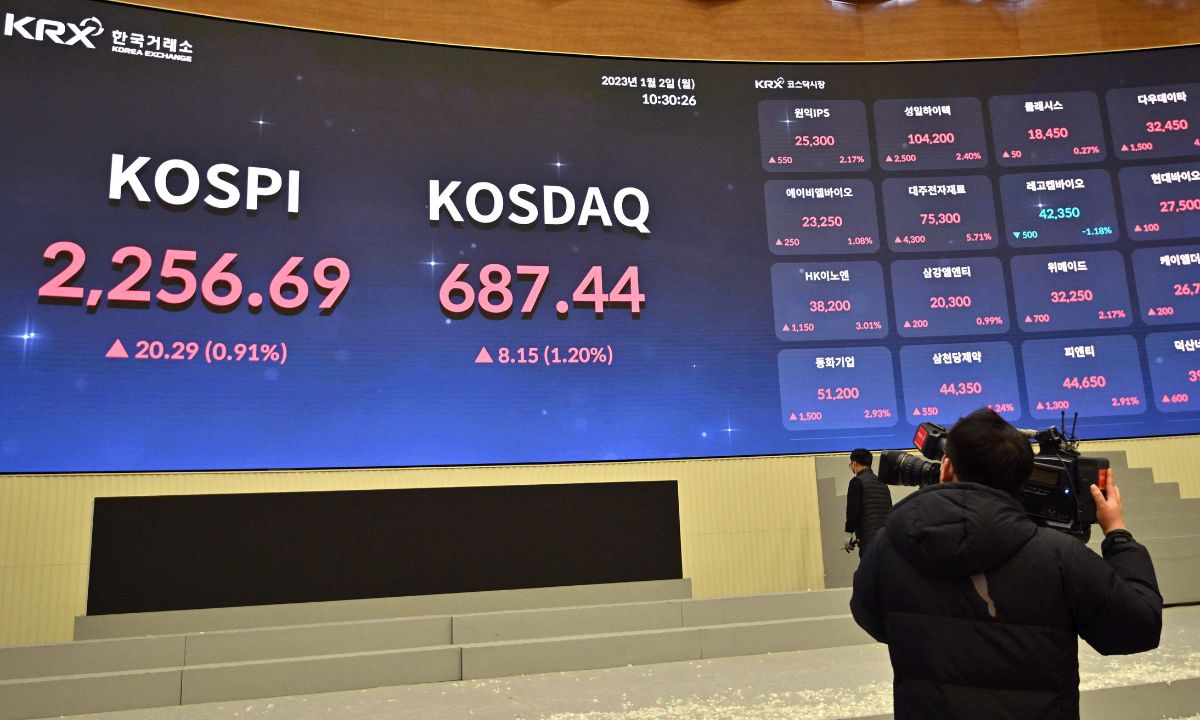
Stock markets in the Asia-Pacific region saw significant gains on Monday, with investors managing to navigate the renewed diplomatic challenges between the United States and Iran. Despite escalating tensions in the Middle East, both Japanese and South Korean stock markets achieved new record levels.
In Japan, the Nikkei 225 index rose by 0.53%, reaching a new all-time high, while South Korea's Kospi index surged by 1%, also hitting record levels. In contrast, Australia's S&P/ASX 200 index experienced a decline of 0.54%.
Event Details
Despite negative news regarding U.S. President Donald Trump's cancellation of plans to send U.S. envoy Steve Witkoff and his son-in-law Jared Kushner to Islamabad for negotiations with Iran, the markets maintained their optimism. Trump stated in a post on Truth Social that time had been wasted in travel and that there were significant internal conflicts within Iranian leadership.
This coincided with rising oil prices, as Brent crude surged by 2% to reach $107.49 per barrel, while U.S. crude oil prices increased by 1.79% to $96.19. These price hikes followed the failure of the second round of negotiations between the U.S. and Iran.
Background & Context
Historically, relations between the United States and Iran have been marked by increasing tensions, especially following the U.S. withdrawal from the nuclear deal in 2018. These tensions have led to escalating crises in the region, impacting global markets. The recent events in the Strait of Hormuz, where reports indicated that the Iranian Revolutionary Guard seized two commercial vessels, have heightened concerns in the markets.
The Middle East is considered one of the most sensitive regions globally, with oil prices playing a pivotal role in the world economy. Any escalation in tensions could significantly impact oil prices, which in turn would reflect on global financial markets.
Impact & Consequences
Financial markets are directly affected by geopolitical tensions, as any escalation in conflicts can lead to significant price volatility. Rising oil prices may increase production costs across various sectors, impacting global economic growth.
Moreover, the stability of Japanese and South Korean markets under these circumstances reflects investor confidence in these economies' ability to weather crises. This stability may encourage further foreign investments, bolstering economic growth in the region.
Regional Significance
For Arab countries, tensions in the Middle East have a direct impact on their economies. Rising oil prices can have a positive effect on oil-producing nations like Saudi Arabia and the UAE, potentially leading to increased revenues. However, any escalation in conflicts could threaten regional stability, adversely affecting investments.
In conclusion, financial markets remain under the influence of geopolitical events, necessitating close monitoring of developments by investors. The stability of markets in Japan and South Korea may serve as a positive indicator, yet it exists amidst unstable conditions in the region.