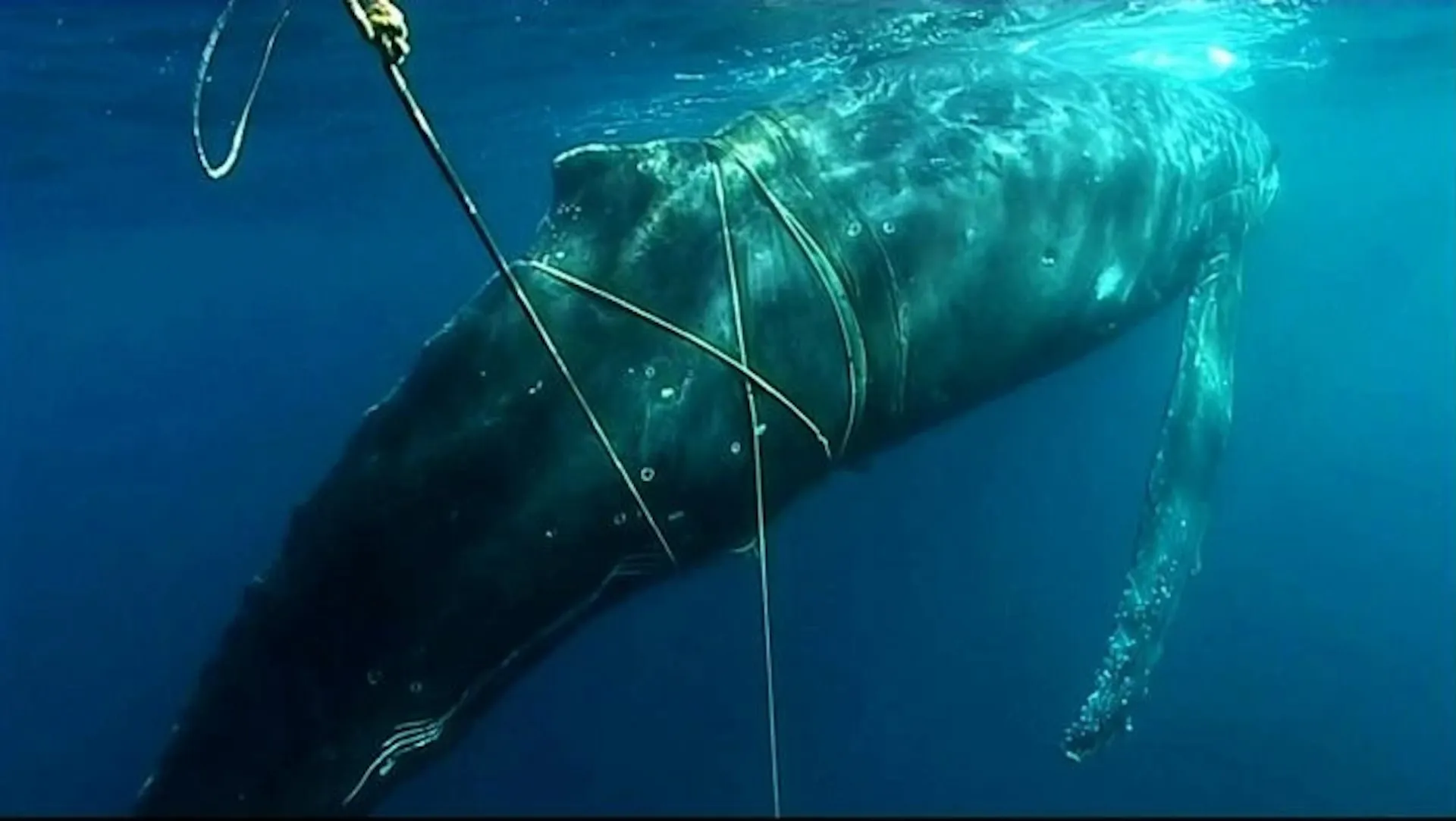
A humpback whale recently rescued in the Baltic Sea has returned to a state of paralysis after getting stuck again in shallow waters. The whale, freed by rescue teams, faces new challenges that threaten its life. This incident raises concerns among marine life experts who warn of the increasing dangers facing these marine creatures.
Previously, rescue teams managed to free the whale after arduous efforts lasting several hours, using special equipment to return it to deeper waters. However, it seems that the whale was unable to remain in the deep waters and returned once again to the shallow area, raising questions about its overall health and ability to survive.
Details of the Incident
The whale, believed to be around 10 years old, was first spotted stuck in a shallow area near the coast of Poland. After a successful rescue operation, it was released into deeper waters, but it did not take long before it returned to the same area. This phenomenon is not new, as similar cases have been recorded in the past, highlighting the challenges faced by marine life in this region.
Humpback whales are considered an endangered species, facing multiple pressures including climate change, ocean pollution, and overfishing. These combined factors negatively impact their numbers and distribution in the oceans.
Background & Context
Historically, humpback whales roamed the oceans freely, but with increasing human activities, these creatures now face escalating threats. In recent years, there has been a significant decline in their numbers due to overfishing and the destruction of marine habitats. In the Baltic Sea, these whales are extremely rare, making every rescue or return to deep waters particularly significant.
Protecting these species requires coordinated efforts among the concerned countries, as the Baltic Sea is a shared area among several nations. International cooperation in marine life protection has become an urgent necessity to ensure the survival of these species.
Impact & Consequences
This incident serves as a wake-up call regarding the environmental situation in the Baltic Sea. The whale's return to shallow waters indicates larger environmental issues, such as water pollution or food shortages. These factors affect the health of the whales and increase their risk of extinction.
Moreover, these incidents raise public awareness about the importance of protecting marine life. They can lead to increased pressure on governments to take more effective actions to protect marine habitats and regulate human activities in these areas.
Regional Significance
Although the incident pertains to the Baltic Sea, it resonates in the Arab region. Preserving biodiversity and protecting endangered species are global issues that require attention from all countries. Arab nations also face similar challenges in protecting marine life, as Arab coastlines are subjected to threats such as pollution and overfishing.
Ultimately, this incident highlights the urgent need for international cooperation in marine life protection, as the fate of these creatures depends on joint efforts to ensure a healthy and safe environment for them.