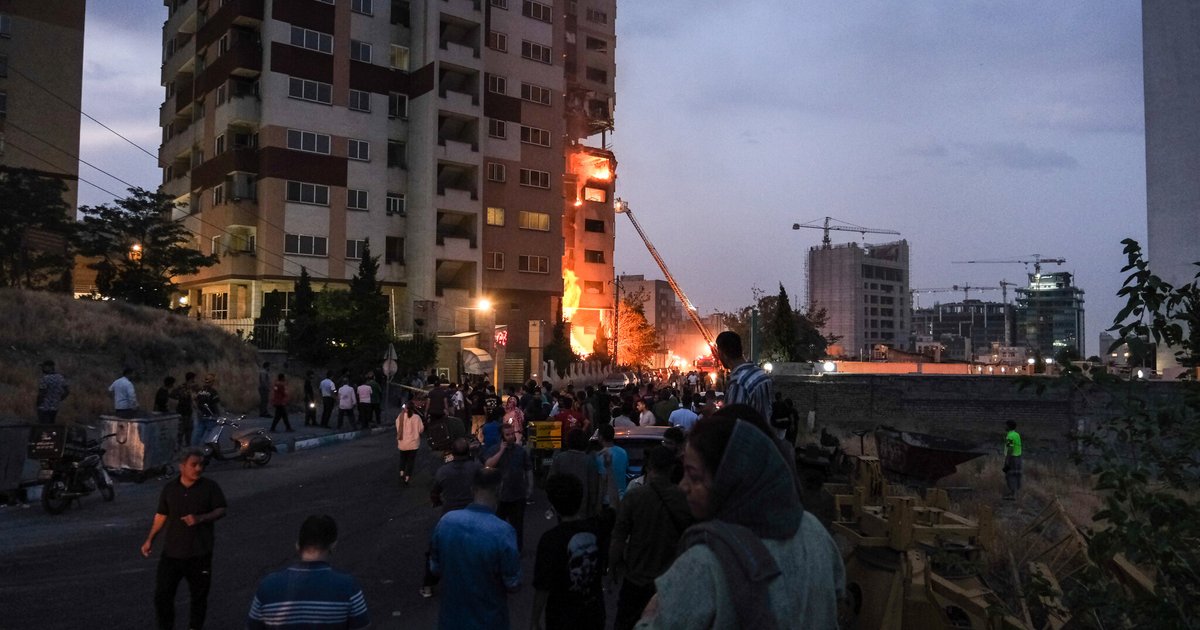
Tehran is experiencing anxiety and anticipation as residents wonder about the potential targets of the continuous bombings affecting various areas of the city. This situation arises amid escalating regional tensions and increasing threats. Many local residents fear that their neighbors could be potential targets, heightening the uncertainty in the city.
As military and political pressures on Iran continue, citizens are increasingly concerned about what the future may hold. The bombings targeting the Iranian regime raise questions about which objectives might be targeted, creating a state of anxiety among residents living in nearby areas.
Details of the Incident
Reports indicate that the ongoing bombings in Tehran are part of a military escalation by regional and international powers, as tensions in the area rise. Local residents express their fears of becoming victims of any military escalation, forcing them to live in a state of constant worry.
The potential targets of the bombings range from military installations to government centers, making it difficult for residents to determine whether they are safe. This situation intensifies the tension in the city, as many express concern about being in the wrong place at the wrong time.
Background & Context
Historically, Iran has witnessed numerous military and political crises, with the country at the heart of multiple regional conflicts. Tensions have escalated in recent years due to Iran's nuclear program, leading to international sanctions against the country. These sanctions have contributed to increasing pressures on the Iranian regime, making it vulnerable to military attacks.
In recent years, Iran has also seen a rise in popular protests against the regime, further increasing instability. These conditions make it challenging for the Iranian government to maintain control over the situation, raising the likelihood of military escalation.
Impact & Consequences
The military escalation in Tehran could have widespread implications for regional security. If military pressures continue, it may lead to violent reactions from the Iranian government, increasing instability in the region. Additionally, any escalation could result in a flow of refugees into neighboring countries, placing additional burdens on these nations.
Moreover, this situation could affect relations between Iran and Western countries, potentially leading to a new escalation of tensions. Neighboring countries, such as Iraq and Turkey, may find themselves in a difficult position if the situation in Tehran worsens.
Regional Significance
The Arab region is significantly affected by the tensions in Iran, as Iran is a key player in many regional conflicts. Any military escalation in Tehran could impact security in countries like Iraq, Syria, and Lebanon, where groups linked to Iran are present.
This situation may also lead to increased tensions between Arab states and Iran, further heightening instability in the region. It is crucial for Arab nations to closely monitor the situation in Tehran, as it may have direct implications for their security and stability.
In light of these circumstances, residents of Tehran remain in a state of anxiety and anticipation, questioning the potential targets of the ongoing bombings. The situation in Iran reflects the increasing regional tensions, necessitating greater international attention to ensure stability in the area.