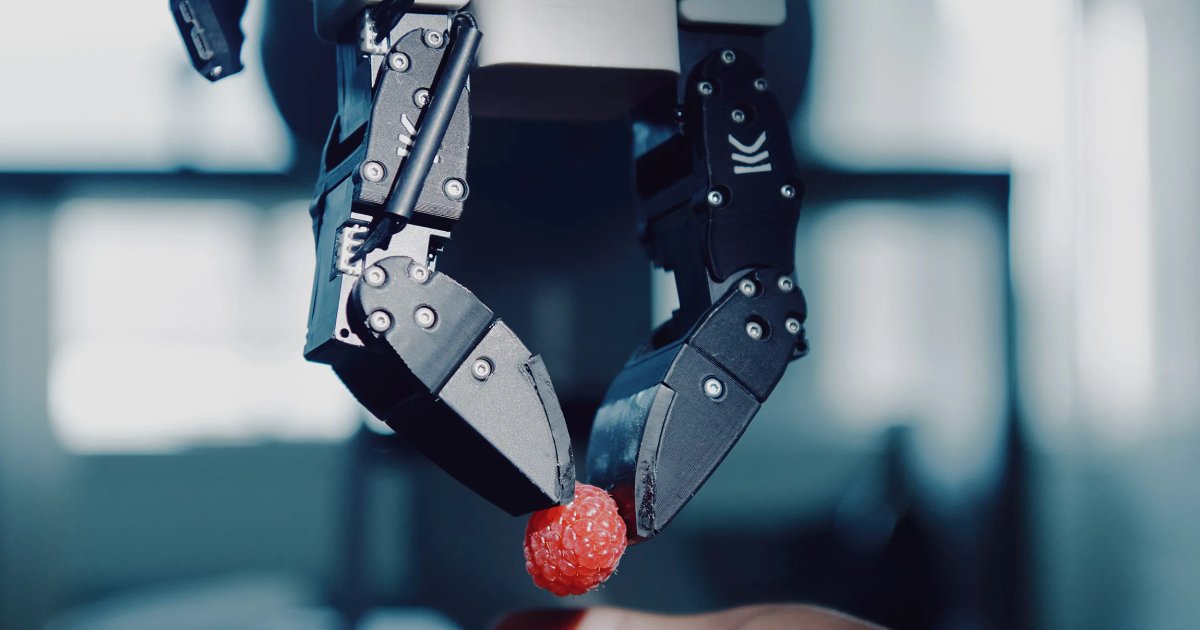
EKA, a startup located in Cambridge, Massachusetts, demonstrates an unprecedented ability to perform precise tasks, such as installing lamps, reflecting significant progress in the field of artificial intelligence. These robots, which exhibit natural and smooth movements, raise questions about the potential for achieving true physical intelligence in machines.
During a visit to the company's headquarters, a robot was showcased performing lamp installation in a remarkable manner, displaying the ability to handle objects with care and precision. This performance starkly contrasts with traditional robots, which often struggle to execute such tasks.
Event Details
EKA was founded by prominent researchers, including Pulkit Agrawal, a professor at the Massachusetts Institute of Technology, and Thomas Harnoy, a former researcher at Google DeepMind. The founders aim to develop robots with advanced motor skills, believing that solving the problem of precision in movement could transform the way robots are utilized in factories, stores, and homes.
Agrawal states, "Trillions of dollars flow through human hands, and this is the biggest challenge to solve." He emphasizes that EKA is on track to achieve this goal by training robots for self-learning.
Background & Context
Historically, robots have faced challenges in executing tasks that require precision in movement, such as lamp installation or handling food. In 2018, OpenAI developed a robotic hand named Dactyl, which used artificial intelligence to solve a Rubik's Cube. However, these robots encountered difficulties when interacting with objects in the real world.
Despite advancements in artificial intelligence, the ability to interact with the physical environment remains a significant challenge. Research has shown that tasks that appear simple for humans can be exceedingly complex for machines.
Impact & Consequences
If EKA succeeds in achieving its objectives, it could lead to a radical change in how robots are used across various industries. Robots could be employed in fields such as food services, where quick and precise handling of food is essential.
This development may also open doors for the use of robots in homes, simplifying daily life for individuals. However, this progress raises questions about its impact on the job market and the need for retraining the human workforce.
Regional Significance
In the Arab world, the evolution of robotics could significantly impact local industries, such as agriculture and manufacturing. Robots could enhance efficiency and reduce costs, boosting the competitiveness of Arab countries in the global market.
However, Arab nations must be prepared to face the challenges associated with digital transformation, including the need to develop human skills to keep pace with these changes.