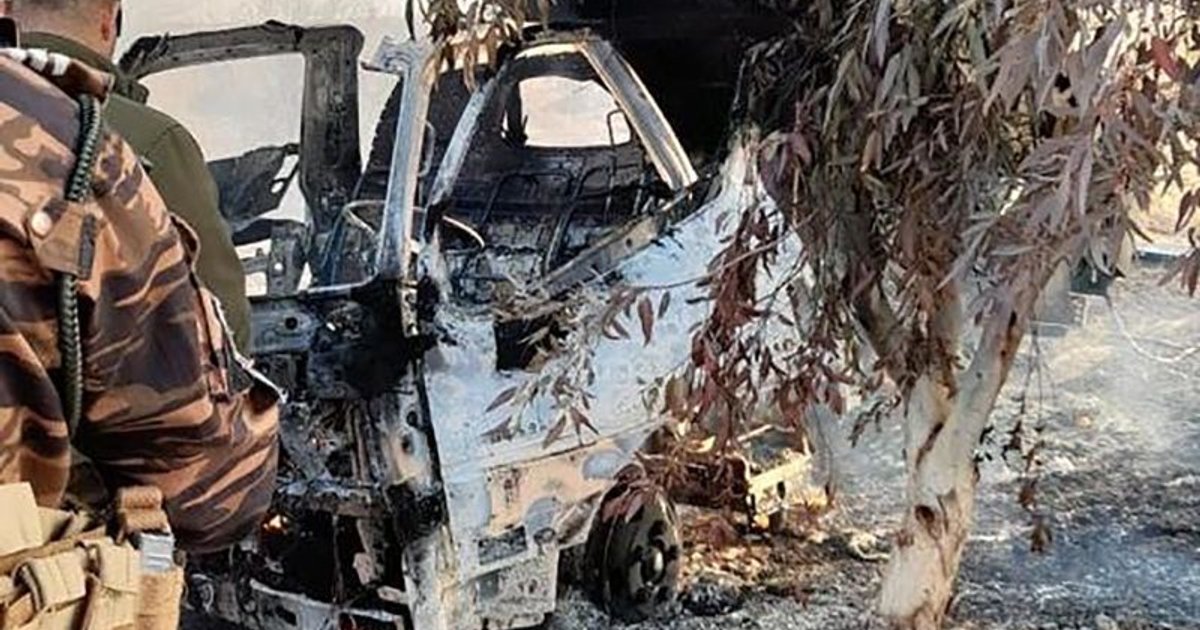
A rocket attack on Monday targeted an Iraqi airbase located near Baghdad International Airport, leading to damage and the incapacitation of a military aircraft. This attack comes at a time when armed factions under the coalition known as "Islamic Resistance in Iraq" announced the execution of 21 attacks in one day, raising concerns about the escalation of military activities in the country.
The Iraqi Ministry of Defense confirmed in a press statement that the attack resulted in significant damage to the base, noting that the aircraft that was hit was in a high state of readiness. The ministry added that it is investigating the circumstances of the attack and identifying the responsible party.
Details of the Incident
The attack that occurred on Monday is part of a series of assaults that have taken place in Iraq recently, as military activities by armed factions increase. The airbase was targeted while military aircraft were conducting training operations, which heightened the severity of the attack.
It is noteworthy that the armed factions have claimed responsibility for the attacks, reflecting an escalation in the conflict between these factions and government forces. Reports have indicated that these factions have intensified their activities recently, raising alarms about the stability of the security situation in the country.
Background & Context
Historically, Iraq has witnessed numerous rocket attacks targeting military bases, especially those hosting foreign forces. These attacks have increased following the withdrawal of U.S. troops from Iraq, as armed factions seek to bolster their influence in the country.
The political situation in Iraq is complex, with various political and military forces overlapping. The armed factions consider themselves part of the resistance against foreign presence and use these attacks as a means to pressure the Iraqi government.
Impact & Consequences
The recent attack could have significant repercussions on security in Iraq, potentially leading to an escalation of violence and increased tensions between armed factions and government forces. This escalation may also affect relations between Iraq and neighboring countries, especially given the presence of regional powers seeking to enhance their influence in the area.
The Iraqi government may take stringent measures against the armed factions, which could lead to further violence. Additionally, this situation could impact reconstruction and stabilization efforts in Iraq, as the country needs a secure environment to attract investments and develop its economy.
Regional Significance
The ramifications of this attack extend beyond Iraq, as the rise in violence in Iraq could affect the stability of the entire region. Armed factions in Iraq may inspire similar groups in other countries, increasing the risk of violence spreading.
Furthermore, the deteriorating security situation in Iraq could hinder counter-terrorism efforts in the region, as chaos may allow for the emergence of new extremist groups. Therefore, the international community is closely monitoring the situation, as any escalation in Iraq could impact regional security.
In conclusion, the situation in Iraq remains complex and fraught with challenges. The recent attack reflects an escalation in military activities, raising concerns about the future of security and stability in both the country and the region.