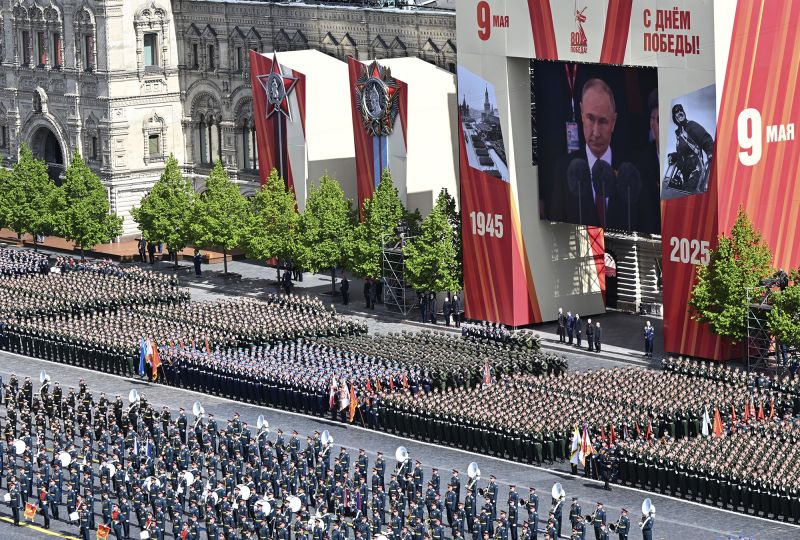
In an unprecedented step, Russia has announced that it will hold this year's Victory Day celebrations without displaying any of its military equipment. This marks the first time this has occurred since the onset of the Russian invasion of Ukraine in 2022, reflecting the challenges Moscow faces in the context of the ongoing war.
Victory Day celebrations, held annually on May 9, are a significant national event in Russia, commemorating the Soviet Union's victory over Nazi Germany in 1945. However, this year comes under exceptional circumstances, as the Russian government seeks to reassess its military strategies amid increasing international pressures.
Details of the Event
This year's celebrations are expected to include a range of cultural and artistic events, focusing on commemorating the anniversary rather than traditional military parades. Russian officials have stated that this decision is part of an effort to ease tensions with the West and avoid any displays that could be interpreted as provocative.
Despite this, there remains concern about the impact of this decision on national spirit in Russia, as many view the display of military equipment as a symbol of strength and prestige. Reactions among citizens have varied, with some believing that celebrations without a military display may undermine the historical significance of the occasion.
Background & Context
Since the beginning of the conflict in Ukraine, Russia has faced a series of economic and political sanctions from Western nations, significantly affecting its economy and military capabilities. In previous years, Victory Day celebrations served as an opportunity to showcase Russian military power, including tanks and fighter jets.
Historically, Russia has utilized this occasion to bolster national spirit, but with escalating international criticism, it appears the Russian government is attempting to alter its strategy to avoid further isolation.
Impact & Consequences
This decision could have far-reaching implications for Russia's relations with Western countries. While the Kremlin aims to reduce tensions, this move may be perceived as a sign of weakness, potentially leading to increased pressure on Russia.
Moreover, the absence of a military parade could strengthen the opposition's position within Russia, as it may be used as evidence that the government is unable to achieve military victories. This could lead to a rise in protests and calls for political change.
Regional Significance
In light of the tense situation in Ukraine, Arab nations are closely monitoring the developments, as any changes in Russian policy could affect economic and political relations in the region. Some Arab countries may reassess their relationships with Russia, particularly in the fields of energy and trade.
Ultimately, Russia's decision to hold Victory Day celebrations without military equipment represents a significant shift in its policy and may have widespread implications on both international and domestic levels.