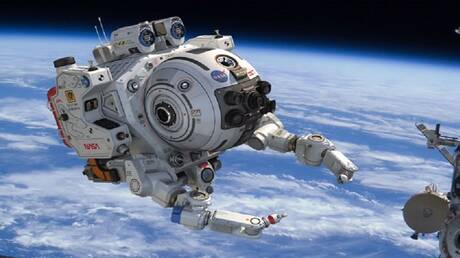
Andrei Ivanov, Deputy Head of the Moscow Aviation Institute, announced that Russia will begin implementing a robotic inspector project capable of moving on the surface of the orbital space station starting in 2027. This project is part of Russia's efforts to enhance its capabilities in the field of space and improve operational efficiency at the space station.
This robot is considered part of Moscow's strategy to develop space technologies, as it will contribute to conducting necessary inspections and maintenance of the equipment and devices on the station. This innovation is expected to reduce reliance on astronauts for some routine tasks, allowing them to focus on more complex scientific research and experiments.
Event Details
This announcement comes at a time when Russia is experiencing increased competition in the field of space, as many countries seek to strengthen their presence in this vital area. The inspector robot will be equipped with advanced technologies that will allow it to navigate freely on the station's surface, conduct necessary inspections of the equipment, and perform simple maintenance tasks.
Ivanov confirmed that the project will officially begin in 2027, which means there is sufficient time to develop the necessary technology and ensure the robot's readiness for its assigned tasks. He also noted that this innovation will help improve operational efficiency at the station and enhance Russia's competitive capabilities in the space sector.
Background & Context
Historically, Russia has been a pioneer in the field of space, having launched the world's first satellite, Sputnik, in 1957. Since then, Russia has continued to develop its technologies in this field, including sending astronauts to the International Space Station and developing new spacecraft.
In recent years, Russia has faced significant challenges in its space program, including the need to update outdated technology and increase investments in research and development. The inspector robot project comes as part of these efforts, as the institute aims to provide innovative solutions that contribute to enhancing Russia's position in space.
Impact & Consequences
The inspector robot project is expected to have positive effects on the Russian space program, as it will help improve efficiency and reduce costs. Additionally, the use of robots in space may open new horizons for scientific research, contributing to new discoveries in various fields.
Furthermore, this project may encourage other countries to invest more in space technologies, thereby enhancing international cooperation in this field. Given the environmental and economic challenges facing the world, innovations in space may become more important than ever.
Regional Significance
Although the project focuses on Russian space, it has potential implications for the Arab region. Many Arab countries have begun investing in their own space programs, such as the United Arab Emirates, which launched the Hope Probe to Mars. Developments in Russian space may encourage Arab countries to enhance their cooperation in this field.
Moreover, technological innovations in space may contribute to the development of other areas such as communications and navigation, benefiting Arab countries that seek to improve their technological infrastructure.
In conclusion, the inspector robot project represents a new step in the journey of Russian space exploration and reflects Russia's commitment to enhancing its capabilities in this field. It also opens new avenues for international cooperation and highlights the importance of technological innovations in addressing global challenges.