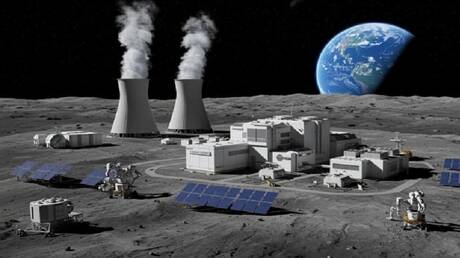
Russia is preparing to launch an ambitious project to establish a lunar nuclear power station named 'Selena', aiming to develop a prototype by 2032. This development represents a significant step towards space exploration and the utilization of nuclear energy in lunar environments.
The 'Selena' station is part of Russia's ambitious strategy to enhance its presence in space, seeking to achieve technological advancements in nuclear energy. This station is expected to contribute to meeting the energy needs of future lunar exploration projects, reflecting the global trend towards exploiting natural resources in space.
Event Details
The Russian space agency 'Roscosmos' announced its plans to create the 'Selena' station, which will provide the necessary energy for lunar missions. The project includes the development of new technologies in the field of nuclear energy, enhancing Russia's competitive edge in the space race. Additionally, this station will rely on modern designs aimed at ensuring safety and operational efficiency.
Russia aims to conduct tests on the prototype before 2032, allowing it to evaluate the actual performance of the technologies used. This project comes at a time when the global space industry is experiencing intense competition, with many countries striving to enhance their capabilities in this field.
Background & Context
Historically, Russia was one of the first countries to invest in space exploration, launching the world's first satellite in 1957. Since then, Russia has continued to develop its space programs, including sending astronauts to the International Space Station. The 'Selena' project represents a continuation of this tradition, aiming to explore the moon as a source of resources.
The importance of nuclear energy in space is increasing, as it is considered a reliable energy source in harsh environments like the moon. With the growing global interest in lunar exploration, many countries are seeking to develop new technologies that enable them to benefit from lunar resources.
Impact & Consequences
If the 'Selena' project succeeds, it could open new horizons for space exploration and enhance Russia's competitiveness in this field. Additionally, the success of the project may encourage other countries to invest in nuclear energy as a means to meet energy needs in space.
This step also indicates a global trend towards exploiting space as a source of resources, which could lead to significant changes in how energy is managed in the future. Furthermore, these projects may contribute to enhancing international cooperation in the field of space.
Regional Significance
Although the 'Selena' project focuses on space, it has potential implications for the Arab region. With the increasing interest in space exploration, some Arab countries may seek to enhance their space programs and collaborate with leading nations in this field.
Russia's success in its project could motivate Arab countries to explore space, thereby enhancing their technological capabilities and providing new opportunities in energy and scientific research.