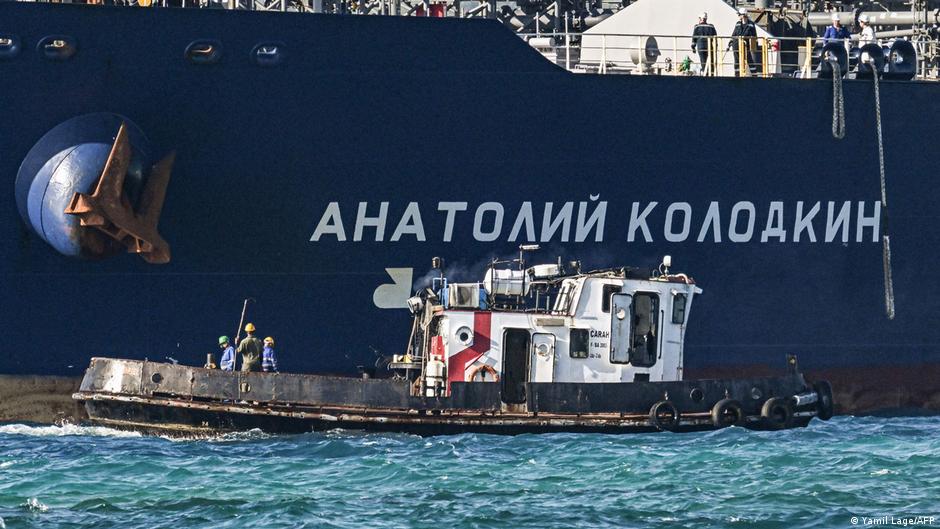
A Russian oil tanker named Anatoly Kolodkin arrived at Matanzas port in eastern Havana in the early hours of Tuesday, carrying with it approximately 730,000 barrels of crude oil. This shipment is the first of its kind to reach Cuba since the Trump administration imposed a comprehensive embargo on the country last January, which has intensified the suffering of the Cuban people.
This move comes at a time when Cuba is facing a severe shortage of fuel and food, as the imposed restrictions have exacerbated the economic crisis, leading to power outages in several areas, including two major outages in March alone.
Details of the Event
Despite the tanker being subject to sanctions from the United States, the European Union, and the United Kingdom due to the war in Ukraine, the White House indicated that allowing the tanker to enter Cuba was for humanitarian reasons. Caroline Levitt, a spokesperson for the White House, stated that the decision would be made on a case-by-case basis.
This shipment is considered a lifeline for Cuba, with experts estimating that it could produce around 180,000 barrels of diesel, sufficient to meet the country's daily demand for a period of 9 to 10 days.
Background & Context
Historically, Cuba has heavily relied on Venezuela as its main source of oil, but after the ousting of Venezuelan President Nicolas Maduro by the Trump administration, Cuba lost one of its most important allies. Since then, pressures on Cuba have increased, prompting it to seek new alternatives to secure its energy needs.
The U.S. embargo imposed on Cuba for decades has significantly impacted the Cuban economy, exacerbating economic and social crises. However, Russian support may have a positive effect on the current situation, as it demonstrates cooperation between the two countries under difficult circumstances.
Impact & Consequences
This shipment may alleviate the current crises in Cuba, but it could also provoke reactions from the United States and other countries. This cooperation between Cuba and Russia is seen as a challenge to U.S. policies in the region, which could lead to heightened tensions.
Additionally, this event illustrates how countries can collaborate in the face of economic and political pressures, with Cuba and Russia serving as an example. This shipment could mark the beginning of a new phase of cooperation between the two countries in other areas as well.
Regional Significance
These events highlight the importance of international relations and their impact on smaller nations. In the Arab world, there may be lessons to be learned from Cuba's experience in dealing with external pressures. Moreover, cooperation among countries in facing crises can serve as a model to be emulated in the region.
In conclusion, the arrival of the Russian tanker in Cuba is a significant event that reflects the challenges faced by small countries under international pressures. It also underscores the importance of cooperation among nations in addressing economic and political crises.