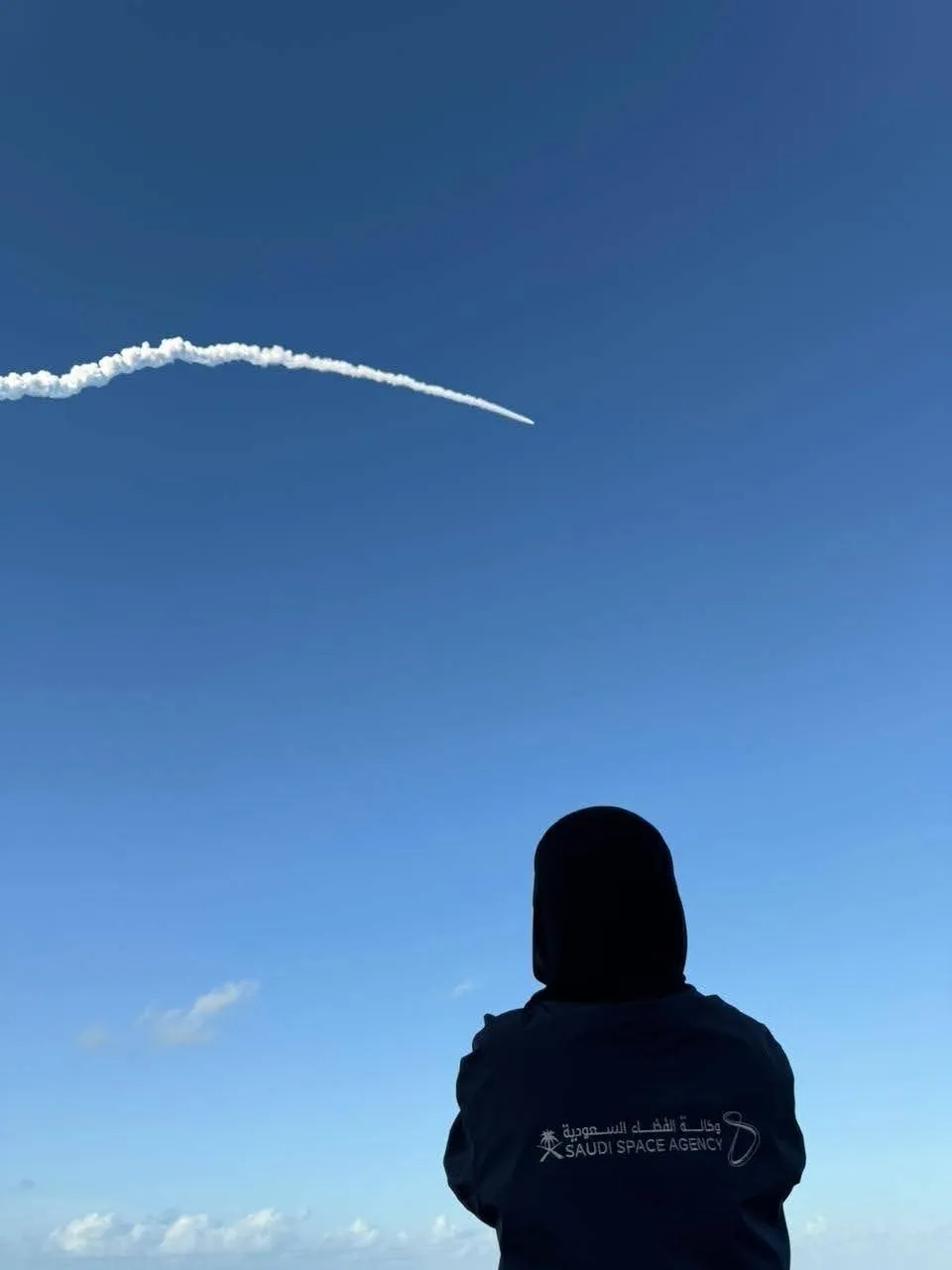
The Saudi Space Agency has successfully launched its satellite 'Shams', representing a historic achievement in the field of Arab space exploration. This launch is part of the 'Artemis 2' mission, where Saudi Arabia has not only become the first Arab partner in this ambitious program but has also introduced the world to its first national mission specialized in exploring the depths of 'space weather'.
The 'Shams' satellite is a pivotal milestone in Saudi innovation, developed in Saudi laboratories by local talents. It serves as a scientific eye that monitors fluctuations in solar activity and its radiative effects, contributing to the protection of the future of global communications and navigation. The 'Artemis 2' mission is the second phase of the 'Artemis' program led by the National Aeronautics and Space Administration (NASA) with extensive international participation, aiming to return humans to the lunar vicinity for the first time in over five decades, paving the way for future missions to Mars.
Event Details
In 2022, Saudi Arabia joined the 'Artemis' agreements initiated by NASA with over 60 countries worldwide to establish a framework governing space exploration activities. The mission carries a crew of four astronauts on the first crewed flight orbiting the moon aboard the 'Orion' spacecraft, propelled by the Space Launch System (SLS), the most powerful rocket in the history of space missions to date. The 'Shams' satellite is one of the accompanying scientific payloads.
The 'Shams' satellite will head to a high elliptical orbit (HEO), approximately 500 to 70,000 kilometers from Earth, allowing for extensive coverage to monitor the effects of solar and radiative activity. The satellite aims to study space weather and observe the impacts of solar and radiative activity on Earth through four diverse scientific axes.
Background & Context
This scientific mission is a significant step towards enhancing the reliability and sustainability of vital sectors associated with space, such as communications, aviation, and navigation. It provides scientific data that enable stakeholders to enhance operational readiness and strengthen the security of the technological infrastructure that the world relies on in daily life. Through this mission, the Saudi Space Agency aims to support scientific research and develop future solutions that enhance the sustainability of space-related services.
The agency also aims to contribute to building a sustainable knowledge economy by localizing advanced technologies and achieving the objectives of 'Saudi Vision 2030', while enhancing Saudi Arabia's global standing in the space sector.
Impact & Consequences
The Saudi satellite's journey is expected to make space travel safer, as understanding space weather helps protect aircraft and enhance safety. It also paves the way for safe crewed space flights to the moon and Mars, opening doors to new technologies in medicine, energy, and sciences that benefit people's lives on Earth.
The data from the 'Shams' satellite will aid in early predictions of solar storms, which typically disrupt internet and phone communications as well as navigation signals. The results from the Saudi satellite's mission will help protect communication networks and applications used daily, thereby enhancing the stability of electricity and energy and safeguarding them from severe solar storms.
Regional Significance
The launch of the 'Shams' satellite represents a significant achievement for Arabs, reflecting the capability of Arab countries to actively participate in the field of space. This accomplishment enhances Saudi Arabia's position as a major supporter of scientific and technological research in the region and encourages other Arab nations to develop their space programs.
In conclusion, the successful launch of 'Shams' reflects Saudi Arabia's commitment to enhancing its capabilities in the field of space and constitutes an important step towards achieving its future goals in this vital sector.