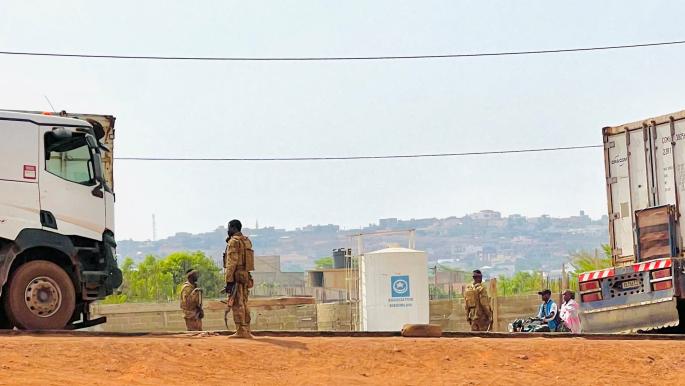
In a significant field development, Tuareg separatists have taken control of the strategic city of Kidal in northern Mali after violent clashes with government forces. This takeover comes at a sensitive time for the country, as the ruling military council faces mounting challenges in maintaining security and stability.
Kidal is considered a vital center in northern Mali and has been a focal point of conflict between the government and Tuareg separatists for years. The control of the city reflects a notable decline in government authority, raising questions about the military council's effectiveness and its ability to regain control over northern regions.
Details of the Event
These events occur at a time when Mali is suffering from escalating violence and armed conflicts, with terrorist activities increasing in the northern part of the country. The Tuareg separatists, seeking greater independence for their region, have found in their alliance with extremist Islamic groups an opportunity to bolster their position in the conflict. Reports indicate that recent clashes have resulted in numerous casualties on both sides, complicating the security situation further.
Kidal symbolizes the cultural identity of the Tuareg people and has witnessed several previous attempts at control by armed groups. This new takeover could reshape the influence map in northern Mali, raising concerns in the international community regarding the stability of the region.
Background & Context
Historically, Mali has experienced multiple conflicts since its independence in 1960, with ethnic and political disputes playing a major role in destabilizing the country. In 2012, a rebellion broke out in the north, leading to the Tuareg separatists seizing Kidal and other cities, before French forces intervened in 2013 to restore control.
Despite international and local efforts to achieve peace, the security situation in Mali remains fragile. Terrorist activities have increased, particularly from groups linked to Al-Qaeda and ISIS, complicating the government's efforts to regain control over northern areas.
Impact & Consequences
The capture of Kidal represents a new blow to the military council that took power following the coup in 2020. These events may lead to increased pressure on the military government, negatively impacting its security and political strategies. Additionally, the growing influence of the separatists could open the door to an escalation of the conflict, threatening regional security.
Under these circumstances, the government may seek to enhance cooperation with international partners, including France and the United Nations, in an attempt to regain control of the situation. However, the challenges facing the government may exceed its capacity to manage them, increasing the likelihood of worsening conditions in the future.
Regional Significance
The events in Mali are part of a larger picture of instability in the African Sahel region, which directly affects regional security. The rise in terrorist activities in Mali could have repercussions for neighboring countries, necessitating a collective response from Arab states and the international community.
Moreover, the situation in Mali may impact relations between Arab and African countries, requiring greater coordination to address shared security challenges. In light of increasing threats, Arab states must be prepared to provide support and assistance in achieving stability in the region.
In conclusion, the events in Kidal serve as a wake-up call for the international community regarding the need for effective measures to address security challenges in Mali and ensure stability in the region as a whole.