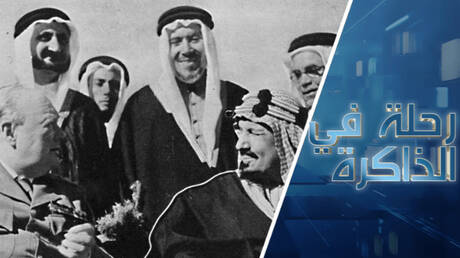
In the aftermath of World War I, Prince Ibn Saud emerged as one of the most prominent leaders in the Arabian Peninsula, receiving unprecedented British support. This backing came at a time when the region was undergoing radical changes following the collapse of the Ottoman Empire.
Numerous questions arose regarding the British leadership's alignment in supporting Ibn Saud. Was this support a result of strategic interests, or were there other considerations behind the abandonment of Sharif Hussein?
Details of the Event
After the conclusion of World War I, Britain sought allies in the region to secure its interests. Reports indicated that Ibn Saud represented an attractive option due to his ability to unify tribes in Hijaz. In contrast, Sharif Hussein had previously received British support, but this backing diminished as Ibn Saud's influence grew.
One of the main reasons that prompted the British to change their stance was their desire for stability in the region. Ibn Saud had the capability to impose order in Hijaz, aligning with British objectives to secure trade routes and strategic interests.
Background & Context
Historically, the relationships between Arabs and the British have been complex. During the war, Sharif Hussein had declared the Arab Revolt against the Ottomans with British support. However, after the war, the equations shifted, and Britain began to seek alternatives to ensure its influence in the region.
Ibn Saud, who had established his authority in Najd, seized the opportunity to strengthen his position in Hijaz. This shift in British support reflects the radical changes that the region experienced after the war.
Impact & Consequences
This shift in British support had profound implications for the future of the Arabian Peninsula. It led to the consolidation of Ibn Saud's authority and the establishment of the modern Saudi state. Additionally, it contributed to altering the balance of power in the region, affecting relationships among various tribes.
The repercussions were not limited to Saudi Arabia alone but encompassed the entire region. These developments led to escalating conflicts among regional powers, complicating the situation further.
Regional Significance
The establishment of the Saudi state under Ibn Saud had far-reaching effects on the Arab world. This state became a model for many other Arab countries seeking independence and building their national identity.
Moreover, the British relations with Ibn Saud had implications for regional politics, as they helped shape new alliances and influenced future conflicts in the area.
In conclusion, it can be said that British support for Ibn Saud after World War I was a turning point in the region's history. This support not only altered the balance of power in Hijaz but also impacted the future of Arab states in general.