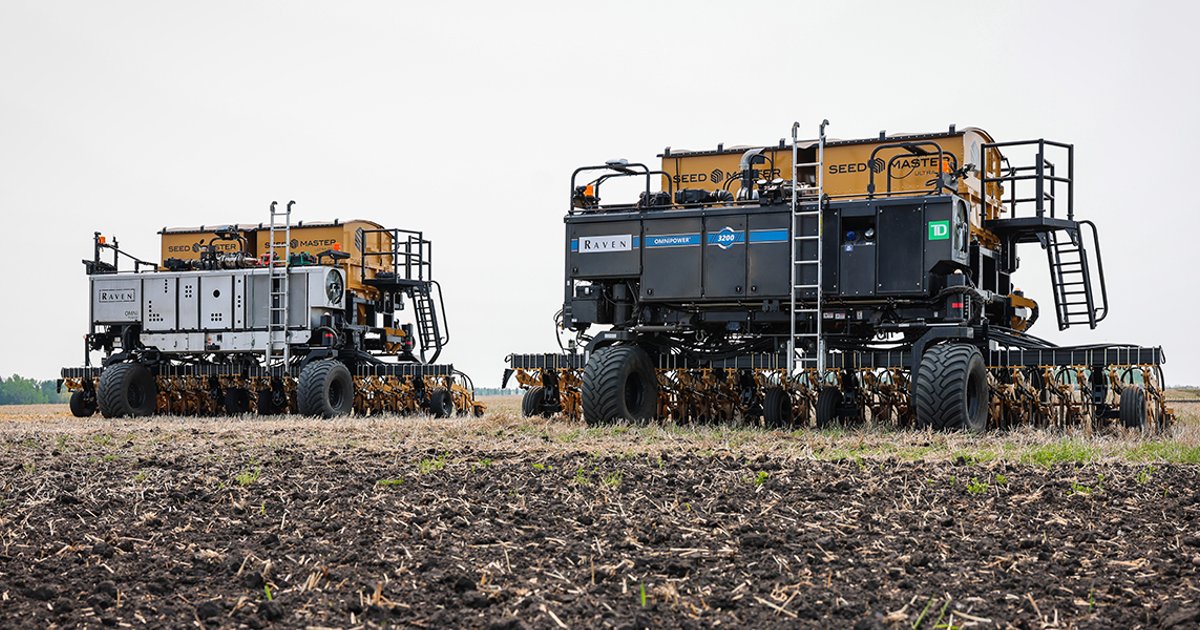
Indonesia is preparing for the palm harvest season, with new smart agricultural machines from China now operating in the country's palm farms. These modern machines are designed to handle challenging terrains, which helps reduce costs and increase efficiency in the local palm oil industry.
Huang Qinghua, the assistant president of the manufacturing company, reported that palm farms in Indonesia cover vast areas, often spanning tens of thousands of hectares. The roads in these farms are often just simple stone paths, making traditional equipment susceptible to high levels of wear and tear.
Event Details
Before the introduction of these machines, most equipment used in palm farms across the Association of Southeast Asian Nations (ASEAN) relied on American and Japanese brands, which were not suitable for local conditions and often broke down after about a year and a half of use. However, the new Chinese machines provide an effective solution to this problem.
China is witnessing significant advancements in agricultural mechanization, with expectations that the overall mechanization rate for farming and harvesting operations will reach 76.7% by 2025. Additionally, the number of drones used in agriculture has surpassed 300,000 units, covering annual operations exceeding 460 million mu (where mu equals 0.0667 hectares).
Background & Context
Historically, agriculture in China relied on traditional methods, but recent years have seen a shift towards modern technology. In the Guangxi region, known as one of China's largest sugar-producing areas, mountainous terrain has hindered mechanization efforts. However, smart agricultural machines and digital technology have significantly improved farming efficiency.
In a sugarcane farm in Laibin, underground sensors are utilized to continuously monitor soil pH levels, moisture, and nutrients. The digital land management system provides real-time recommendations, assisting in tackling challenges such as pest control and production decision-making.
Impact & Consequences
The demand for advanced agricultural machines is increasing in countries like Thailand, which produces large quantities of tropical fruits, where harvesting and sorting processes are still largely manual. Daris Kittiyobas, the president of the Thai Agricultural Engineering Association, noted the urgent need to adopt modern technology to enhance efficiency and quality.
As the number of agricultural workers in Thailand declines, there is growing pressure to shift towards mechanical and smart farming. The Thai market increasingly requires crop protection equipment, tractors, and harvesting machines.
Regional Significance
These developments in Chinese agriculture present a significant opportunity for Arab countries, which face similar challenges in the agricultural sector. Arab nations can benefit from Chinese technology to enhance their agricultural productivity, especially under challenging climatic conditions.
In conclusion, the entry of Chinese agricultural machines into the ASEAN markets represents a strategic step to enhance agricultural cooperation between China and the region's countries, opening new horizons for improving productivity and efficiency in agriculture.