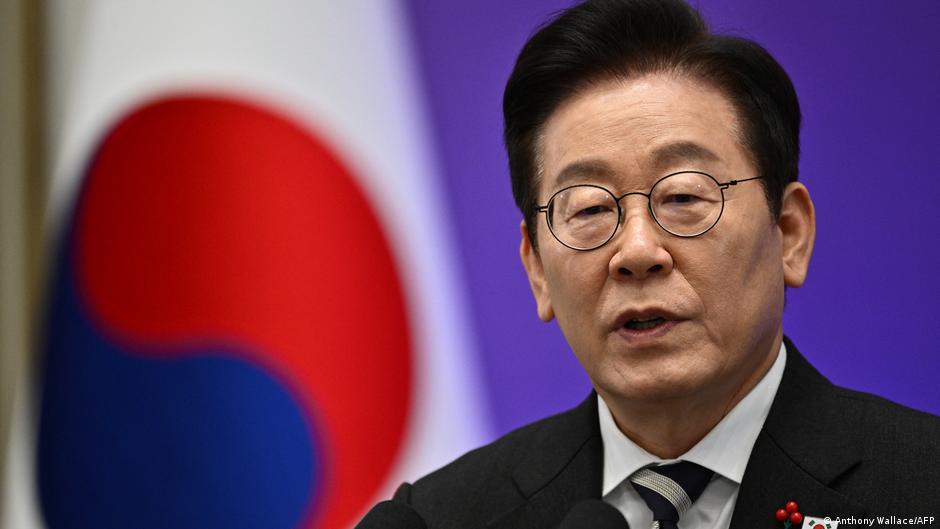
South Korean President Yoon Suk-yeol expressed regret to Pyongyang on Monday after a drone entered northern territory earlier this year, describing the act as 'irresponsible'. This statement comes after Seoul initially denied any government involvement in the incident that occurred in January, suggesting it was the act of civilians.
However, Yoon confirmed that investigations showed the involvement of government officials in this incident, prompting him to issue an apology. Pyongyang had warned in February of a 'horrific' response if more drones were found violating its airspace, forcing Seoul to open an investigation into those claims.
Details of the Incident
During a cabinet meeting, Yoon stated, 'Although the government did not intend this, we express our regret to the North due to the unnecessary military tensions resulting from the irresponsible actions of some individuals.' He clarified that investigations confirmed the involvement of a National Intelligence Service official and an active-duty soldier in the incident.
Yoon also pointed out that the South Korean constitution prohibits individuals from engaging in actions that could 'provoke the North'. He emphasized that such actions, even if deemed necessary for national strategy, must be carried out with extreme caution.
Background & Context
These events come amid Yoon's attempts to improve relations with Pyongyang, yet his repeated efforts have been met with ongoing rejection from the North Korean leadership. In March, North Korean leader Kim Jong-un described Seoul as 'the most hostile country' and vowed to 'reject and disregard' any attempts at rapprochement.
Historically, relations between the two Koreas have experienced significant fluctuations, with periods of intense tension and others of détente. However, recent events indicate that tensions remain high, raising concerns in the region.
Impact & Consequences
This incident serves as a reminder of the fragility of the security situation on the Korean Peninsula. The exchanged statements between the two sides could escalate tensions, affecting regional stability. Additionally, the involvement of government officials in the incident raises questions about the level of oversight and control over military activities in South Korea.
Furthermore, Pyongyang's reaction to this incident may influence South Korea's strategies in dealing with the North and could prompt a reassessment of its defense and military policies.
Regional Significance
While Arab nations focus on their internal and external issues, events on the Korean Peninsula highlight the importance of regional stability. Relations between major powers in the region, such as the United States and China, may be affected by tensions between the Koreas, reflecting on Arab interests.
In conclusion, developments in inter-Korean relations remain a global focal point, as any escalation could impact security and stability across the entire region.