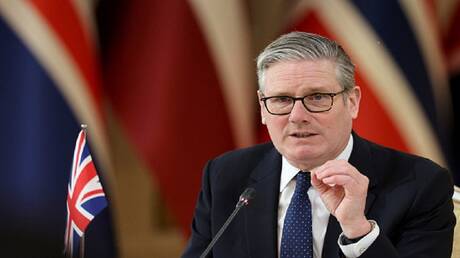
British Prime Minister Keir Starmer stated that the US military operation against Iran does not represent his country's war, indicating that the United Kingdom will remain committed to supporting its allies in the Middle East. These remarks come at a time when tensions between Washington and Tehran are escalating, raising concerns about regional stability.
In his comments, Starmer clarified that Britain is closely monitoring the situation and will make appropriate decisions based on developments. He also highlighted the importance of cooperation with allies in addressing the security challenges facing the region, without involving the British military directly in the conflict.
Details of the Situation
Concerns are growing over a potential military escalation in the Middle East, as the United States announced plans to increase its military presence in the region as part of its strategy to counter Iranian threats. This move follows a series of attacks targeting American interests and those of its allies in the region, prompting calls from some European leaders to avoid escalation.
Starmer, who took office in 2020, is seeking to strengthen Britain's position in foreign policy, especially in light of the challenges it faces following its exit from the European Union. He has expressed support for American efforts but emphasized the need to avoid getting drawn into direct military conflict.
Background & Context
Historically, relations between Iran and the West have been strained, particularly following the Iranian Revolution in 1979. Recent years have seen a rise in tensions, especially after the United States withdrew from the Iranian nuclear deal in 2018. Since then, Washington has imposed stringent sanctions on Tehran, exacerbating the economic and social conditions in the country.
Iran is considered a key player in the Middle East, supporting a range of armed groups in Iraq, Syria, and Lebanon, complicating the regional situation. In this context, the United States is seeking to form new alliances with Gulf Arab states to counter Iran's growing influence.
Impact & Consequences
The US military operations against Iran could escalate the conflict in the region, threatening security and stability in neighboring countries. Any military escalation may also impact global oil prices, as Iran is one of the major oil-producing countries.
Furthermore, these operations could increase tensions between the United States and its European allies, as perspectives on how to deal with Iran vary. While some countries advocate for dialogue, others prefer a more stringent approach.
Regional Significance
Arab countries neighboring Iran, such as Iraq and Saudi Arabia, find themselves in a precarious position. Any military escalation could have negative repercussions on the internal security of these countries, as armed groups may exploit the chaos to achieve their objectives. There are also concerns about a potential influx of refugees should a full-scale war break out.
At the same time, these events may lead some Arab countries to reassess their relations with Iran, as some seek to improve ties amidst current tensions. The question remains: how will these dynamics affect the future of the region?
In conclusion, Starmer's statements underscore the importance of balance in British foreign policy, as London seeks to support its allies without getting drawn into direct military conflicts. The situation in the Middle East remains complex and requires effective diplomatic strategies to address future challenges.