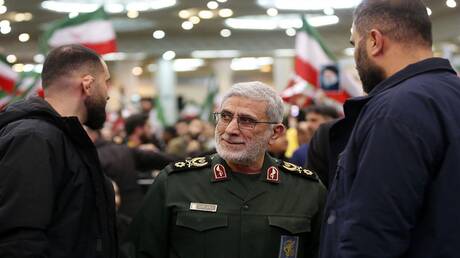
Ismail Qaani, the commander of the Quds Force in the Iranian Revolutionary Guard, emphasized that the resistance front in the region has become more cohesive and powerful than ever before. This statement was made during Qaani's remarks, where he noted that this unity reflects a strategic development in confronting the challenges facing the region.
These statements come at a sensitive time marked by increasing tensions in the area, where the resistance front emerges as a key force in countering Israeli threats. Qaani added that any defeat Israel might face in southern Lebanon would have historical repercussions, highlighting the significance of this conflict within the context of the Arab-Israeli struggle.
Details of the Event
During his speech, Qaani stressed the importance of unity among resistance factions, indicating that this unity represents a strong response to the disintegration and division attempts by hostile forces. He also pointed out that this unity is not merely a slogan but a tangible reality being embodied on the ground.
Qaani addressed the challenges faced by the resistance, noting that enemies attempt to sow discord among different factions, but they have failed in this regard. He affirmed that the resistance will continue to enhance its military and tactical capabilities to confront any future threats.
Background & Context
Historically, the region has witnessed numerous conflicts that have shaped the resistance front, with various attempts to dismantle this coalition. However, over the years, the resistance has proven its ability to adapt and grow, making it a formidable force in the regional equation.
The defeat in southern Lebanon in 2006 marked a turning point in the conflict, showcasing the resistance's capability to confront the Israeli army. This experience bolstered the resistance's position and underscored the importance of unity among different factions.
Impact & Consequences
Qaani's recent statements could significantly affect the regional situation, reflecting the rising tensions between the resistance and Israel. Should any escalation occur, it could lead to increased violence in the region, impacting the security and stability of neighboring countries.
Moreover, strengthening unity among resistance factions may alter the balance of power in the region, potentially prompting major powers to reassess their strategies in dealing with the Arab-Israeli conflict.
Regional Significance
Qaani's remarks serve as a call for Arab countries to support the resistance front, as unity in facing common challenges may be the only path to achieving stability. While some Arab nations suffer from internal divisions, enhancing cooperation among resistance factions could serve as a model to emulate.
In conclusion, Qaani's statements represent a new starting point in the resistance's trajectory, reflecting the challenges and opportunities available in the region. Strengthening unity and cohesion among factions could have far-reaching effects on the future of the conflict in the area.