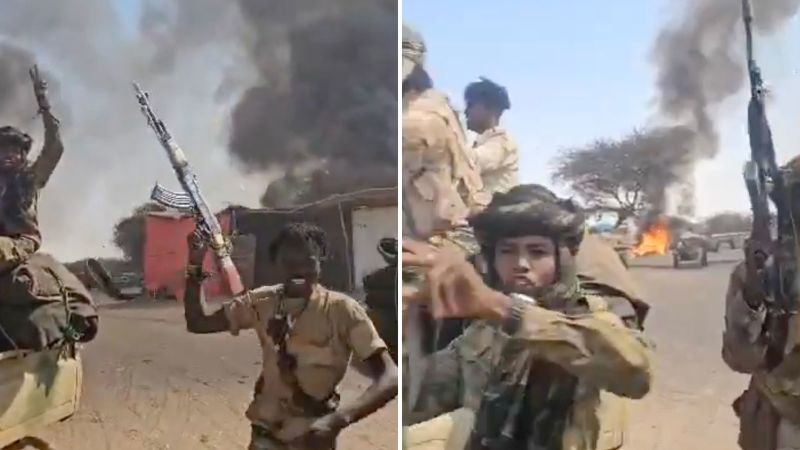
On Sunday, the Sudanese army announced the death of 94 members of the Rapid Support Forces during its response to an attack in the Kaili area of Blue Nile State, located in the southeast of the country. This comes at a time when the country is suffering from escalating conflict between the army and the Rapid Support Forces, which were previously part of the transitional government.
The Fourth Infantry Division of the army stated in a press release from Dhamazin, the capital of Blue Nile State, that its forces managed to repel the attack as part of their mission to secure the state and protect civilians. The statement confirmed that the armed forces will continue their efforts to confront any threats to the country's security.
Details of the Incident
The attack that occurred in the Kaili area comes at a sensitive time, as the country has been experiencing ongoing conflicts since the outbreak of the dispute between the army and the Rapid Support Forces in April 2023. These conflicts have exacerbated the humanitarian situation in Sudan, where millions are suffering from severe shortages of food, water, and healthcare.
Despite the figures announced by the army, the Rapid Support Forces have not issued any official comment regarding this incident, raising questions about the accuracy of these numbers and whether they reflect the true situation on the ground. At the same time, the Sudanese armed forces continue to strengthen their presence in the conflict-affected areas, increasing tensions in the region.
Background & Context
The conflict in Sudan has deep roots in long-standing political and social tensions, where the Rapid Support Forces, originally formed to combat rebellion in Darfur, have turned into a major power in the struggle for authority. After the ousting of former President Omar al-Bashir in 2019, the country entered a transitional phase, but internal conflicts among military and political components have led to a resurgence of tensions.
Blue Nile State is considered one of the most affected areas by the conflict, housing a large number of displaced persons who have fled from conflict zones. The repeated clashes have led to a deterioration of the humanitarian conditions, necessitating international intervention to assist those affected.
Impact & Consequences
The death of 94 members of the Rapid Support Forces could have significant implications for the course of the conflict in Sudan. This incident may lead to an escalation of military operations by the Rapid Support Forces, further intensifying tensions in the region. Additionally, the ongoing conflict could hinder peace efforts sought by the international community and increase civilian suffering.
At the same time, this escalation may affect relations between the Sudanese army and neighboring countries, especially amid fears of a refugee influx into neighboring states, potentially creating new humanitarian crises in the region.
Regional Significance
The situation in Sudan holds particular importance for the Arab region, as the stability of Sudan directly impacts regional security. Ongoing conflicts in Sudan could lead to chaos spilling over, threatening the stability of neighboring countries such as Egypt and South Sudan. Moreover, the humanitarian crises resulting from the conflict may require urgent international responses, increasing pressure on Arab nations to intervene.
In conclusion, the situation in Sudan remains complex, with military, political, and humanitarian dimensions intertwining. It requires efforts from all concerned parties to achieve peace and stability in the country and to avoid further escalation that could lead to humanitarian disasters.