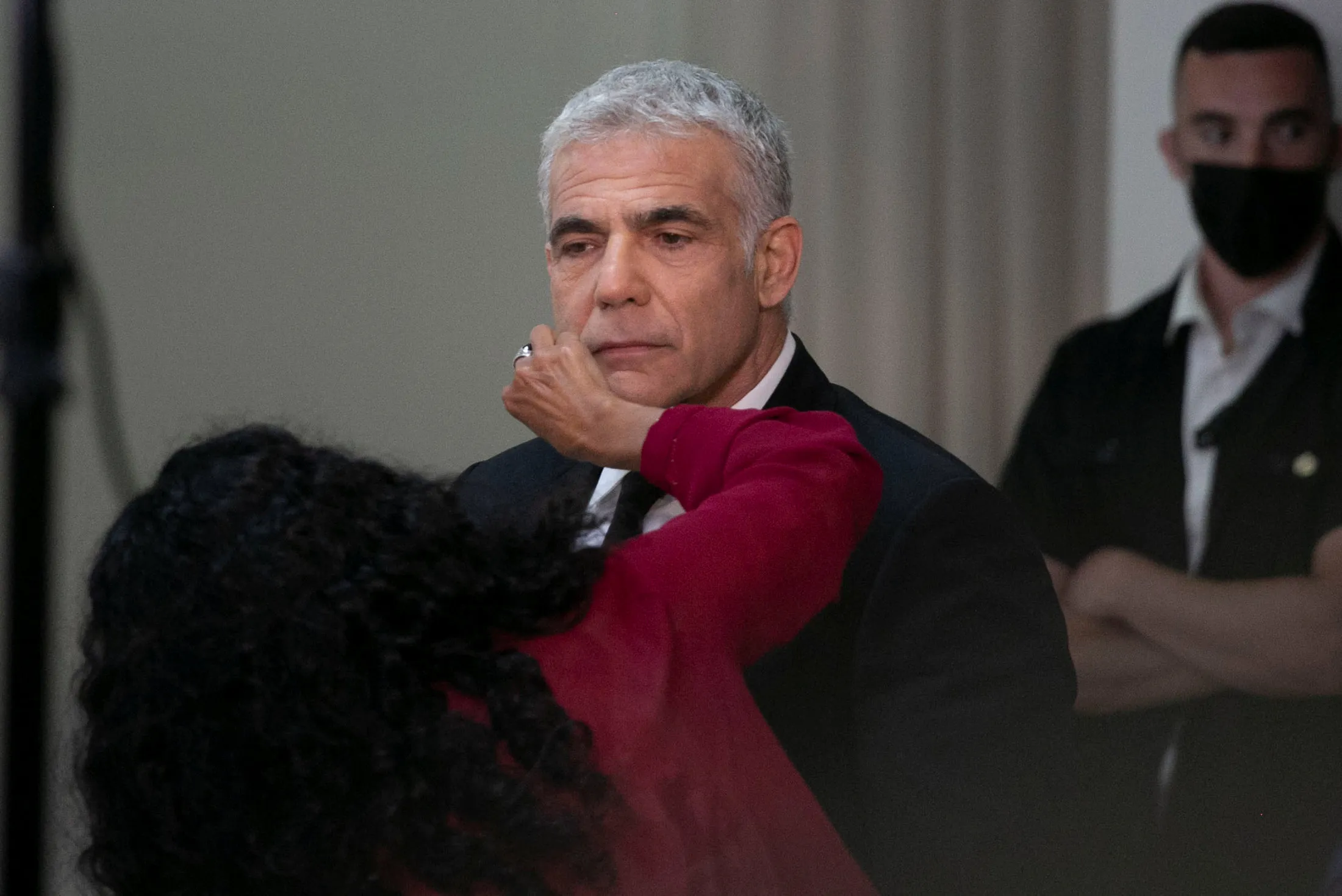
A recent opinion poll conducted after the announcement of the merger between former Israeli Prime Ministers Naftali Bennett and Yair Lapid into a new political alliance named "Together" shows that the alliance leads voting trends if elections were held today, outpacing the Likud party led by Benjamin Netanyahu.
According to the survey results, the "Together" party, led by Bennett and Lapid, is expected to secure 26 seats in the Knesset, surpassing the Likud party, which comes in second with 25 seats, the same number it received in the previous survey.
Event Details
These results place Prime Minister Benjamin Netanyahu in a complex electoral equation, as the Likud party remains the largest party according to the Israeli Broadcasting Authority, but his camp does not possess a guaranteed majority in the upcoming elections. The new alliance between Bennett (from the right-wing) and Lapid (from the center) comes as part of efforts to form a political alternative capable of competing with Netanyahu and ousting him from the premiership.
The survey also revealed that the opposition camp could secure 60 seats, excluding support from Arab parties. It also indicated that the "Yashar" party, led by Gadi Eisenkot, is making notable progress, potentially winning 15 seats, making it a pivotal player in any potential government formation.
Background & Context
Historically, Israel has witnessed numerous political alliances aimed at countering the dominance of the Likud party, which has remained in power for extended periods. The alliance between Bennett and Lapid represents a strategic step aimed at uniting diverse political forces in opposition to Netanyahu, who faces legal and political challenges.
This alliance comes at a sensitive time, with elections expected later this year, increasing the significance of these political dynamics. Previous alliances in Israel have often led to significant changes in the political balance of power, making this event a focal point for observers.
Impact & Consequences
If the alliance between Bennett and Lapid continues to succeed in the polls, it could significantly impact the future of Israeli politics. The alliance may contribute to altering the political landscape and enhance the chances of forming a new government that could break the Likud's control.
This development could also lead to a reassessment of other political forces in the Knesset, as other parties may need to adjust their strategies to confront this new alliance. Should the alliance succeed, Israeli society might witness changes in both domestic and foreign policies.
Regional Significance
These developments in Israeli politics are particularly significant for the Arab region, as any change in the Israeli government could affect relations with Arab countries, especially amid ongoing tensions in the Israeli-Palestinian conflict.
If the new alliance manages to come to power, it may adopt new policies towards the Palestinians, potentially impacting peace efforts in the region. Additionally, the stability of the Israeli government could reflect on regional security and influence relations between Israel and Arab nations.
In conclusion, this survey serves as an indicator of potential changes in Israeli politics, reflecting the complex dynamics that govern the political landscape in the country.