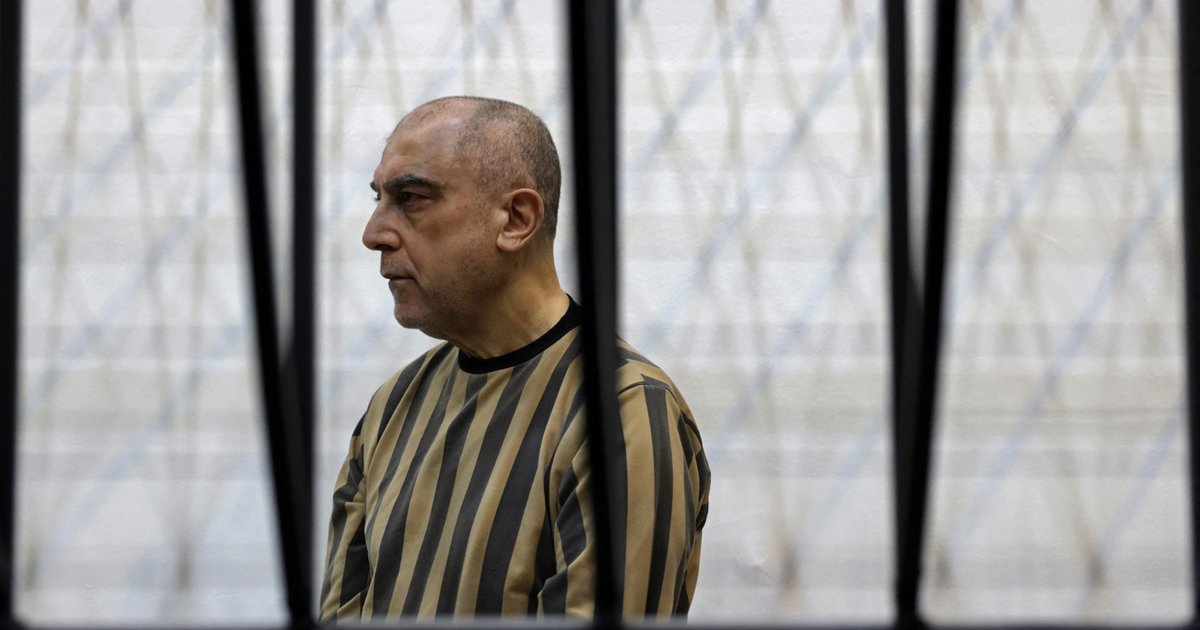
Syria has commenced the trial of Atif Najib, cousin of former President Bashar al-Assad, on April 26, 2026, facing charges related to crimes against the Syrian people. Najib, who served as the head of political security in Dar'a province, was placed in a metal cage inside the courtroom at the Justice Palace in Damascus. He is accused of leading a violent crackdown against protesters during the Syrian uprising that erupted in 2011.
The trial is taking place at a sensitive time, as the Syrian regime seeks to demonstrate its commitment to transitional justice following the government's collapse in December 2024. Najib was brought to court wearing prison attire, while families of the victims gathered in the hall, holding photos of their loved ones who were killed during the protests.
Details of the Event
In the courtroom, a photo of the child Hamza al-Khatib, who became a symbol of the Syrian uprising after being killed under torture, was displayed. This presentation evoked strong emotions among those present, as families chanted slogans demanding justice. Najib is one of the first high-ranking officials to be arrested after the regime's collapse, making this trial a landmark event in modern Syrian history.
During the session, Prosecutor Hossam Khattab affirmed that justice would be served, indicating that this trial is merely the beginning. He also mentioned a list of ten other defendants, including Bashar al-Assad himself, who has fled to Russia and will be tried in absentia.
Background & Context
The protests in Syria erupted in March 2011, inspired by the Arab Spring, when a group of teenagers wrote anti-regime slogans on school walls. This was met with a brutal crackdown by the authorities, leading to escalating protests that transformed into an armed conflict. Since then, the country has suffered from a civil war lasting over 14 years, resulting in the deaths of hundreds of thousands and the displacement of millions.
The Syrian authorities are now attempting to present a positive image of transitional justice, although the process is slow. Several military and security officials have been arrested in recent months, indicating the possibility of accountability for those who committed crimes.
Impact & Consequences
The trial of Najib is considered an important step towards achieving justice for the victims and their families, and it may contribute to rebuilding trust between citizens and the state. However, the question remains about the regime's seriousness in implementing justice, especially amid ongoing conflict and international pressures.
This trial demonstrates a desire within the Syrian community to hold those responsible for crimes accountable, which could lead to changes in how the government addresses protests and popular demands in the future.
Regional Significance
The trial of Najib is a significant event not only for Syria but for the entire Arab region. It reflects the political and social changes occurring in countries that have experienced revolutions. The success or failure of this trial may influence transitional justice movements in other nations grappling with the aftermath of conflicts.
In conclusion, the trial of Atif Najib represents a new beginning for justice in Syria, with many hoping that this step will lead to greater accountability for those responsible for crimes against humanity.