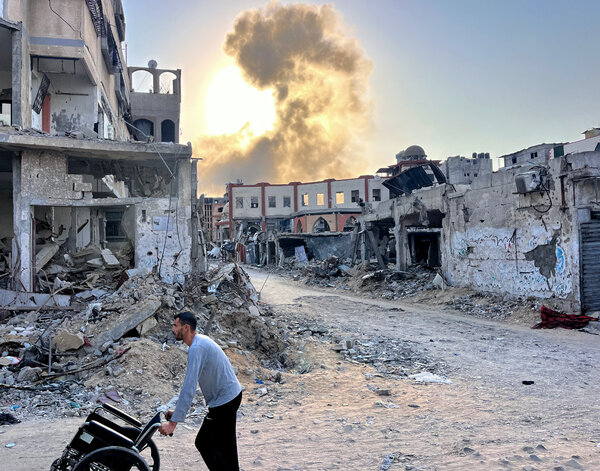
Iran has confirmed that any negotiations concerning the situation in Lebanon will not occur without the establishment of peace in the country. This statement comes at a time when the region is witnessing a rise in political and security tensions, raising concerns about Lebanon's stability and its impact on neighboring countries.
Iran is considered a key player in the region, seeking to enhance its influence by supporting its allies in Lebanon, including Hezbollah. Iranian officials have indicated that peace in Lebanon is a prerequisite for any political or diplomatic dialogue.
Details of the Situation
The statements from Iranian officials come at a time when international pressure on Lebanon is increasing to find political solutions to the multiple crises facing the country. The Lebanese political landscape has seen sharp divisions among political forces, complicating the political scene further.
Moreover, the economic situation in Lebanon is deteriorating, with citizens suffering from a severe shortage of essential resources. These conditions make it difficult to achieve any progress towards peace, placing additional pressure on the Lebanese government.
Background & Context
Historically, Lebanon has experienced internal and external conflicts that have led to the disintegration of its social and political fabric. Since the civil war in the 1970s, the country has faced the repercussions of ongoing conflicts, impacting its political and economic stability.
Iran, for its part, views Lebanon as part of its regional strategy, seeking to bolster its influence through support for armed and political groups. This complicates the prospects for peace amid ongoing foreign interventions.
Impact & Consequences
The failure to achieve peace in Lebanon could exacerbate humanitarian and economic conditions. Continued tensions may negatively affect relations between Lebanon and its neighbors, increasing the risk of new conflicts erupting.
Furthermore, the situation in Lebanon could influence regional stability, as the impact of crises may extend to other countries in the region, complicating peace efforts in the Middle East.
Regional Significance
The conditions in Lebanon serve as an indicator of the challenges faced by many Arab countries. Internal conflicts, political divisions, and economic pressures are common issues affecting the stability of the region as a whole.
Achieving peace in Lebanon could serve as a model for other countries experiencing similar conflicts. Therefore, reaching comprehensive political solutions is essential for achieving stability in the region.