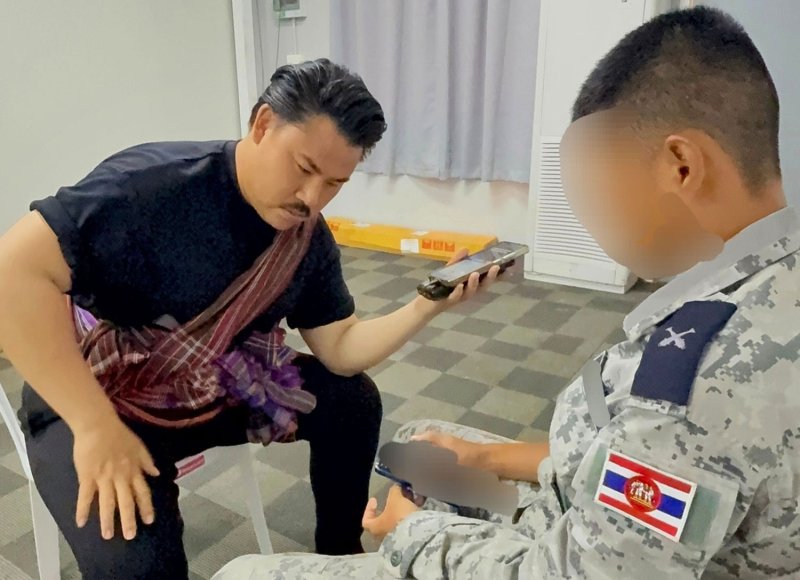
The Royal Thai Navy has announced a seven-day disciplinary penalty for one of its commanders after an official investigation revealed that he used excessive force against a naval recruit, which constitutes a violation of existing naval regulations. This decision came after allegations of assault circulated on social media, leading to the formation of a committee to investigate the incident.
In a statement, Admiral Parach Ratanachaiyapan, the Navy's spokesperson, confirmed that the investigations concluded on the same day they began, with the committee determining that the commander’s behavior was inappropriate and that he had used excessive force. He explained that this was a clear breach of the Navy's command orders, which strictly prohibit any form of violent punishment against individuals.
Details of the Incident
The details of the incident stem from a social media activist named Guntotch Pongpaiboonwit, who shared the incident on his Facebook page, indicating that the naval recruit had sought his help after being assaulted. According to the activist, the recruit was forced to remove his shirt and lie on the deck of a naval ship, resulting in burns from the hot metal.
Furthermore, Guntotch added that the recruit sustained painful injuries, with images of his wounds circulating online. He noted that the recruit had been denied visits from his family, despite submitting leave requests to see his father, who is suffering from end-stage kidney disease.
Background & Context
This incident is part of a series of issues related to abuse within the armed forces, raising widespread concerns about how military leadership treats personnel. In recent years, many countries have faced increasing criticism regarding violence and abuses within military institutions, leading to calls for reform.
Historically, the armed forces in Thailand have faced criticism for their internal practices, but this incident may represent a turning point in how the Navy addresses such issues. The swift handling of these allegations may reflect a desire to improve the Navy's public image and enhance trust between personnel and the community.
Impact & Consequences
This incident underscores the importance of having effective mechanisms to monitor the behavior of military leaders, as the failure to take strict action could lead to a culture of violence within the armed forces. The disciplinary penalties imposed on the commander may be a positive step towards promoting discipline and transparency within the military institution.
Moreover, this incident could lead to increased public awareness about the rights of recruits, potentially exerting more pressure on military authorities to improve service conditions and provide a safe environment for recruits.
Regional Significance
This case is significant for the Arab region, as many Arab countries face similar challenges within their military institutions. Strengthening individual rights within the armed forces could have a positive impact on social and political stability in the region.
Additionally, this incident may inspire activists in Arab countries to advocate for improved military service conditions, potentially leading to positive changes in military policies in the future.