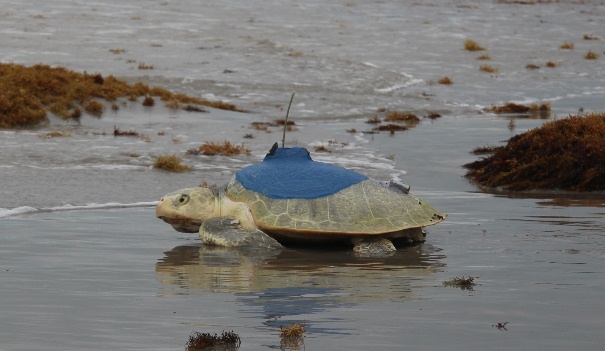
A three-legged Kemp's ridley sea turtle, known for being one of the smallest species of sea turtles, has drawn attention after its satellite tracking commenced in the ocean. The turtle, which has lost one of its limbs, was spotted in American waters, and this step is part of ongoing efforts to protect endangered species.
The satellite tracking of the turtle allows scientists to better understand its behavior and habitats, which aids in developing effective protection strategies. This turtle, considered one of the rare species, faces significant challenges due to environmental changes and illegal fishing.
Details of the Tracking Initiative
The tracking of the turtle is part of a research project aimed at studying the behavior of sea turtles and the effects of climate change on their lives. The turtle, named Tracy, has been equipped with a satellite transmitter, allowing researchers to pinpoint its location and monitor its movements in real-time.
The Kemp's ridley turtle is one of the most endangered species, with an estimated population of only 1,000 turtles remaining in the wild. It has been listed as an endangered species by the International Union for Conservation of Nature.
Background & Context
Historically, the Kemp's ridley turtle was considered one of the most common species in the Atlantic Ocean, but the degradation of its marine environment due to pollution and overfishing has led to a significant decline in its numbers. In the 1970s, legal measures were taken to protect this species, including a ban on its hunting and the development of rehabilitation programs.
Sea turtles are a vital part of the marine ecosystem, playing an important role in maintaining the health of coral reefs and marine environments. However, the threats they face, such as climate change and rising ocean temperatures, significantly impact their survival capabilities.
Impact & Consequences
The satellite tracking of the turtle may contribute to improving protection strategies, as researchers can gather accurate data on the turtles' migration patterns and breeding sites. This information can be crucial in designing effective marine reserves and developing policies for the conservation of sea turtles.
Moreover, the success of this project may encourage the implementation of similar projects to protect other endangered species, reflecting the importance of scientific research in preserving biodiversity.
Regional Significance
Although the Kemp's ridley turtle lives in the Atlantic Ocean, the challenges faced by sea turtles affect all marine areas worldwide, including Arab waters. Sea turtles are part of the natural heritage of many Arab countries, with various species found in the Red Sea and the Arabian Gulf.
Arab countries are striving to enhance their efforts in protecting the marine environment, which requires international cooperation to address shared challenges. The success of sea turtle conservation projects can serve as a model for biodiversity conservation efforts in the region.