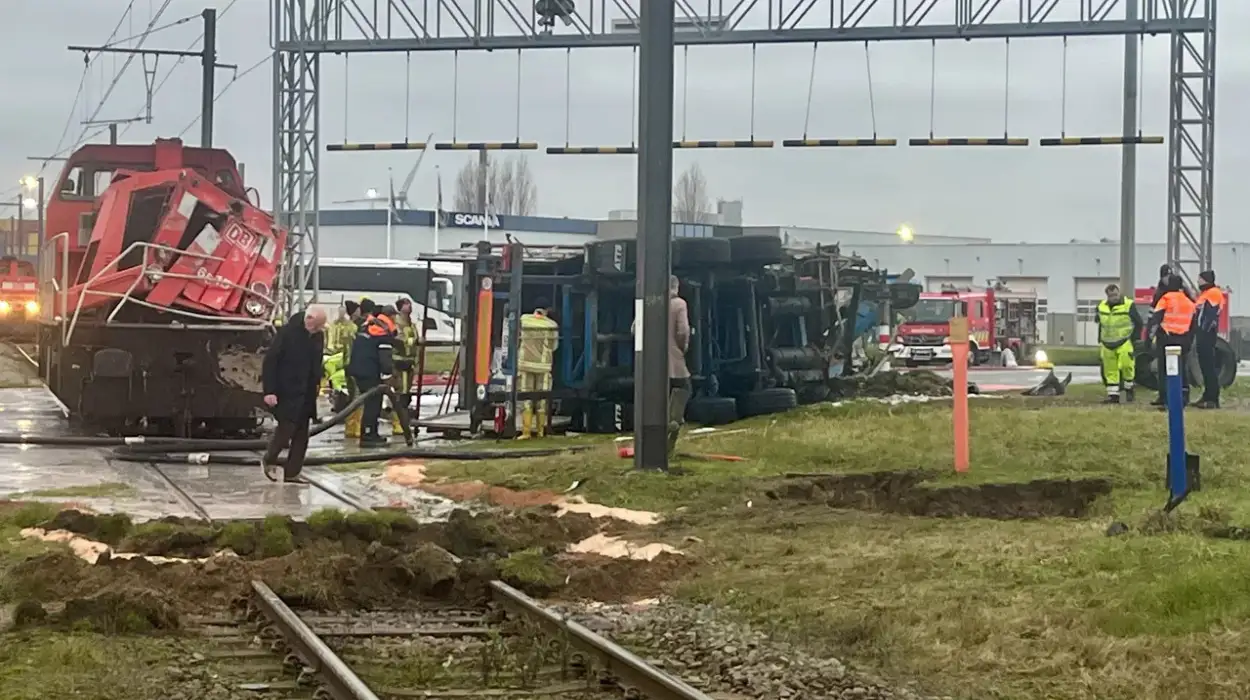
A train driver has died after his high-speed train collided with a truck carrying military equipment in the Calais region of France, leading to injuries among several passengers. The accident occurred on Tuesday morning between the cities of Béthune and Lens in northwestern France, as the train was en route from Dunkirk to Paris.
According to reports, the accident resulted in two individuals sustaining serious injuries, while 11 others suffered minor injuries. The regional president Xavier Bertrand confirmed the death of the train driver, describing the incident as a "terrible tragedy."
Details of the Incident
The collision took place around 7 AM local time, when the train struck a heavy truck that was crossing the railway crossing. Reports indicated that the truck was carrying military equipment, which heightened the severity of the incident. French Transport Minister Philippe Tabaro announced that he was heading to the accident site accompanied by the head of the French railway company SNCF.
The accident disrupted train services between Béthune and Lens until mid-morning, with some services gradually resuming. SNCF was contacted for comments regarding the incident, but CEO Jean Castex has not yet made a statement.
Background & Context
Collisions at railway crossings in France are relatively rare, but they are more common compared to the United Kingdom. In 2024, there were 89 recorded incidents in France resulting in 20 fatalities, while the UK recorded only 6 incidents. Over the past three years, more than 100 collision incidents have been documented annually in France.
Similar incidents raise concerns about public transport safety, especially with the increasing traffic and the rising number of heavy vehicles on the roads. The recent accident comes less than two weeks after another fatality in a similar incident in the southeastern Var region.
Impact & Consequences
These accidents raise questions about the effectiveness of safety systems at railway crossings, with the railway union SUD-Rail calling for "full transparency" regarding the incident. These incidents are expected to lead to comprehensive reviews of railway safety policies, particularly in areas with heavy traffic.
Accidents involving heavy trucks and high-speed trains highlight the need for improved coordination among various transportation modes and the implementation of stricter measures to ensure the safety of passengers and vehicles. Additionally, the incident may affect public confidence in railway services, potentially leading to a decrease in passenger numbers in the future.
Regional Significance
Although the accident occurred in France, it underscores the importance of improving safety standards worldwide. Arab countries, which are also experiencing increased transportation activity, could benefit from studying these incidents and implementing similar preventive measures. Furthermore, developing public transport infrastructure in Arab nations is vital to ensure the safety of citizens.
In conclusion, collisions at railway crossings remain a significant issue that requires immediate attention and effective measures to ensure the safety of passengers and vehicles, whether in France or elsewhere.