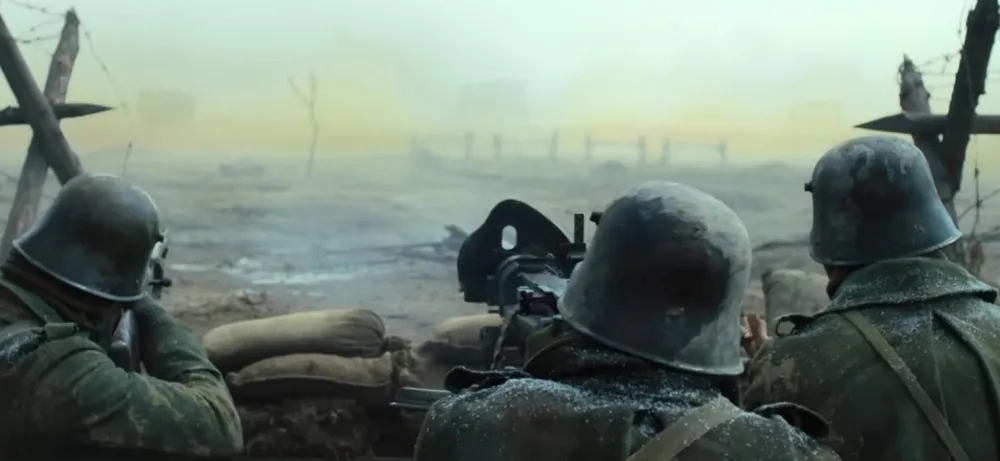
The nature of contemporary warfare is evolving, characterized by a slow slide into a state of continuous tension rather than traditional declarations of war. This shift reshapes our understanding of conflict and its relationship with daily life, complicating the distinction between war and other forms of tension.
In the past, war was understood through clear focal points, where frontlines were spatially defined, making it easier for the world to distinguish between combat zones and everyday life. People could live far from the war, or at least imagine they could, thanks to the boundaries separating military action from other modes of existence.
Details of the Event
However, this framework no longer operates in the same way. Frontlines have transformed into complex interconnections between multiple levels of action, where there is no longer a clear separation between strike and response, or between military action and the surrounding economic and political structures. Events no longer unfold along a timeline that can be easily tracked; instead, they intertwine in a web of influences that are difficult to separate.
When the United States and Israel act against Iran, the conflict becomes more complicated, as the impact intertwines across multiple levels, losing the event's initial unity. What appears to be a limited action in a specific location extends its influence across vast areas of the global system, reshaping balances that are not directly tied to the location of the action itself.
Background & Context
This transformation in the nature of warfare reshapes humanity's relationship with it. It is no longer possible to stand outside it as a separate event; instead, the impact extends into daily life, where everyone is affected by economic flows, energy prices, and news movements. War no longer occurs in a distant place; it has become part of the general rhythm of life.
In this context, security is no longer a stable state but a temporary result of a balance that can be disrupted at any moment. Stability is no longer a standalone condition but a continuously evolving situation, making what seems like calm not an end to tension but a form of its postponement.
Impact & Consequences
The idea of a decisive decision is also diminishing, as war is no longer managed from a single point but through a series of partial actions. This makes tracking its beginning or end impossible in the traditional sense, as war is no longer an event that starts and finishes but a process that is constantly changing.
In the face of this reality, modern warfare resembles a continuous management of tension rather than a confrontation that ends in clear victory or defeat. It is a condition that changes its nature more than it ceases, imposing its own rhythm on everyone.
Regional Significance
From this perspective, awareness of this transformation is not an intellectual luxury but a national necessity, especially for countries like Saudi Arabia that recognized the nature of this change early on. Strengthening strategic independence, diversifying sources of power, and building cohesive economic and technological systems are conscious responses to a war that is no longer fought on a single front but in every direction.
In conclusion, the question of the frontline's location has lost its meaning, as the frontline is no longer a spatial structure at all. The deeper question relates to how the conflict itself is shaped when it loses its cohesive form and transforms into a network of mutual influences.