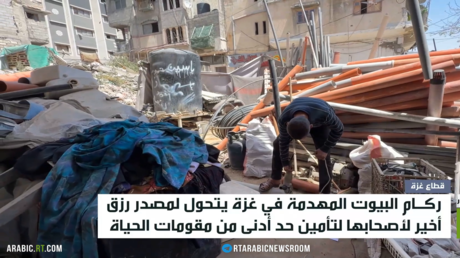
Under the weight of Israeli restrictions on the entry of essential materials, many residents of Gaza find themselves compelled to search through the rubble of their destroyed homes. With scarce job opportunities and rising prices, the remnants of houses have become a source of livelihood for many families struggling to survive.
The number of families turning to rubble digging is increasing, as they collect usable materials such as iron and wood, then sell them at low prices. This work, despite its difficulties, has become an urgent necessity for many to secure their daily bread.
Details of the Situation
Reports indicate that many families who lost their homes during the recent military escalations find themselves in a deteriorating economic situation. With insufficient job opportunities available, residents resort to exploiting what remains of their possessions. This phenomenon is not new, but it reflects the worsening living conditions in the sector.
Some traders exploit these circumstances by purchasing the debris at low prices and then reselling it at higher rates. This raises questions about economic justice under the current conditions and highlights the challenges faced by Gaza's residents in their efforts to improve their living conditions.
Background & Context
For years, the Gaza Strip has suffered from a suffocating blockade that has significantly impacted the local economy. Restrictions on the movement of goods and people have led to economic deterioration, forcing many families to rely on unconventional sources of income. This situation has worsened following the recent military escalations that resulted in the destruction of numerous homes.
Historically, Gaza relied on agriculture and industry, but the blockade and restrictions have led to a decline in these sectors. With the increasing number of families that have lost their homes, digging through the rubble has become a means of survival, reflecting a painful reality experienced by the residents.
Impact & Consequences
The impact of this phenomenon extends to several aspects, contributing to rising poverty and unemployment rates. Additionally, reliance on selling debris reflects economic instability, adversely affecting the mental health of the population. The difficult living conditions drive many young people to emigrate in search of better opportunities, exacerbating the skills crisis in Gaza.
Moreover, this phenomenon could lead to the spread of corruption, as some traders may exploit the situation for illicit gains, further complicating the economic crisis in the sector.
Regional Significance
The situation in Gaza serves as a mirror reflecting the challenges faced by many Arab countries amid economic and political crises. With the increasing crises in the region, it becomes crucial to consider how these conditions impact regional stability.
What happens in Gaza may have repercussions on neighboring countries, potentially leading to increased refugee flows or even escalating political tensions. Therefore, addressing the conditions in Gaza requires coordinated international and regional efforts.
In conclusion, Gaza remains a symbol of resilience in the face of challenges, but the current situation demands urgent action from the international community to assist the residents in overcoming these crises.