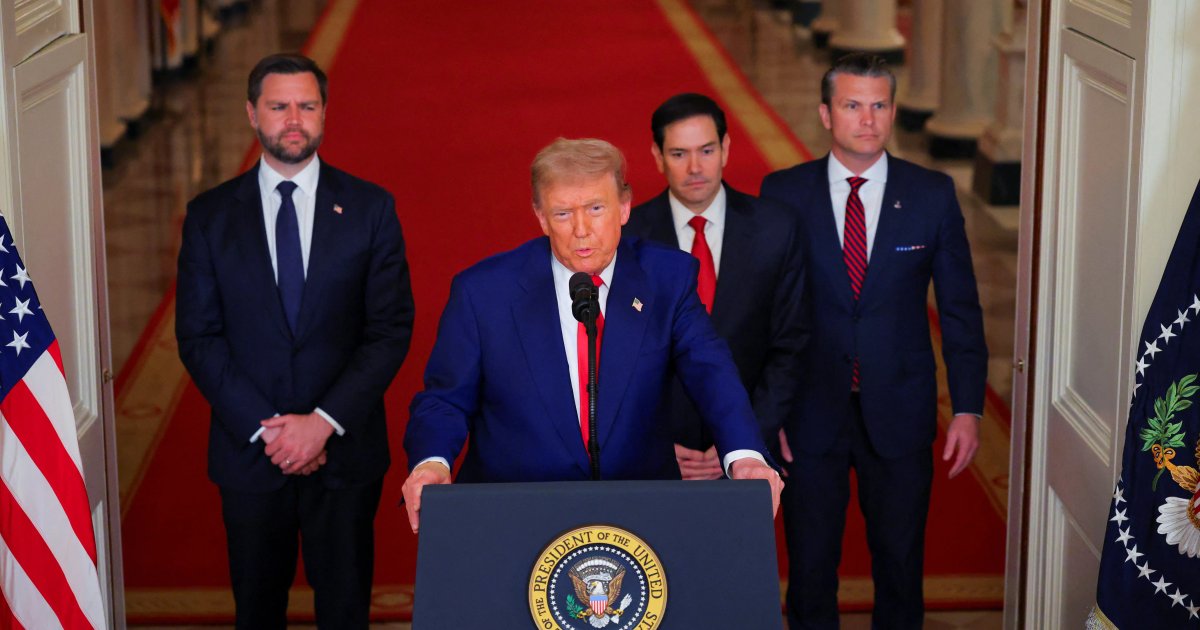
President Donald Trump has announced that the United States will launch severe strikes against Iran in the upcoming period, which may extend from two to three weeks. These statements come in the context of increasing tensions between Washington and Tehran, where Trump has once again threatened to target Iranian power stations, heightening regional tensions.
Trump's remarks come at a time when relations between the United States and Iran have significantly deteriorated, following the U.S. withdrawal from the Iranian nuclear deal in 2018. Since then, Washington has imposed stringent economic sanctions on Tehran, severely impacting its economy and exacerbating internal crises.
Details of the Announcement
During a press conference, Trump confirmed that the United States would take strict measures against Iran, indicating that economic and military pressures would continue until Tehran changes its behavior. He noted that the strikes would target critical Iranian infrastructure, including power stations, in a move aimed at undermining Iran's ability to carry out military activities.
Trump also pointed out that these measures are part of protecting American interests in the region and reaffirming the United States' commitment to the security of its allies, especially amid increasing Iranian threats.
Background & Context
Historically, U.S.-Iranian relations have witnessed numerous crises, starting with the Iranian Revolution in 1979, which led to the severance of diplomatic relations between the two countries. Since then, the United States has taken several steps to counter Iran's influence in the region, including supporting allies such as Israel and Saudi Arabia.
In recent years, tensions have notably increased, especially following attacks targeting oil facilities in Saudi Arabia, which Iran was accused of orchestrating. Additionally, the Iranian nuclear program remains a major point of contention, with the U.S. and its allies fearing that Iran may seek to acquire nuclear weapons.
Impact & Consequences
The increasing military and economic pressures on Iran could escalate tensions in the region, threatening stability in neighboring countries. Any military escalation could provoke reactions from Iran, whether through targeting American interests or those of its allies in the region.
Furthermore, U.S. pressures may exacerbate humanitarian crises in Iran, where the Iranian people are suffering from the effects of economic sanctions. Consequently, the escalation could negatively impact the internal situation in Iran, potentially leading to popular protests against the regime.
Regional Significance
Arab countries neighboring Iran, such as Iraq, Saudi Arabia, and the UAE, are among the most affected by the tensions between the United States and Iran. Any military escalation could destabilize these countries and increase the risks of armed conflict.
Moreover, Arab nations that rely on the United States to secure their interests may find themselves in a difficult position, needing to balance support for the U.S. while maintaining their relationships with Iran. Ultimately, the situation in the region remains complex and requires comprehensive dialogue to avoid military escalation.