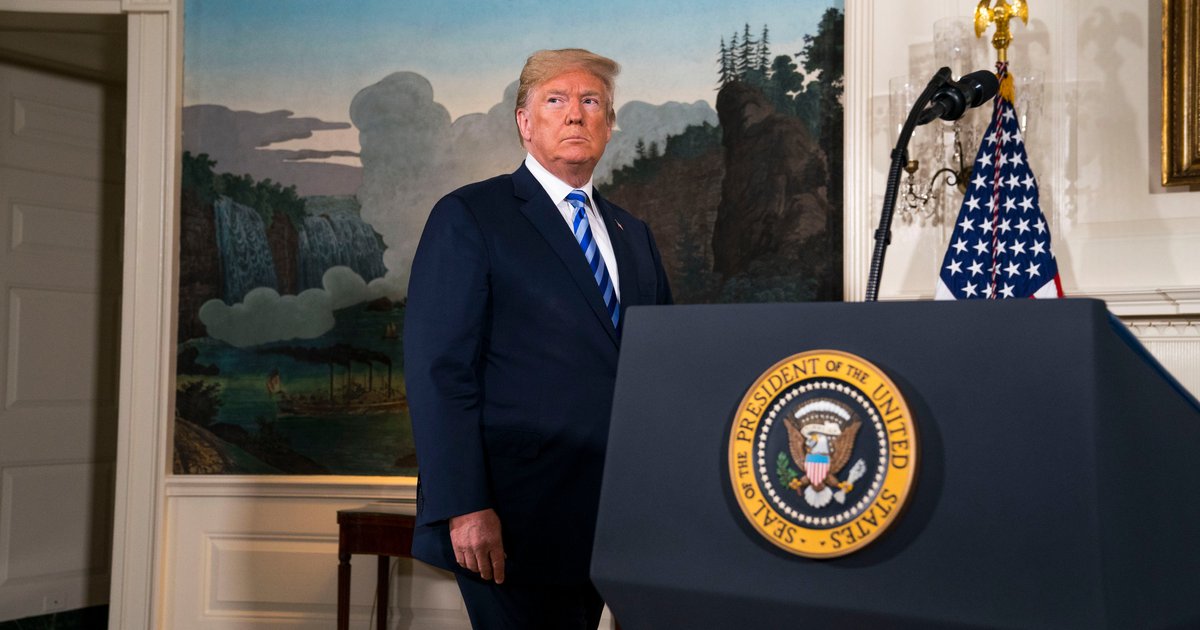
Former U.S. President Donald Trump stated that Iranians are refusing to surrender, indicating that tomorrow will be a critical deadline for Tehran. These remarks come at a sensitive time in U.S.-Iran relations, marked by escalating tensions between the two sides.
In statements made by Trump, he pointed out that the Iranian regime is facing significant pressure but shows no willingness to retreat or accept U.S. terms. These comments reflect the ongoing pressure policy adopted by the U.S. administration towards Iran, which includes imposing strict economic sanctions.
Details of the Event
Trump's statements come at a time of increasing international concern regarding Iranian nuclear activities. Iran is seeking to enhance its nuclear program, raising fears of its potential development of nuclear weapons. The United States and its allies have warned that this could lead to heightened tensions in the region.
Trump, who withdrew from the Iranian nuclear deal in 2018, emphasized that Iran has not adhered to previous agreements and that the time has come for decisive action. He also indicated that tomorrow will be a crucial date for Tehran, raising questions about the next steps the United States may take.
Background & Context
Historically, U.S.-Iran relations have seen increasing tensions since the Islamic Revolution in 1979. Recent years have witnessed an escalation of these tensions, especially following the U.S. withdrawal from the nuclear agreement. This agreement aimed to limit Iranian nuclear activities in exchange for easing economic sanctions.
Despite diplomatic efforts, Iran continues to develop its nuclear program, exacerbating tensions. These conditions have led to fears of a potential military conflict in the region, particularly with U.S. forces present in neighboring countries.
Impact & Consequences
If Iran continues to ignore international demands, it may face severe consequences. The United States is likely to take military action or increase economic sanctions, which could significantly impact the Iranian economy.
Moreover, the escalation in relations between Iran and the United States could affect the stability of the entire region, as any military moves could provoke reactions from other countries in the area, complicating the security situation further.
Regional Significance
Arab countries neighboring Iran are on high alert, as any escalation in U.S.-Iran relations could impact their security and stability. Countries such as Saudi Arabia and the United Arab Emirates are among the most affected, fearing any military escalation that could reach their territories.
At the same time, some armed groups in the region may exploit these tensions, further complicating the security landscape. Therefore, the situation requires close monitoring by Arab nations and the international community.