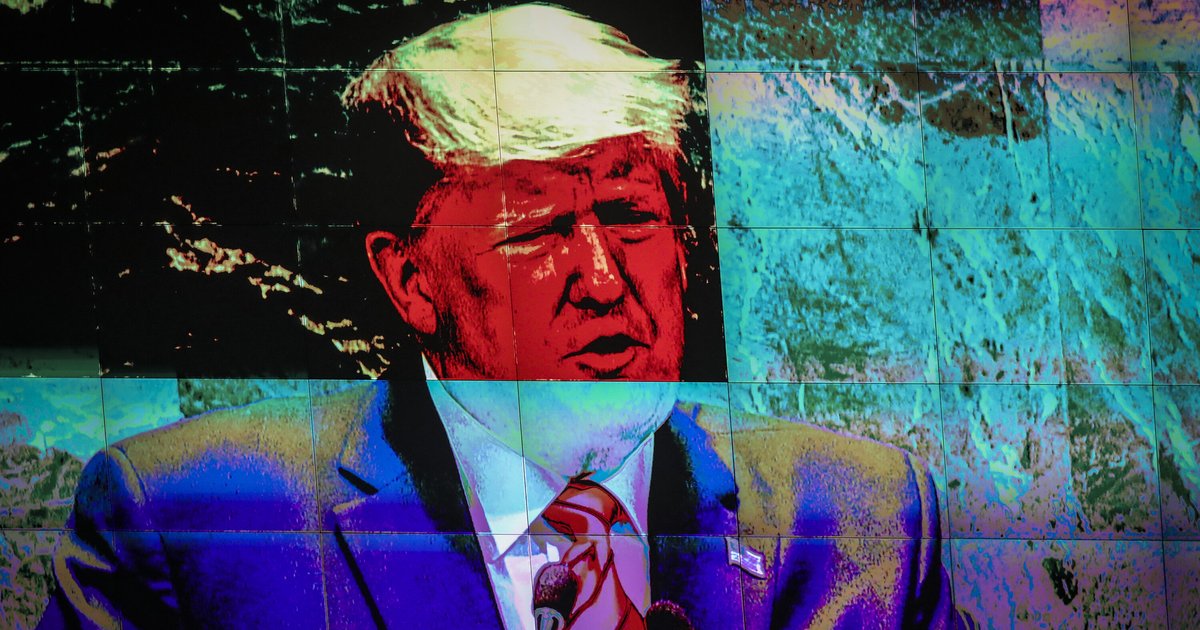
The foreign policies of U.S. President Donald Trump towards Iran, Venezuela, and Gaza are a direct embodiment of the ideas and theories he presented in his books. Since 1980, when Trump spoke about the necessity of using military force to face challenges, to his current strategies that rely on maximum pressure, the relationship between his political literature and presidential decisions is clear.
Iran is one of the most prominent arenas where Trump applies his ideas, utilizing the style of "The Art of the Deal" which relies on power and bargaining to achieve gains. This approach is not spontaneous; rather, it is the result of decades of thought and planning, as evidenced by his writings that exceed 15 books.
Details of the Event
In his book published in 2000, Trump expressed his political ambitions, stating: "Yes, I am thinking of running for President of the United States," emphasizing the importance of non-politicians in leading the country. He laid the foundations for his political project in this book, stressing the principle of "America First."
The influence of these ideas manifested in his foreign policies, especially after he reached the White House. He attacked Iran on every occasion, considering the nuclear deal made by the Obama administration to be weak and wrong, and he canceled it 14 months after taking office. He also criticized Obama for his policy towards China and the "oil mafia," reflecting the continuity of his attack on his predecessor's legacy.
Background & Context
Trump's stance on Iran dates back to the 1980 hostage crisis, where he expressed his willingness to use military force. This position evolved to become part of his political strategy, where he considered power to be the way to achieve American goals abroad.
In his book "How to Get Rich," Trump emphasized the importance of being aggressive in dealing with adversaries, which is evident in his policies towards Iran and Venezuela. Additionally, his book "The Art of the Deal" illustrates how Trump views international relations as business transactions, where he seeks to achieve clear gains.
Impact & Consequences
The repercussions of Trump's policies extend beyond the United States, affecting stability in the Middle East and Latin America. Escalation against Iran could exacerbate conditions in the region, while pressures on Venezuela may worsen humanitarian crises there.
Moreover, Trump's use of force in foreign policy reflects a shift in how the United States interacts with other countries, potentially altering the landscape of the existing international order.
Regional Significance
Trump's policies towards Iran, Venezuela, and Gaza pose a significant challenge for Arab countries, as they must adapt to the rapid changes in American policy. Tensions with Iran may impact regional security, while pressures on Gaza could worsen humanitarian conditions.
In conclusion, it can be said that Trump, through the ideas articulated in his books, has managed to transform his visions into tangible political reality, making it essential to monitor what he promises in the future.