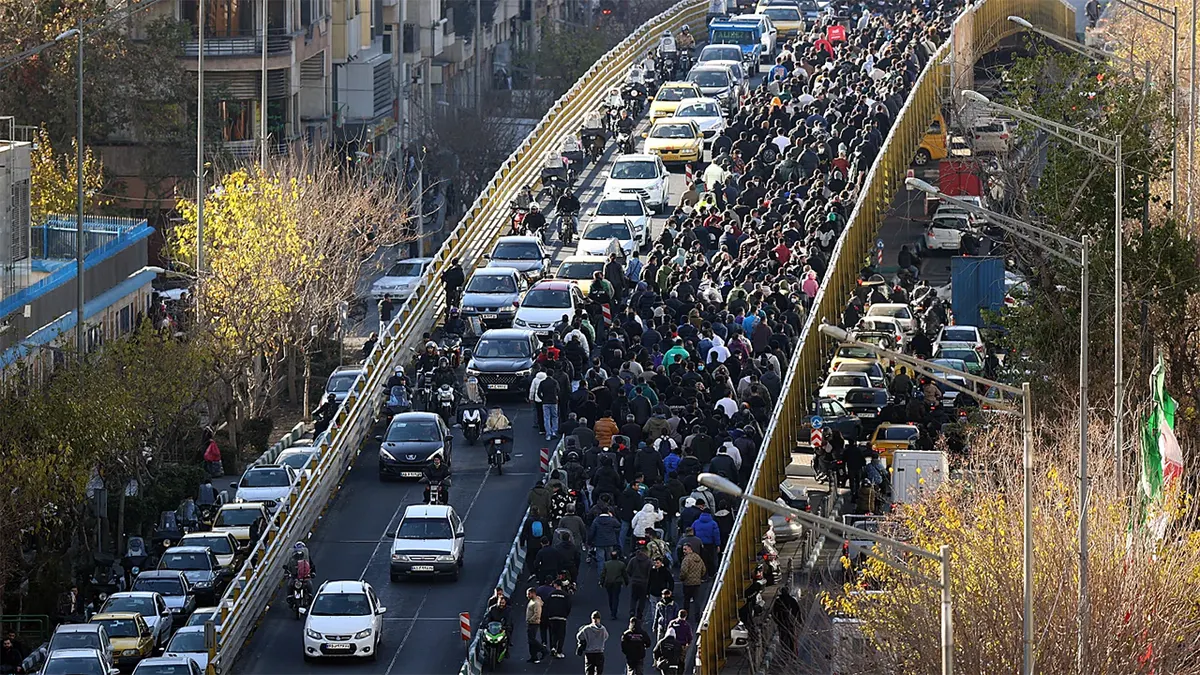
U.S. President Donald Trump is facing mounting pressures amid deteriorating domestic conditions and escalating tensions with Iran. Trump is confronted with multiple challenges, ranging from popular protests at home to military threats from Tehran, raising questions about how these crises will affect his political future.
These pressures come at a sensitive time as Trump seeks to maintain his popularity ahead of upcoming electoral challenges. Internal crises, including protests against racism and discrimination, place him in a precarious position, with opponents accusing him of failing to manage crises effectively.
Event Details
In recent weeks, the United States has witnessed a wave of protests ignited by the killing of George Floyd, leading to widespread calls for reform. While Trump attempts to focus on national security issues, these internal crises may negatively impact his popularity.
On the other hand, tensions with Iran are escalating, with Tehran issuing new threats against American interests in the region. These tensions arise at a critical moment as Trump seeks to assert his strength as a military leader, but escalation could lead to adverse outcomes.
Background & Context
Historically, U.S.-Iran relations have been strained since the 1979 Islamic Revolution. Recent years have seen an escalation in tensions, particularly following Trump's withdrawal from the Iranian nuclear deal in 2018. This withdrawal led to the re-imposition of economic sanctions on Iran, exacerbating tensions.
These crises coincide with a critical electoral period, as Trump aims to secure a second term. Both internal and external crises may influence his electoral strategies, placing him in a difficult position.
Impact & Consequences
If internal crises continue to escalate, they could significantly affect Trump's chances in the upcoming elections. Protests may exacerbate political division within the country, making it harder to achieve stability.
On the external front, rising tensions with Iran could lead to military escalation, placing the United States in a precarious position. Any escalation could impact relations with America's allies in the region, such as the Gulf states.
Regional Significance
The Arab region is significantly affected by tensions between the United States and Iran. Any military escalation could destabilize countries like Iraq and Syria, where U.S. forces are present.
Moreover, internal crises in the United States may influence Trump's policies towards the region, potentially leading to changes in military and economic support strategies for Arab countries.
In conclusion, Trump faces significant challenges both domestically and internationally. How he navigates these crises and the potential outcomes for his political future remain open questions in the current circumstances.