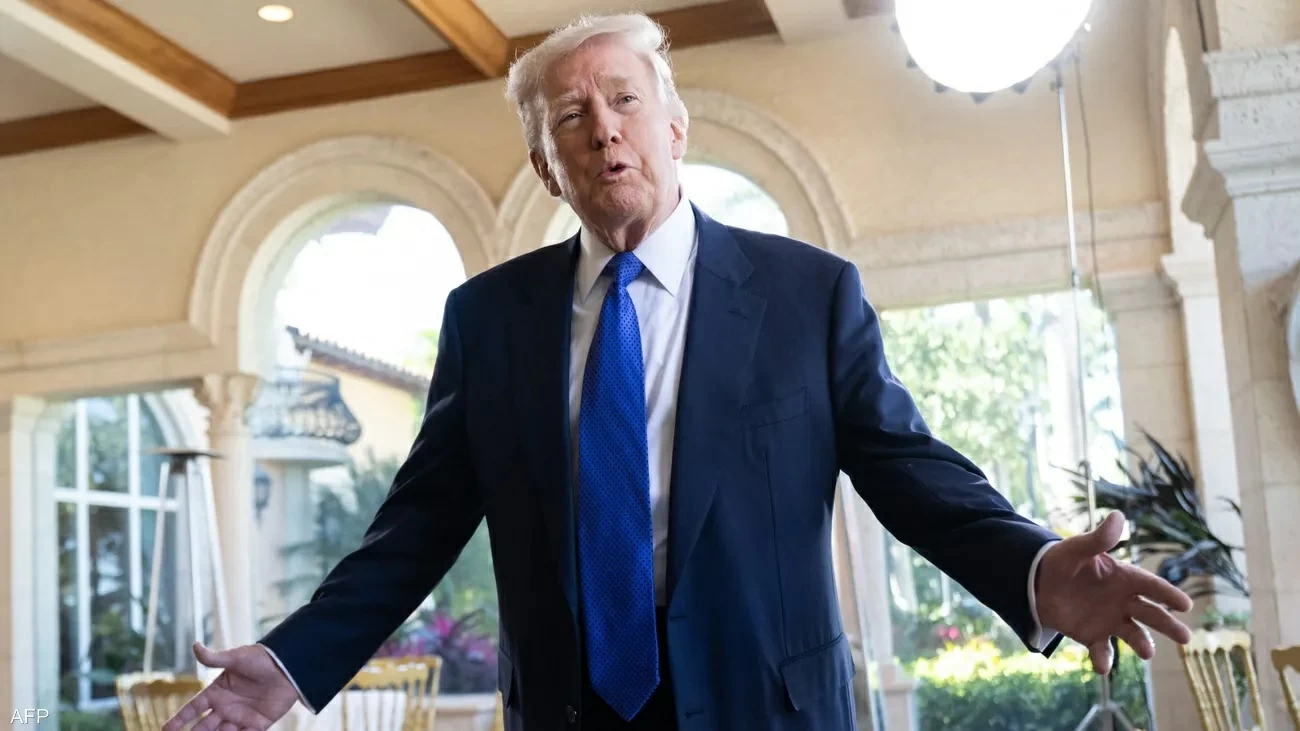
The U.S.-Israeli war with Iran has entered its second month with no signs of a ceasefire in sight. In this context, a U.S. official revealed that President Donald Trump informed his aides that the duration of combat operations could range between 4 and 6 weeks.
The official confirmed that Trump is seeking to avoid a long-term war with Iran, indicating that he prefers to find a way out through negotiations, according to reports from Reuters. He also stated that the U.S. president emphasized he does not plan to send ground troops to Iran at this time, but keeps all options open.
Details of the Situation
In preparation, the official noted that Trump and his team are poised to deal with Iran in the Strait of Hormuz, and may direct stronger strikes against the Iranians if they do not accept the current reality. They expressed confidence that the strait could be reopened soon. However, it remains unclear whether there are realistic prospects for negotiations with Iran that could lead to positive outcomes.
Trump continues to speak about assessments indicating victory, but he is increasingly sending messages to reassure the jittery financial markets. In this context, U.S. Secretary of State Marco Rubio stated that President Trump has all options available to deal with Iran, noting that the military operation in Iran "will end within weeks, not months."
Background & Context
These statements come at a sensitive time, as tensions between the United States and Iran have significantly escalated in recent months. Relations between the two countries have deteriorated sharply since the U.S. withdrawal from the Iranian nuclear deal in 2018, leading to the imposition of severe economic sanctions on Tehran.
Historically, the United States and Iran have been at odds since the Islamic Revolution in 1979, with these disputes leading to several proxy conflicts in the region. As tensions rise, fears of a full-scale war that could impact the stability of the entire region have increased.
Impact & Consequences
If combat operations continue for an extended period, they could exacerbate the humanitarian situation in Iran and increase the suffering of the Iranian people. Additionally, any military escalation could negatively affect global oil prices, which would have repercussions for the global economy.
Moreover, the continuation of the war could strengthen the position of Iran-backed armed groups in the region, complicating security situations in countries like Iraq, Syria, and Lebanon.
Regional Significance
Neighboring Arab countries are in a precarious position, as they may be directly affected by any military escalation. Countries such as Saudi Arabia and the UAE could find themselves in the line of fire, increasing regional tensions.
The situation in Iraq and Syria could also be significantly impacted, as any escalation could lead to increased sectarian divisions and bolster chaos in the region. In this context, Arab countries must take a cautious stance to navigate the rapidly evolving developments.
In conclusion, the situation between Iran and the United States remains precarious, teetering between war and peace, as pressures mount on Trump to find a diplomatic exit before conditions worsen.