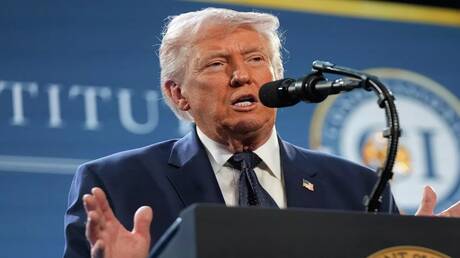
U.S. President Donald Trump has revealed new details concerning the progress of negotiations with Iran, stating that Tehran submitted an initial document that did not meet his expectations. However, he managed to obtain an improved version within a matter of minutes. These remarks come at a sensitive time when relations between Washington and Tehran are notably strained, especially after the United States withdrew from the nuclear agreement in 2018.
These negotiations are part of broader efforts aimed at reviving dialogue between the two sides amid increasing tensions in the region. Trump, who had previously expressed a willingness to negotiate with Iran, appears to be striving for tangible progress in these talks.
Details of the Negotiation Event
In his recent statements, Trump clarified that the initial document presented by Iran did not meet his expectations, prompting him to request improvements. Shortly thereafter, he received a revised version, indicating a willingness from the Iranian side to negotiate. This dynamic reflects the challenges faced in the negotiations, as each party seeks to achieve its own interests.
It is important to note that these negotiations are taking place at a time when the region is experiencing significant political and economic changes, complicating the landscape further. Trump, facing both internal and external pressures, seems to be trying to leverage this opportunity to bolster his political standing.
Historical Context and Background
Historically, relations between the United States and Iran have been tense since the Iranian Revolution in 1979. These relations have seen numerous fluctuations, ranging from economic sanctions to military confrontations. The U.S. withdrawal from the nuclear agreement in 2018 marked a turning point, as it reinstated harsh sanctions on Iran, adversely affecting its economy.
In recent years, Iran has sought to strengthen its ties with other countries in the region, including Russia and China, further complicating negotiations with the United States. These dynamics cast a shadow over any efforts to reach a new agreement, as each side aims to enhance its position in the negotiations.
Implications and Potential Impact
Recent developments in the negotiations could significantly affect regional stability. If the United States and Iran can reach an agreement, it may lead to a de-escalation of tensions in the region, positively impacting the global economy and oil markets.
On the other hand, if negotiations fail, tensions may escalate, potentially leading to military confrontation. These scenarios underscore the necessity of closely monitoring the developments in the negotiations, as their outcomes could influence many countries in the region.
Significance for the Arab Region
The relations between the United States and Iran hold particular significance for Arab countries, many of which are affected by the tensions between the two sides. Any progress in the negotiations could lead to greater stability in the region, while failure may exacerbate existing conflicts.
Arab nations seeking to advance their interests in the region will closely monitor these negotiations, as any shift in relations between Washington and Tehran could impact the balance of power in the area.
In conclusion, the negotiations between the United States and Iran remain a vital topic that requires careful monitoring, as their outcomes could have far-reaching implications for security and stability in the Middle East.